Home › Garden pests › Cutworms
Garden pests
Cutworms
Agrotis, Noctua and related moth species · Insect
Also called common cutworm (caterpillar of the Bogong moth), brown cutworm (Australia), black, variegated and granulate cutworms (USA), turnip moth, large yellow underwing, heart and dart (the moths) (UK).
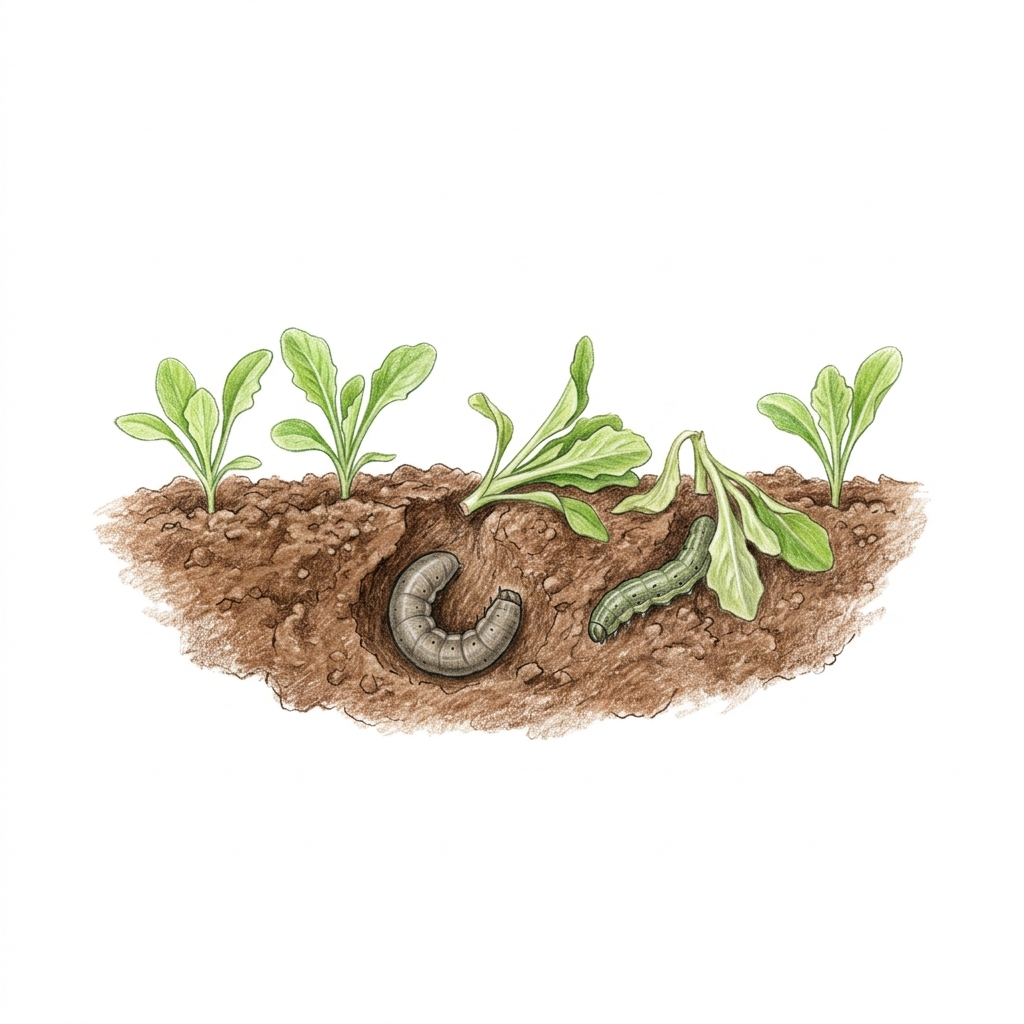
Illustration
Fat, grey-brown caterpillars that hide in the soil by day and cut seedlings off at ground level at night. Scrape back the soil around a felled plant to find one curled in a C, and protect new transplants with collars.
How to spot it
- Seedlings and young transplants cut off at or just below soil level.
- Plants that suddenly wilt, with roots, tubers or root vegetables tunnelled.
- Smooth, dull grey-brown (sometimes green or creamy) caterpillars up to 4–5 cm long that curl into a tight C when disturbed.
- Caterpillars just under the soil or debris beside the damaged plant by day.
- Holes in the leaves and flowers of low plants, where some kinds climb up to feed.
Easily confused with
Slugs and snails
They leave shiny slime trails; look for those before digging for caterpillars.
Chafer grubs (lawn grubs)
White, C-shaped beetle grubs with a brown head and legs only near the head; they eat roots rather than cutting stems.
Where it's a problem
- Australia: Brown, black, variable and common cutworms attack crops and gardens, and seedlings are most at risk.
- United Kingdom/Europe: The caterpillars of the turnip moth, large yellow underwing and heart and dart moth. They can be found all year, most of all after summer egg-laying.
- North America: Black, variegated and granulate cutworms are common in gardens.
What to do
- When a plant is cut down or suddenly wilts, gently scrape back the soil around it and remove the caterpillar.
- Search with a torch at night, when they feed, and pick them off.
- Put a collar of card or a cut-down cardboard tube around each transplant, about 2.5 cm above the soil and 5 cm below, or cover young plants with fleece or fine mesh.
- Clear weeds a few weeks before planting, and dig or cultivate the soil, which kills caterpillars sheltering there.
- Keep vegetable beds well watered, and encourage birds and ground beetles.
- Plant a few extra seedlings to allow for losses.
If you use an insecticide, choose one labelled for cutworms and follow the label and local rules. Sprays work best applied late in the day, when the caterpillars come out to feed.
Free account, no card needed. You sign up or sign in first, then the scanner opens.
Sources
- RHS: Cutworms
- University of California IPM: Cutworms
- Virginia Cooperative Extension: Cutworms in the home garden
- Business Queensland: Cutworm
- NSW National Parks: Mountain pygmy-possum project
- RHS: Chafer grubs in garden borders
- University of California IPM: Snails and slugs
Facts checked Sunday 27 September 2026. General guidance only: follow your local council, agency and product label.