Home › Vegetables › Celeriac
Vegetables
Growing celeriac
Apium graveolens var. rapaceum. A slow, cool-season crop grown for its knobbly, celery-flavoured swollen base, raised from seed in trays and planted out once the weather is mild. It wants rich soil and steady water, and young plants that get too cold run to seed. These steps work anywhere: they go by soil and weather, not by month. Also called celery root (US, Canada).
How celeriac grows
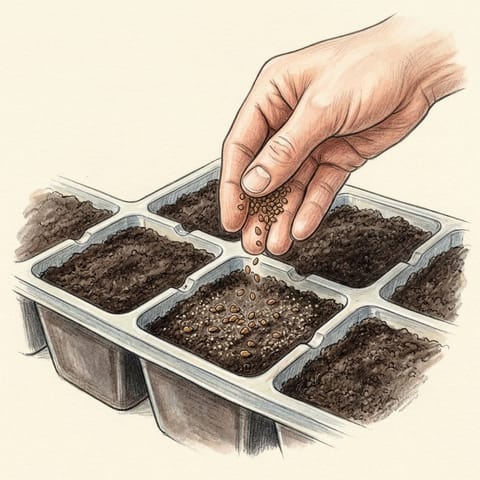 SowSeeds on the surface, barely coveredUp in 2–3 weeks
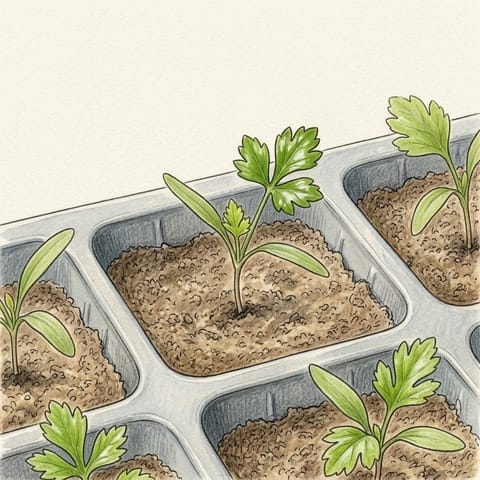 SeedlingOne to a cell, true leaves form4–8 weeks
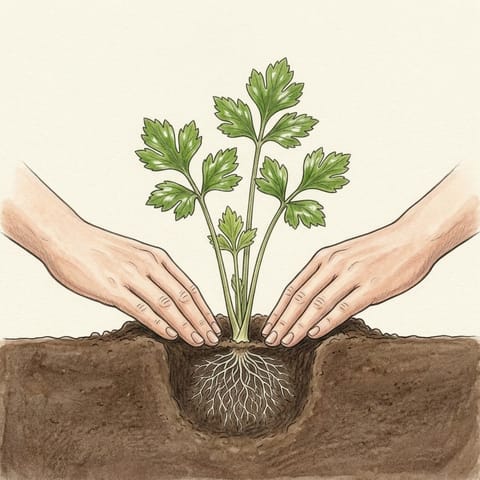 Plant outCrown at soil level, not buriedAbout 10 weeks from sowing
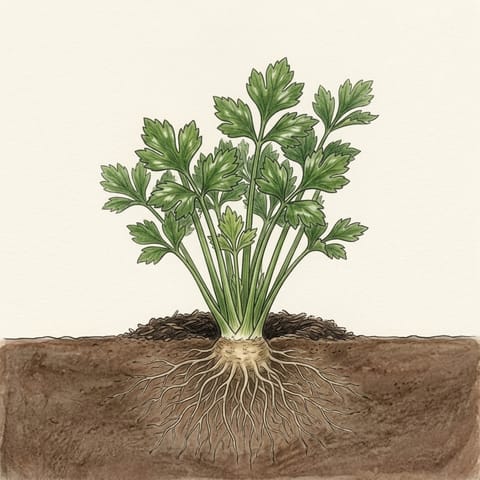 GrowLeaves fill out; mulch and water4–8 weeks after planting
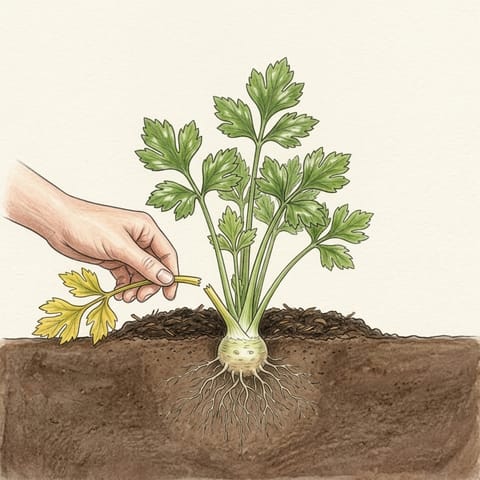 TidySide shoots and old outer leaves offEvery 2 weeks from about 6 weeks
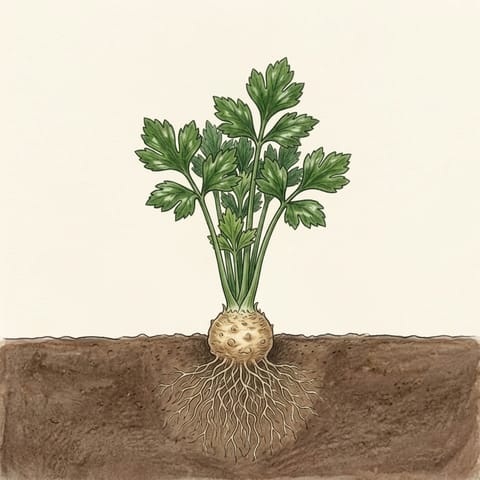 SwellThe base swells at the soil line2–4 months after planting
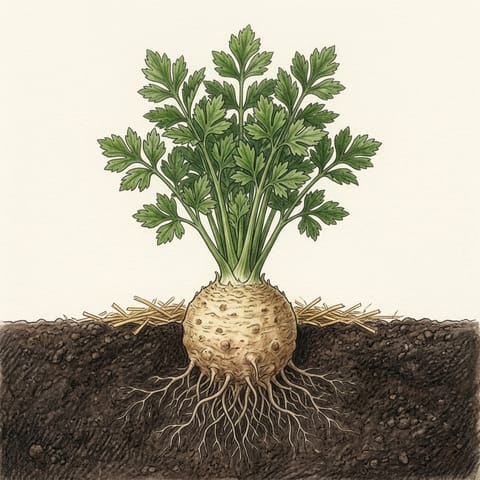 Ready8–10 cm (3–4 in) across4–5 months after planting
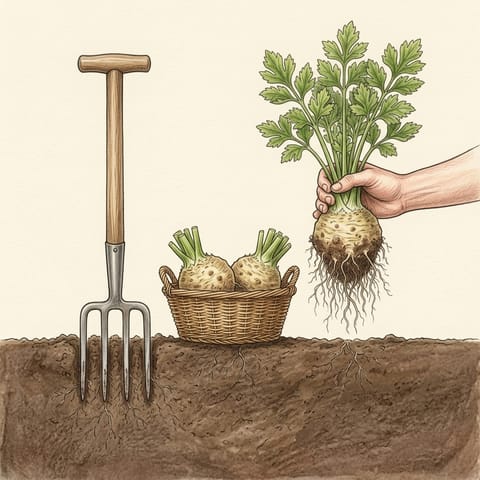 LiftFork it out, trim roots and leavesAs you need it, over weeks
Times run from sowing until planting out, then from planting out. They vary with the variety and the weather. Celeriac is slow: from seed to a full-sized root takes six months or more.
Growing it, step by step
Is it right for you?
- Celeriac needs a long, mild season: six months or more from sowing, with days around 10–24°C (50–75°F) and soil that never dries out.
- Young plants are touchy about cold. A week or more below about 10°C (50°F) can make them bolt later instead of forming a root. Grown plants take frost, and a light frost sweetens the flavour.
- It needs rich soil that stays moist. Where the soil dries fast and summers are dry, it is hard to grow well without regular watering.
- Each plant needs about 30 cm (12 in) of row. It is grown much like celery, needs no blanching, and keeps for months after lifting.
When to plant
Sow seeds in trays about ten weeks before you plan to plant out. Plant out once the last frost has passed, the soil is at least 10°C (50°F) and nights stay mild. Waiting a week or two for warmer weather is better than planting into cold soil, which makes them bolt.
Cold winters: sow indoors in late winter and plant out after the last frost, for roots in autumn. Mild climates: plant out in spring, then lift through autumn and winter. Hot or subtropical places: plant in autumn, so it grows through the cooler months. Tropics: the cool, dry season or the highlands.Prepare the bed
- Full sun or light shade, in rich soil that holds moisture but drains well. Dig in plenty of compost before planting.
- Slightly acid to neutral soil suits it, about pH 6.0–7.0. See soil pH.
- Avoid a bed that grew celery, celeriac, carrots, parsnips or parsley in the last few years. They are relatives and share pests and diseases.
Sow and plant
- Sow a few seeds to a cell in trays or small modules of seed-raising mix. Press them onto the surface and cover with only a light sprinkling: the seed needs light to sprout.
- Keep the mix moist and warm, at about 15°C (59°F) or a little more. They come up slowly and unevenly, in two to three weeks.
- Thin to one seedling per cell once you can handle them. Keep them in a bright spot that stays above 10°C (50°F): colder, and they may bolt later.
- A week or so before planting out, harden them off: put them outside by day and bring them in at night.
- Plant 30 cm (12 in) apart, in rows 45 cm (18 in) apart, with the base of the stems at soil level. Don't bury the crown.
Get it started
- Water in well, then water daily for the first two weeks or so until the plants settle.
- If a cold snap follows planting, cover them with fleece. Young plants chilled for days on end often bolt.
- Weed by hand around them. The roots are shallow, so don't dig or hoe close to the plants.
Keep it growing
- Water: keep the soil steadily damp but never waterlogged. If it does dry out, give one thorough soak rather than frequent sprinkles. Water matters most as the root swells: dry spells mean small, tough roots.
- Mulch: about a week after planting, spread compost about 5 cm (2 in) deep around the plants. Keep it off the crown, and top it up as it breaks down.
- Feed: rich, compost-improved soil needs little. If growth is slow, a balanced liquid feed about once a month from four weeks after planting. Avoid high-nitrogen feeds: they grow big leaves and small roots.
- Side shoots and old leaves: from about six weeks after planting, every two weeks or so, rub off side shoots around the base and snap off yellow, damaged or flopped outer leaves. Keep the healthy upright leaves: they feed the root.
- Side roots: as the base swells, snip off any thin roots growing from its upper sides near the soil surface. There's no need to heap soil over it: celeriac swells sitting on the soil.
Watch for problems
The common ones, with a Garden help page each where there is one:
Harvest
- Lift once the swollen base is about 8–10 cm (3–4 in) across, usually four to five months after planting. Bigger roots are fine too, and stay tender.
- A light frost sweetens the flavour, so many gardeners wait until after the first frosts.
- Ease each one out with a garden fork. Trim off the roots and cut the leaves back to about 2–3 cm (1 in).
- Where winters are mild, leave them in the ground and lift them as you need them. In colder places, cover the bed with a thick layer of straw to stop the ground freezing. On heavy or waterlogged soil, lift them all by late autumn.
After harvest
- Keep them cold and moist: in a bag in the fridge they last a few weeks. For months, pack them in damp sand or coir in a cool shed or cellar.
- Peel them before use: the skin is tough. They are eaten raw, grated, or cooked in soups, stews and mash.
- Lift any left in the ground before the weather warms. In their second year they run to seed and the roots turn pithy.
- Next in that bed: cabbage family crops, beans, peas or leafy greens. Keep celeriac, celery, carrots, parsnips and parsley out for a few years.
Sources
- RHS: How to grow celeriac
- UC Master Gardeners of Sonoma County: Celeriac
- University of Arkansas Extension: Celeriac (Home Gardening Series)
- University of Kentucky: Celery and celeriac
Facts checked Friday 23 October 2026. General guidance only: local advice comes first.