Home › Vegetables › Radishes
Vegetables
Growing radishes
Raphanus sativus. The quickest root crop, a member of the cabbage family, sown where it is to grow and ready in a few weeks. It wants loose soil, mild weather and steady moisture: heat, dry soil or crowding give hot, woody roots, or no roots at all. These steps work anywhere: they go by soil and weather, not by month.
How a radish grows
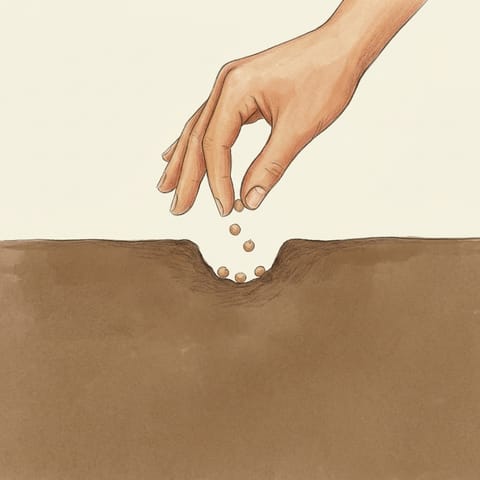 SowSeeds in a shallow drillDay 0
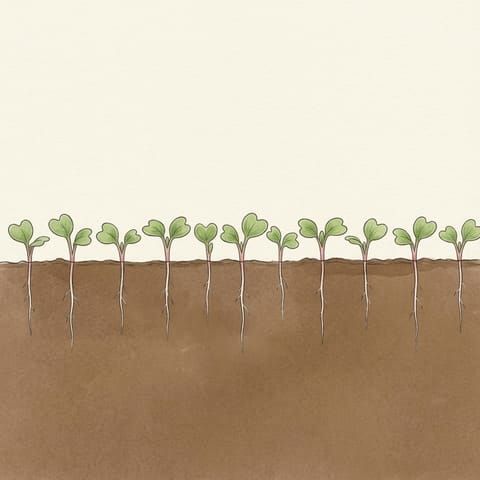 SeedlingsTwo heart-shaped seed leavesUp in 5–10 days
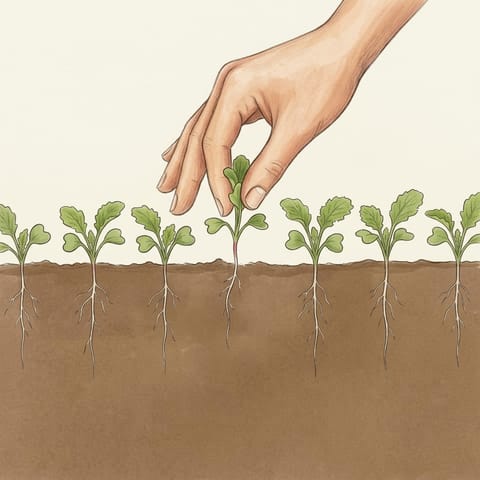 ThinCrowded seedlings thinned outAbout 10 days
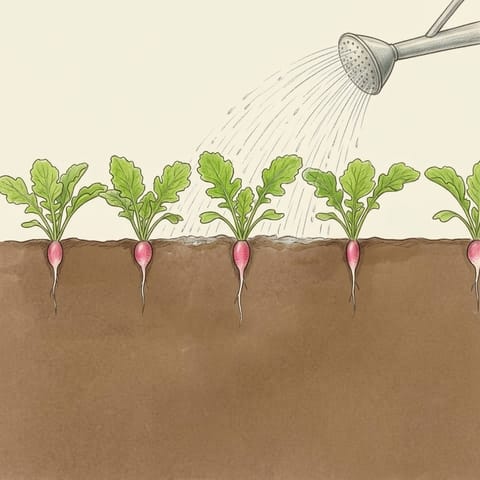 WaterSoil kept evenly moist2–3 weeks
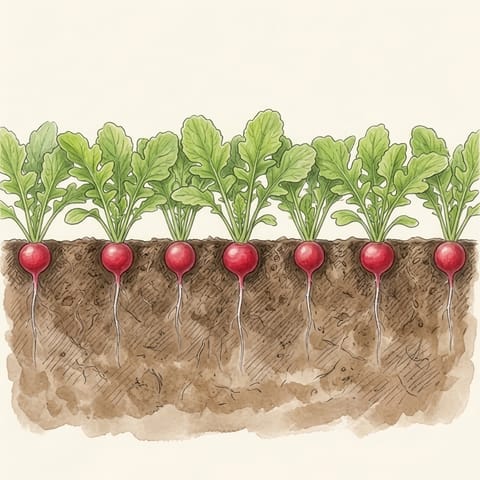 SwellRoots round out at the surface3–4 weeks
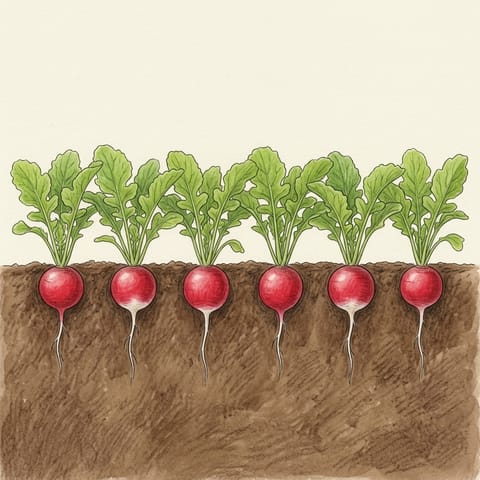 ReadyAbout 2.5 cm (1 in) across3–6 weeks
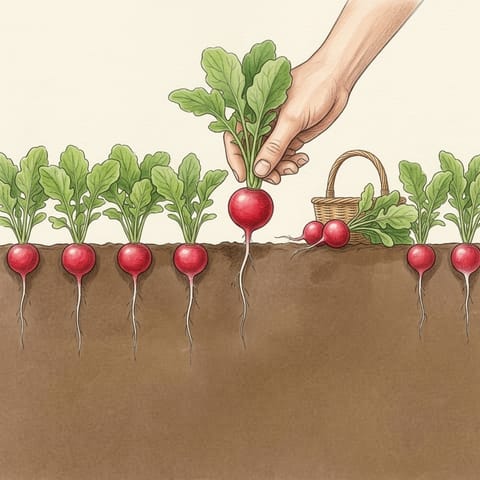 PullPulled young, a few at a timeWithin a week or so
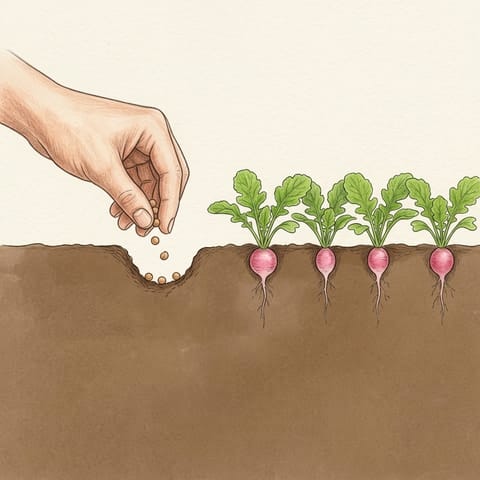 Sow againA new short row for a steady supplyEvery 2 weeks or so
Times run from sowing and vary with the variety and the weather. Small round kinds are quickest, faster in warm weather; winter radishes and long white kinds take two months or more.
Growing it, step by step
Is it right for you?
- Radishes like cool weather, with days around 10–18°C (50–65°F). They take frost, but heat makes the roots hot and pithy and the plants bolt to flower instead.
- They grow fast, so they fit in gaps: between slower crops such as peas, potatoes or cabbages, or in a short row before a summer crop goes in. A few seeds sown along a row of slow starters such as parsnips or onions mark the row while those come up.
- They take little room: 2.5–5 cm (1–2 in) a plant. Small round kinds grow well in a pot at least 30 cm (12 in) wide and deep.
- Winter radishes and long white kinds, such as daikon, are bigger, slower and need deep soil. They are sown later, for cool weather.
When to plant
Sow once the soil is at least 5°C (40°F). They take frost, so the first sowings can go in two to three weeks before the last frost. For a steady supply, sow a short row every two weeks or so while the weather is mild, and skip the hottest weeks, when they bolt and turn hot. Sow winter and long white kinds after the hottest weather, so they grow in the cooling weeks.
Cold winters: sow from early spring to early summer, then again from late summer to early autumn. Mild climates: sow from late winter to autumn, a short row every couple of weeks, skipping the hottest spells. Hot or subtropical places: sow from autumn to early spring, so they grow in the cooler months. Tropics: any time, but best in the cool, dry season or the highlands.Prepare the bed
- Full sun, and loose, well-drained soil without stones or clods. Dig it over to about 15 cm (6 in), and twice as deep for long kinds.
- A little well-rotted compost is fine. Don't dig in fresh manure or fertiliser before sowing: it grows leaves instead of roots.
- Slightly acid to neutral soil suits them, pH 6.0–7.0. Club root is worse in acid soil: if yours is below 6, lime it a few months before sowing. See soil pH.
- Avoid beds that grew any of the cabbage family in the last four years: cabbage, broccoli, cauliflower, kale, Brussels sprouts, turnips or swedes. They share club root and other soil-borne problems.
Sow
- Sow straight into the bed, where they are to grow. Radishes aren't transplanted.
- Sow 1–1.5 cm (½ in) deep, a seed every 2.5 cm (1 in), in rows 15 cm (6 in) apart. Spaced like this, they need no thinning.
- Winter and long white kinds: sow about 2 cm (¾ in) deep, a seed every 15–20 cm (6–8 in).
- Cover with fine soil, firm it gently and water along the row.
Get it started
- Keep the surface moist every day until the seedlings are up, five to ten days. A dry crust holds them back.
- Where flea beetles are a pest, cover the row with fine insect mesh from sowing day, tucked in at the edges. It keeps them off the seedlings and, in cool climates, keeps cabbage root fly maggots out of the roots, mostly a risk for winter kinds. Guard seedlings against slugs and snails.
- Weed by hand close to the plants. A hoe is fine between rows if you keep it shallow: deep hoeing damages the roots.
Keep it growing
- Thin: only if sown thickly. About ten days after sowing, pull out the weaker seedlings so the rest stand about 2.5 cm (1 in) apart, or 15–20 cm (6–8 in) for winter and long white kinds. Crowded radishes grow leaves but no roots.
- Water: even moisture is everything. In dry weather, water about three times a week, and every day or two in hot weather. Dry soil makes the roots hot, woody and quick to bolt, and a soaking after a dry spell splits them.
- Mulch: not needed for so quick a crop. For summer sowings, a thin layer of straw or grass clippings between the rows helps hold moisture.
- Feed: none. They are ready in a few weeks, and extra feed grows leaves instead of roots. In pots, fresh potting mix is enough; just keep it evenly moist.
Watch for problems
The common ones, with a Garden help page each where there is one:
Flea beetlesCabbage root flySlugs and snailsAphidsLoopers and other caterpillarsCutwormsWirewormsClub rootRoot rotBoltingSplit rootsPithy rootsHarvest
- Start pulling when the roots are about 2.5 cm (1 in) across, usually three to six weeks after sowing. Brush the soil from the top of one to check.
- Pull them young and pull them all within a week or so. Left too long, they turn pithy, woody and hot, and they split.
- Winter and long white kinds are ready after eight weeks or more. Loosen the soil with a fork before lifting long roots, so they don't snap. They hold in the ground for weeks without turning woody.
- If a few plants bolt, their young green seed pods are good to eat too.
After harvest
- Twist off the leaves and brush off the soil. In a bag in the fridge, radishes keep for a week or two.
- Winter radishes can stay in the ground through the cold months and be lifted as you need them; cover the row in freezing weather. Or lift them and keep them in the fridge or somewhere as cool.
- Pull out any plants that have bolted or gone woody, and sow the next short row somewhere else.
- Next in that bed: anything outside the cabbage family, such as tomatoes, beans, peas, onions or carrots. Keep radishes, cabbage, broccoli, cauliflower, kale, Brussels sprouts, turnips and swedes out for four years.
Sources
- RHS: How to grow radishes
- University of Minnesota Extension: Growing radishes in home gardens
- Utah State University Extension: Radishes in the garden
- Clemson Cooperative Extension: Carrot, beet, radish and parsnip
- Gardening Australia: Radish
Facts checked Friday 23 October 2026. General guidance only: local advice comes first.