Home › Vegetables › Lettuce
Vegetables
Growing lettuce
Lactuca sativa. A quick, cool-season leafy crop, sown where it grows or planted as seedlings. It likes mild weather and steady moisture and takes light frost, but heat and long summer days make it run to seed. These steps work anywhere: they go by soil and weather, not by month.
How a lettuce grows
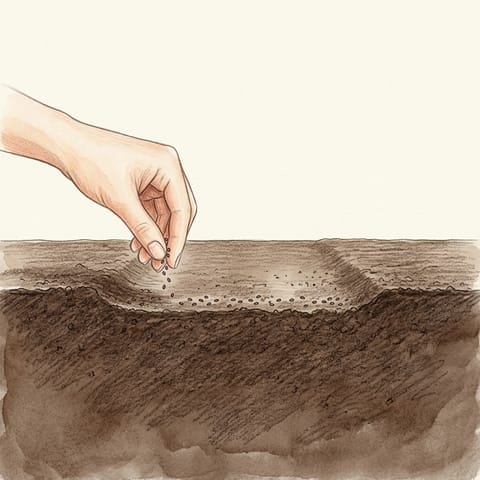 SowSeeds on the surface, barely coveredUp in 7–10 days
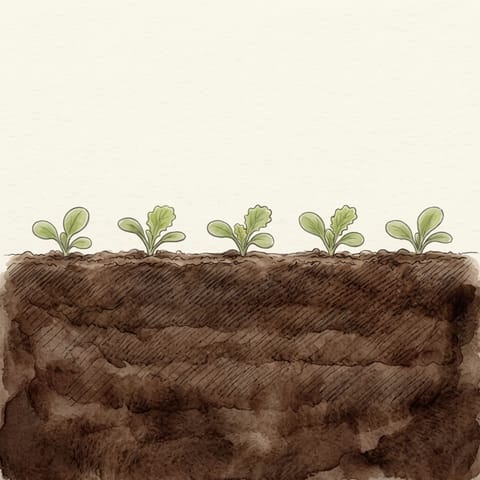 SeedlingFirst true leaves showAbout 2 weeks
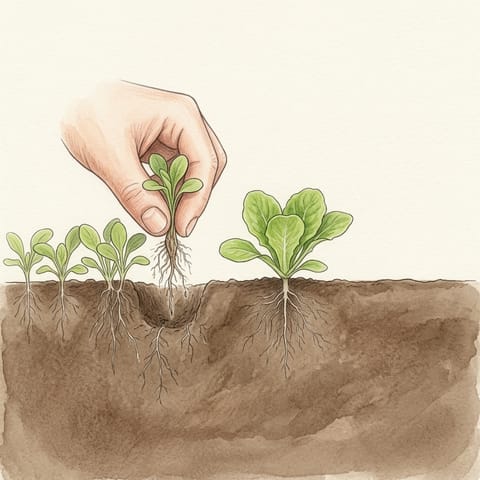 ThinOne plant left with room to growAbout 3 weeks
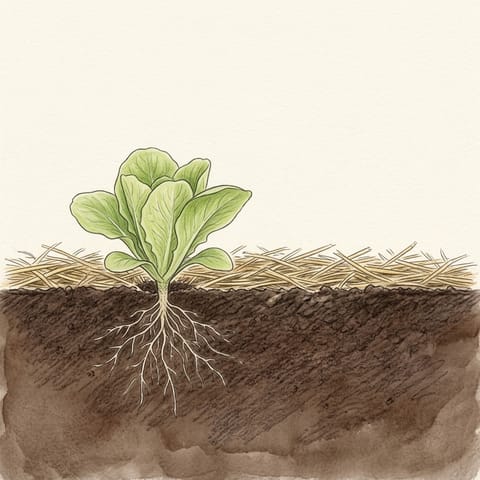 MulchStraw keeps the roots cool3–4 weeks
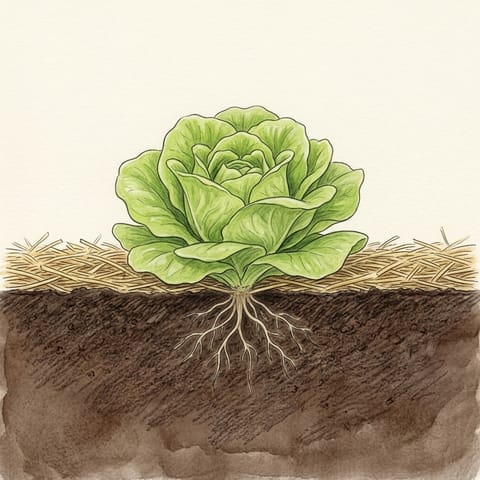 GrowLeaves fill out into a rosette4–6 weeks
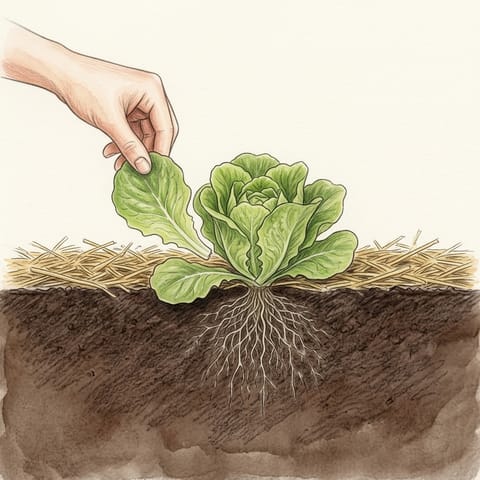 Pick leavesOuter leaves, a few at a time5–8 weeks
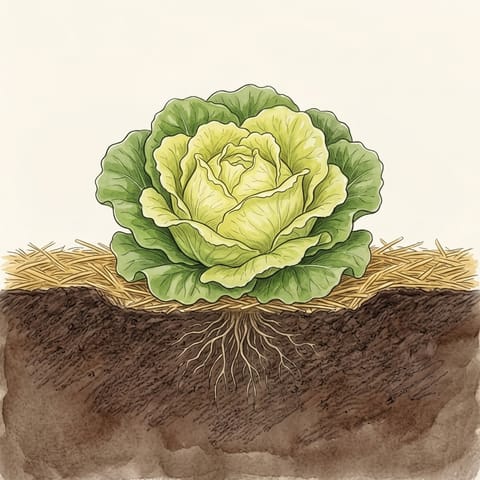 HeartInner leaves fold into a firm heart7–10 weeks
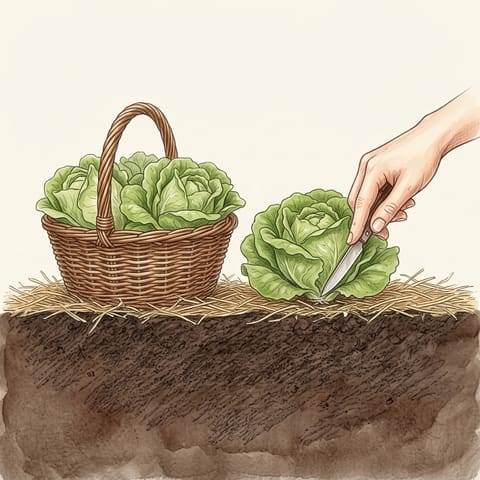 CutWhole head cut at the base8–12 weeks
Times run from sowing and vary with the variety and the weather. Loose-leaf kinds are ready first; crisp, iceberg-type hearts take the longest. Planted seedlings are a few weeks ahead.
Growing it, step by step
Is it right for you?
- Lettuce likes mild weather: days around 13–18°C (55–65°F). It is quick, so a short cool season is enough: loose-leaf kinds can be picked about four weeks after sowing.
- It takes light frost. Heat is the problem: above about 24°C (75°F), or as summer days grow long, it bolts. It sends up a flower stalk and the leaves turn bitter.
- It needs little room and copes with part shade, about four hours of sun. It grows well in pots at least 30 cm (12 in) wide and deep.
When to plant
Sow once the soil is at least 5°C (40°F). Seedlings come up in 7–10 days, but in soil above about 25°C (77°F) the seed sprouts poorly or not at all. Lettuce takes light frost, so sowing can start two to three weeks before the last frost, with seedlings planted out around it.
Cold winters: sow from early spring and again from late summer; fleece or a cold frame stretches both ends. Mild climates: sow from spring to autumn, and through winter where frosts are light. Give summer sowings afternoon shade. Hot or subtropical places: sow from autumn to spring; summer is usually too hot. Tropics: the cooler, drier months, with loose-leaf kinds in a little shade.Prepare the bed
- A sunny spot, with light shade from hot afternoon sun. Fertile, well-drained soil that holds moisture: dig in plenty of compost before sowing.
- Slightly acid to neutral soil suits it, pH 6.0–7.0. See soil pH.
- Rake the surface fine and level. The seed is tiny and needs close contact with the soil.
- Avoid a bed that grew lettuce last year. Downy mildew can carry over in the soil.
Sow and plant
- Sow thinly on the surface and barely cover, 5 mm (¼ in) deep at most: light helps the seed sprout. Sow direct in rows 30 cm (12 in) apart, or in trays.
- In hot weather, sow in the cool of the evening, water with cold water and shade the row until the seedlings are up.
- Plant seedlings at four to six true leaves, at the same depth they grew in the tray: hearting kinds 25–30 cm (10–12 in) apart, loose-leaf kinds 10–15 cm (4–6 in).
- For a steady supply, sow a short row every two to three weeks instead of one big sowing.
Get it started
- Keep the surface moist with a fine spray until the seedlings are up, then water daily for the first three weeks or so. Water new transplants daily for their first week.
- Thin when seedlings have three or four true leaves: hearting kinds to 25–30 cm (10–12 in), loose-leaf kinds to 10–15 cm (4–6 in). Eat the thinnings.
- Guard against slugs and snails from the day the seedlings come up: check at dusk after rain, and use barriers or traps. Young lettuce can vanish overnight.
Keep it growing
- Water: the roots are shallow, so water little and often to keep the soil evenly moist. Water at the base, in the morning: evening watering draws slugs and grey mould. In hot weather water daily, or the leaves turn bitter and it bolts.
- Mulch: once seedlings are 5–8 cm (2–3 in) tall, spread fine straw or compost about 5 cm (2 in) deep to keep the soil cool and moist. Keep it off the stems.
- Shade: in hot weather, shade cloth or a taller crop on the sunny side slows bolting. Kinds sold as slow to bolt help too.
- Feed: compost dug in before sowing is enough. Extra feed makes soft growth that aphids and slugs love. In pots or poor soil, a liquid feed every two weeks from two to three weeks after the seedlings come up, stopping once hearts start to firm.
- Weed and tidy: pull weeds by hand or hoe very shallowly: the roots sit near the surface and lettuce can't compete. Pull off yellowing lower leaves before they rot.
Watch for problems
The common ones, with a Garden help page each where there is one:
Harvest
- Leaves: start once they are about 10 cm (4 in) long. Pick a few outer leaves from each plant and leave the centre to keep growing.
- Or cut the whole plant about 2.5 cm (1 in) above the soil. The stump often regrows for a second, smaller picking.
- Hearting kinds: cut at the base once the heart has formed and feels firm when gently pressed.
- A flower stalk rising from the centre means it is finishing, and the leaves soon turn bitter: pick the lot.
After harvest
- Keep picked lettuce in a bag in the fridge crisper. Crisp, iceberg-type heads keep about two weeks; soft butterhead kinds are best eaten fresh.
- Pull out plants once they finish or bolt. Bin any with downy mildew rather than composting them.
- Next in that bed: almost anything. Lettuce is quick, so it often fills a gap before or between slower crops such as tomatoes or broccoli. Grow the next lettuce somewhere else.
Sources
- RHS: How to grow lettuces
- Utah State University Extension: How to grow lettuce in your garden
- Clemson Cooperative Extension: Lettuce
- Gardening Australia: Lettuce
Facts checked Wednesday 21 October 2026. General guidance only: local advice comes first.