Home › Vegetables › Potatoes
Vegetables
Growing potatoes
Solanum tuberosum. A cool-season crop grown from seed potatoes, not seed. It likes mild days, steady moisture and loose soil, and it can't take frost or real heat. These steps work anywhere: they go by soil and weather, not by month.
How a potato grows
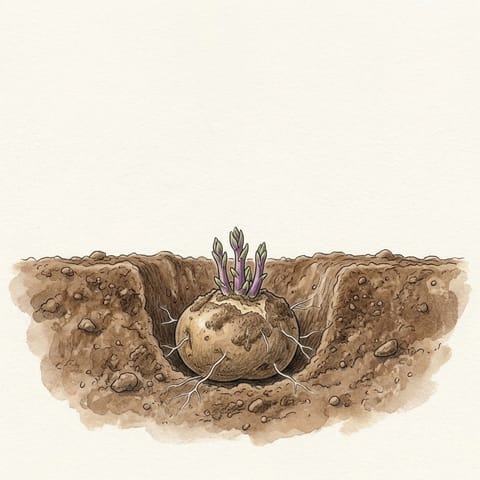 PlantSeed potato in the ground, sprouts upDay 0
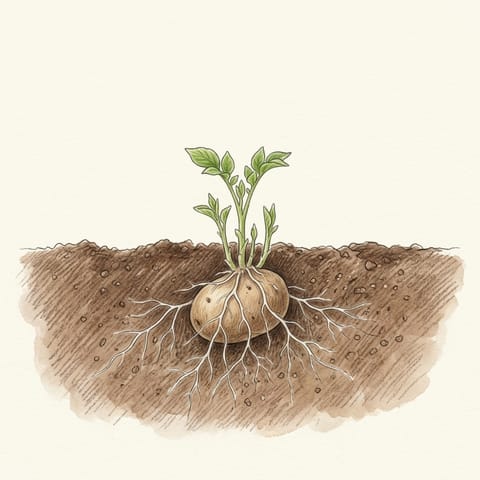 ShootsRoots spread, shoots break the surface2–4 weeks
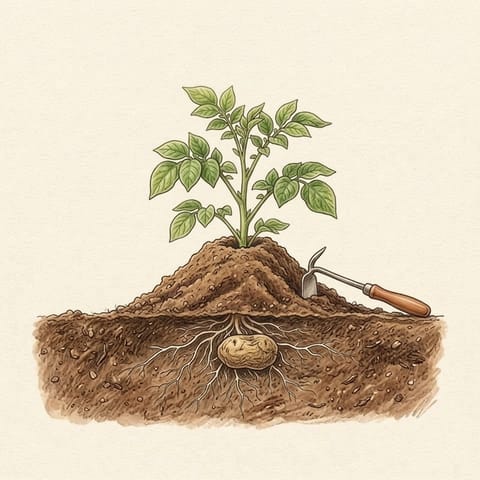 Earth upSoil drawn up around the stemsAt about 20 cm (8 in) tall
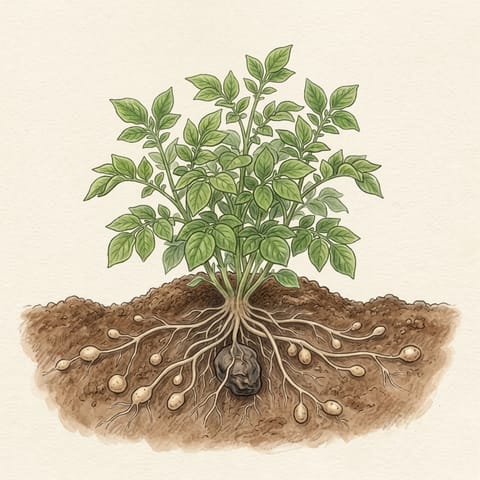 GrowRunners spread underground4–8 weeks
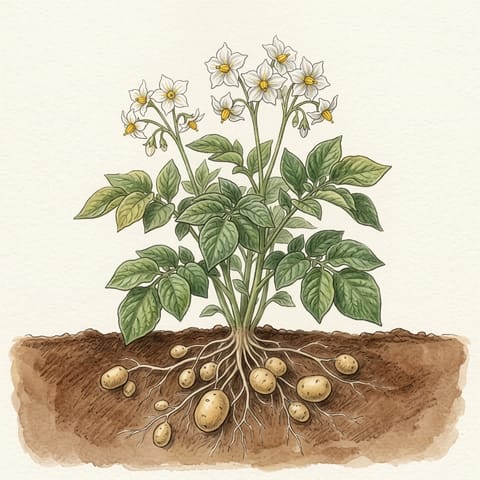 FlowerSmall potatoes form below8–12 weeks
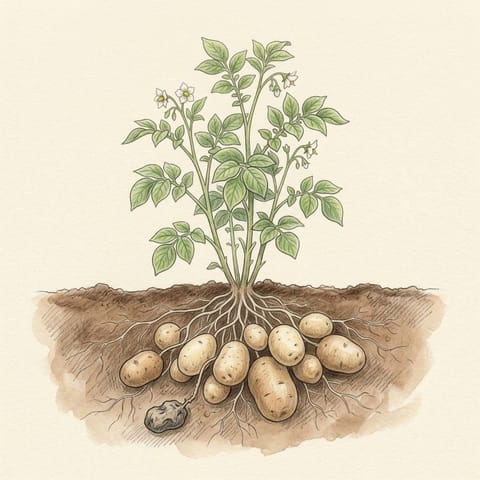 SwellPotatoes grow bigger10–16 weeks
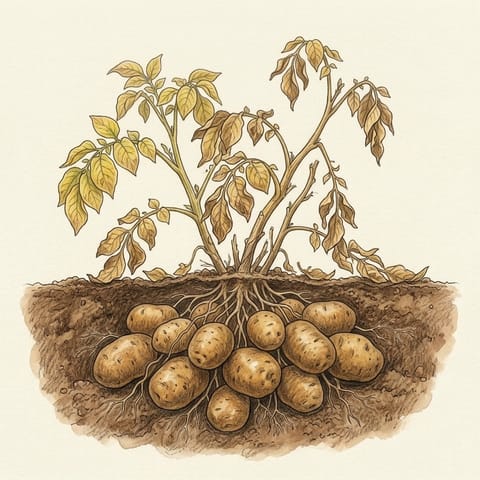 Die backLeaves yellow, skins firm up14–20 weeks
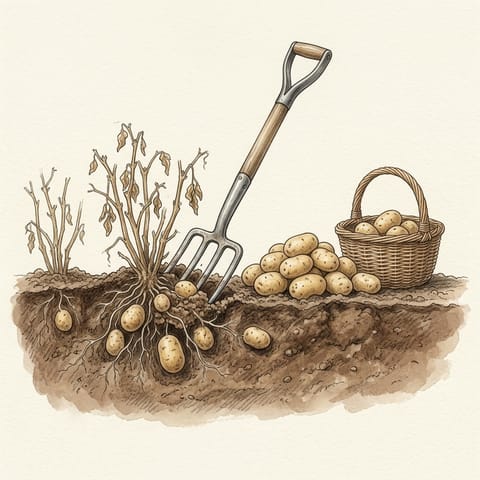 DigLift on a dry day10–14 days after die-back
Times run from planting and vary with the variety and the weather. Early varieties are quicker; main-crop varieties take the longest.
Growing it, step by step
Is it right for you?
- Potatoes need a run of mild weather: days around 15–20°C (59–68°F) for about three to four months.
- Frost kills the leaves. Heat stops potatoes forming once the soil is above about 27°C (80°F), and nights above 20°C (68°F) mean fewer.
- Each plant needs about 30 cm (12 in) of row. They also grow well in deep bags or tubs, at least 40 litres (10 gallons) each.
When to plant
Plant once the soil at planting depth is at least 7°C (45°F), and so the shoots come up after the last frost. Shoots take two to four weeks to appear, so planting a little before your last frost is usually fine.
Cold winters: one crop, planted in spring. Mild climates: a spring crop and a late-summer crop. Hot or subtropical places: plant in the cooler months, autumn to winter. Tropics: the cool, dry season or the highlands.Prepare the bed
- Loose, deep, well-drained soil in full sun. Dig in compost before planting.
- Slightly acid soil suits them best, pH 6.0–6.5, and they cope down to 5.0. Don't add lime or fresh manure just before planting: both make potato scab worse. See soil pH.
- Avoid beds that grew potatoes, tomatoes, capsicum or eggplant in the last three years. They share the same diseases.
Plant
- Use certified seed potatoes. Supermarket potatoes can carry disease or be treated to stop them sprouting.
- For an earlier crop, sprout them first: lay them in a cool, light place for four to six weeks until short, sturdy shoots form.
- Plant 10–15 cm (4–6 in) deep, sprouts facing up, 30 cm (12 in) apart, in rows 70 cm (28 in) apart. Large seed potatoes can be cut into pieces with two or three eyes each; let the cut sides dry for a few days first.
Get it started
- Give little water until the shoots show. Seed potatoes rot in soil that stays wet.
- If frost is forecast after the shoots appear, draw soil over them or cover them with fleece for the night.
Keep it growing
- Earth up: when the shoots are about 20 cm (8 in) tall, draw soil up around them so only the top 10 cm (4 in) shows. Do it again about three weeks later, until the ridge is 20–30 cm (8–12 in) high. Straw works instead of soil.
- Water: from flowering, keep the soil evenly moist with a deep soak about once a week. Uneven watering gives knobbly, cracked potatoes.
- Feed: good soil needs little or nothing. On poor soil, one feed at the second earthing up is enough. Too much feed grows leaves instead of potatoes. In bags or tubs, a liquid feed every two weeks from about six weeks.
Keep them covered. Light turns potatoes green, and the green parts are poisonous. Never eat green potatoes or green patches.Watch for problems
The common ones, with a Garden help page each where there is one:
Harvest
- New potatoes: once the flowers open, about 8–12 weeks after planting, feel into the side of the ridge and take a few small ones.
- Main crop: wait until the leaves turn yellow and die back. Cut the stems at ground level, then leave the potatoes in the ground 10 days to two weeks so their skins firm up. Where potato tuber moth is about, lift them as soon as the skins are firm: the longer they sit, the more it can reach them.
- Dig on a dry day with a garden fork, starting from the outside of the row so you don't spear them.
After harvest
- Let them dry for a few hours out of the sun and brush off the soil. Don't wash potatoes you're storing.
- Store them dark, cool and airy, around 5–10°C (40–50°F), in paper or hessian sacks. Check them now and then and remove any soft ones.
- Buy fresh seed potatoes each year rather than replanting your own: diseases build up.
- Next in that bed: beans, peas or leafy greens. Keep tomatoes, capsicum and eggplant out for three years.
Sources
- RHS: How to grow potatoes
- University of Minnesota Extension: Growing potatoes in home gardens
- University of Maryland Extension: Growing potatoes in a home garden
- Gardening Australia: Hot potato tips
Facts checked Wednesday 21 October 2026. General guidance only: local advice comes first.