Home › Vegetables › Peas
Vegetables
Growing peas
Pisum sativum. A cool-season climber grown for its sweet pods and peas, sown where it is to grow. It likes mild weather and moist, well-drained soil, and takes frost while young, but heat stops it cropping. These steps work anywhere: they go by soil and weather, not by month. Also called English peas (US, for shelling peas), mangetout (UK, for snow peas), snap peas (US, for sugar snaps).
How a pea grows
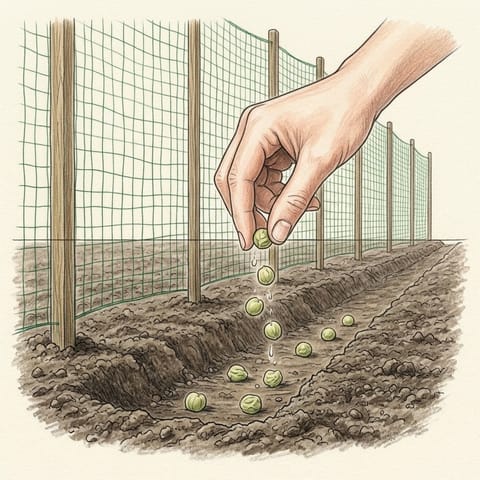 SowSeeds in a trench, the net already upUp in 1–2 weeks
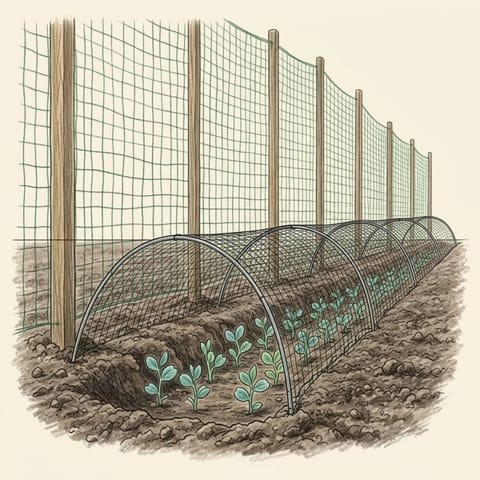 ShootsShoots up, netted against birds1–3 weeks
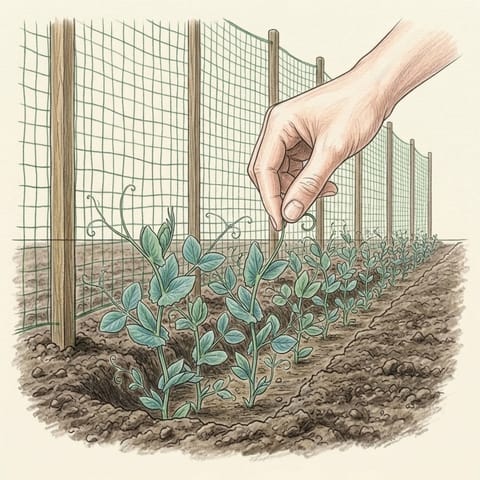 ClimbTendrils led onto the net3–5 weeks
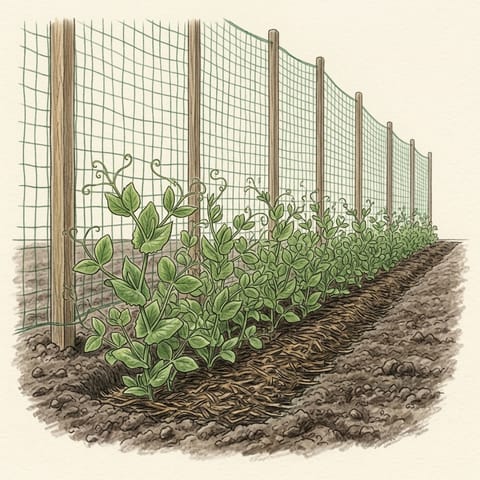 GrowClimbing fast, mulch goes down4–7 weeks
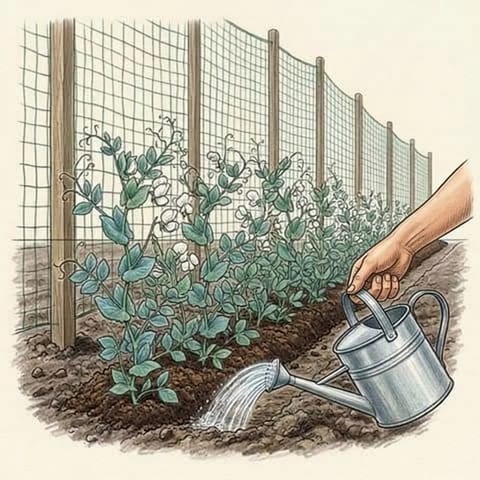 FlowerWhite flowers open: soak the roots6–9 weeks
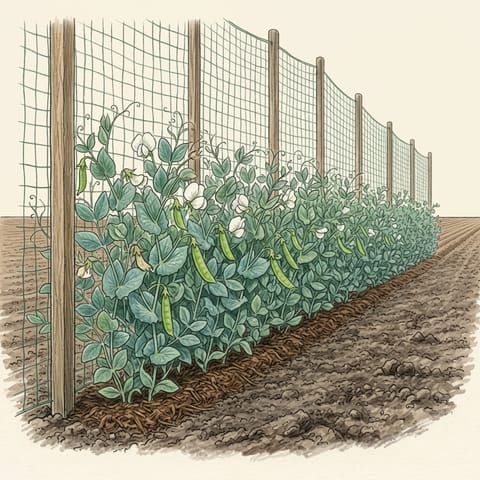 PodsFlat pods follow the flowersAbout a week after flowering
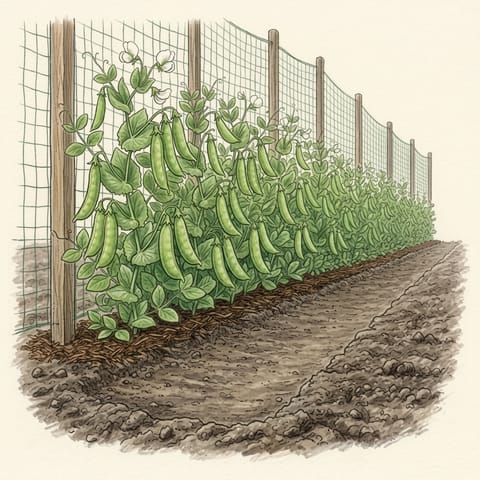 FillPeas swell inside the podsAbout 3 weeks after flowering
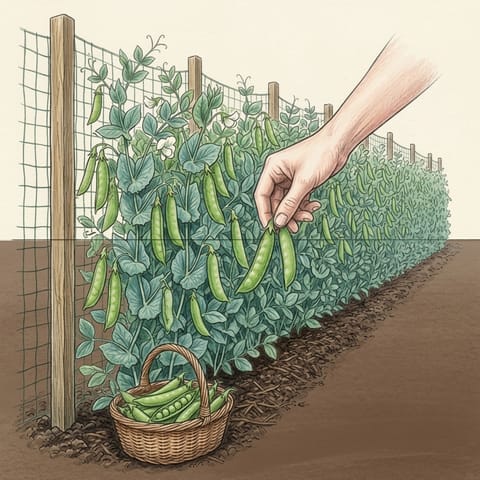 PickLowest pods first, every 2–3 daysFor 3–6 weeks
Times run from sowing and vary with the variety and the weather: cold spells slow everything down. Snow peas are picked first, while the pods are still flat; sugar snaps once the pods turn round; shelling peas last, about three weeks after flowering.
Growing it, step by step
Is it right for you?
- Peas like cool, mild weather, with days around 13–18°C (55–65°F). From sowing to the first pods takes about two to three months.
- Young plants take frost, but frost damages the flowers and young pods. Heat ends the crop: above about 27°C (80°F) the flowers drop and the plants stop cropping.
- Three kinds grow the same way: shelling (garden) peas, eaten shelled; snow peas, eaten whole while the pods are flat; and sugar snaps, eaten whole once the pods are round and crisp.
- Tall kinds climb to about 1.8 m (6 ft) and need netting. Dwarf kinds stay short, need only twiggy sticks, and suit pots at least 45 cm (18 in) wide.
When to plant
Sow once the soil is at least 5°C (40°F) and dry enough to work: young pea plants take frost. Seed comes up in one to two weeks in soil around 13–18°C (55–65°F), more slowly in cold soil, where it rots if the soil stays wet. Time sowings so the plants flower after the hardest frosts and before the weather turns hot.
Cold winters: sow in early spring, as soon as the soil can be worked, and again in late summer for a smaller autumn crop. Mild climates: sow from autumn to early spring, timed so the plants flower after the hardest frosts and before the heat. Hot or subtropical places: sow in autumn and winter, so they crop before the weather warms. Tropics: the cool, dry season or the highlands.Prepare the bed
- Full sun and well-drained soil. Dig in compost a few weeks before sowing. Peas make their own nitrogen, so they need no fertiliser.
- Slightly acid to neutral soil suits them, pH 6.0–7.0. Very acid soil holds them back. See soil pH.
- Heavy, wet ground rots the seed and the roots. On heavy soil, sow in a raised bed.
- Put the supports in before sowing: netting about 1.8 m (6 ft) tall on sturdy posts for tall kinds, twiggy sticks for dwarf ones.
- Choose a bed where peas or beans didn't grow in the last three years. Root rots and wilt build up in the soil, and blight lives on in old pea plants.
Sow
- Sow straight into the bed where they are to grow.
- Sow 2.5–5 cm (1–2 in) deep and 5 cm (2 in) apart, in rows 45 cm (18 in) apart. Or sow a double row, about 15 cm (6 in) apart, with the net between them.
- Cover, firm the soil gently and water once.
- Cover the row with netting straight away: birds pull up the seedlings. Mice also dig up pea seed.
- For a steady supply, sow another row every two to three weeks while the weather stays cool.
Get it started
- After that first watering, don't water again until the shoots show, unless the soil dries out. Wet, cold soil rots pea seed.
- Keep the bird netting over the row until the plants are growing well.
- When the shoots are about 10 cm (4 in) tall, lead their tendrils onto the net or sticks. After that they climb on their own.
- In damp weather, guard the seedlings against slugs and snails.
Keep it growing
- Water: once they are up, water only in dry spells: a good soak about once a week, at the soil rather than the leaves, which helps against powdery mildew. The watering that matters most comes as the flowers open: soak the roots then, and again two weeks later if it is dry, so the pods fill.
- Climb: check every week or so that the stems are holding on, and tuck strays back onto the net. In windy spots, make sure the posts are firm: a full row of peas is heavy.
- Mulch: about four weeks after sowing, once the plants are growing well, spread compost about 5 cm (2 in) deep along the row to keep the roots cool and moist. Where slugs are bad, wait until the plants are bigger.
- Feed: none in the ground: peas make their own nitrogen, and extra feed grows leaves instead of pods. In pots, a high-potash liquid feed every two weeks from the first flowers.
- Weed: pull weeds by hand or hoe very shallowly, above all while the plants are small: pea roots sit near the surface.
Watch for problems
The common ones, with a Garden help page each where there is one:
Powdery mildewDowny mildewRoot rotDamping-offFusarium wiltMosaic virusBacterial blightAphidsThripsPea mothSlugs and snailsCutwormsBirdsMiceHarvest
- Shelling peas: pick when the pods are plump and well filled but still bright green, before they turn dull or waxy and the peas go starchy. Taste one to check.
- Snow peas: pick while the pods are flat, about 7.5–10 cm (3–4 in) long, with the peas just showing as small bumps.
- Sugar snaps: pick once the pods are round and plump but still crisp, and eat them whole. Pull off any string along the seam first.
- Pick every two to three days, the lowest pods first. Pods left to ripen on the plant stop it flowering.
After harvest
- Chill peas as soon as they are picked and keep them in a bag in the fridge. They lose their sweetness fast, so eat them within a few days, and freeze any extra.
- When the plants finish, cut them off at ground level and leave the roots in the soil to rot down. Compost the tops, but bin any diseased plants.
- Next in that bed: cabbage family crops or leafy greens. Keep peas and beans out for three years.
Sources
- RHS: How to grow peas
- Utah State University Extension: How to grow peas in your garden
- Iowa State University Extension: Growing peas in Iowa
- UC IPM: Cultural tips for growing peas
- UMass Extension: Peas, growing tips
Facts checked Friday 23 October 2026. General guidance only: local advice comes first.