Home › Vegetables › Celery
Vegetables
Growing celery
Apium graveolens var. dulce. A slow, cool-season crop grown for its crisp stalks, raised from seed in trays and planted out once the nights are mild. It needs rich soil and water all season, and cold spells make young plants run to seed. These steps work anywhere: they go by soil and weather, not by month.
How celery grows
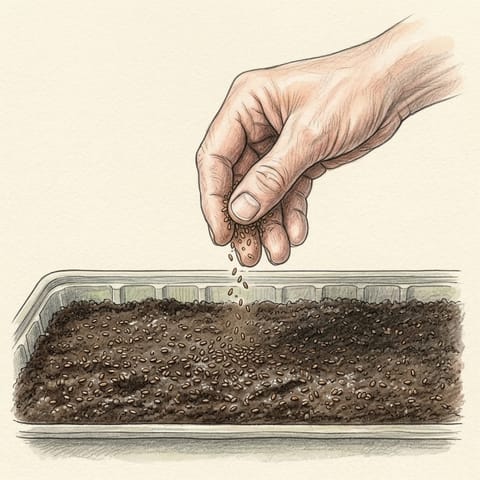 SowSeed on the surface, in the lightUp in 2–3 weeks
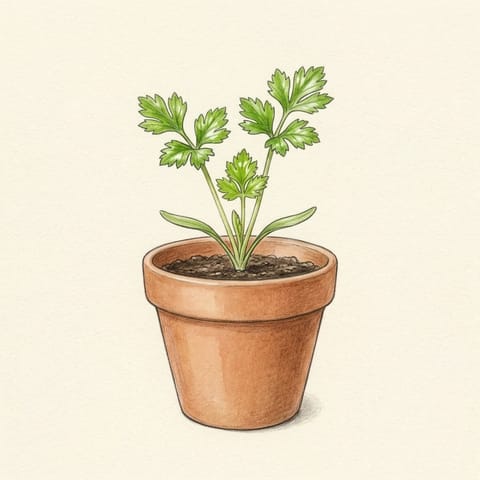 SeedlingSmall, toothed true leaves form4–6 weeks
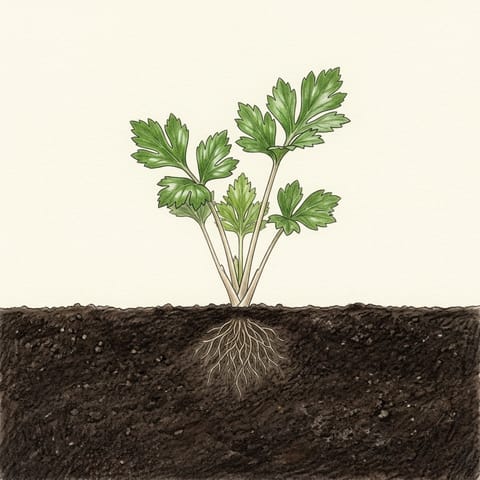 Plant outCrown at soil level, not buriedAbout 10 weeks from sowing
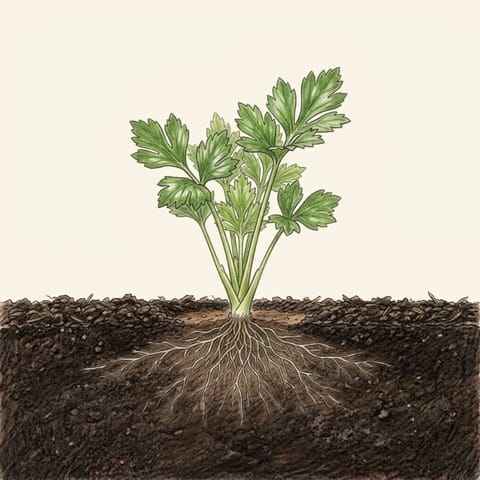 MulchCompost spread, clear of the stalks1 week after planting
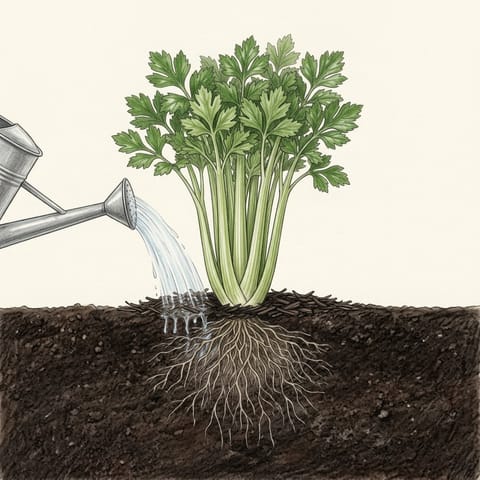 GrowStalks thicken; water often4–8 weeks after planting
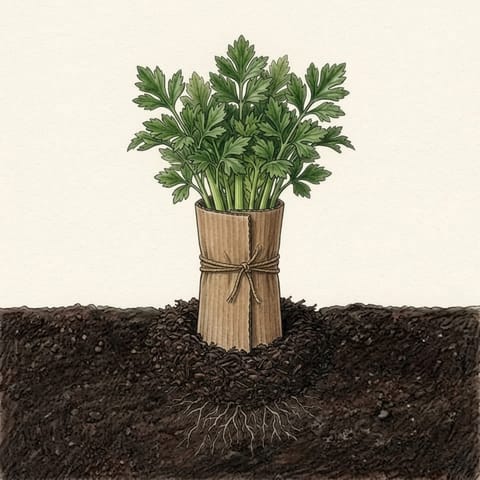 BlanchOptional: a collar, top third clear3–4 weeks before picking
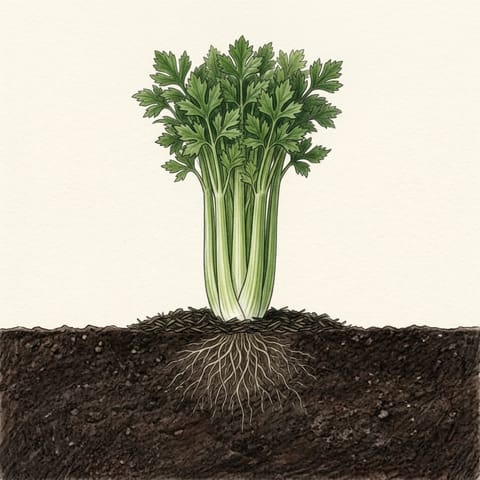 Full sizeA tight bunch of crisp stalks12–16 weeks after planting
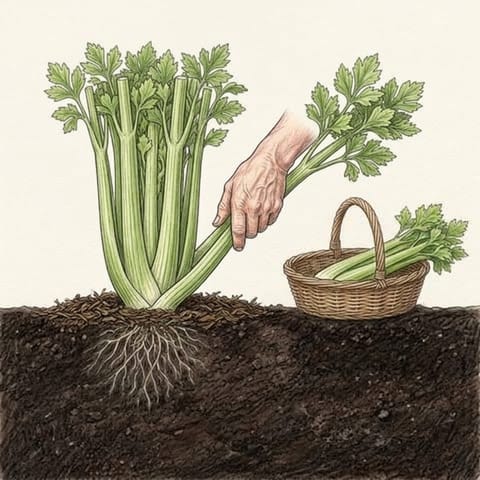 PickOuter stalks, or the whole plantFor several weeks
Times run from sowing until planting out, then from planting out, and vary with the variety and the weather. Seedlings you buy skip the first ten weeks.
Growing it, step by step
Is it right for you?
- Celery needs a long, mild spell: about three to four months after planting out, with days around 15–21°C (60–70°F).
- Cold is the main risk. Young plants that sit below about 10°C (50°F) for long often run to seed later, and frost harms them. Hot weather above about 24°C (75°F) makes the stalks tough and bitter.
- It is thirsty, with shallow roots, and needs watering all season. Self-blanching (green) kinds are the easiest: grown in a block, they need nothing more. It also grows well in large pots, with plants about 23 cm (9 in) apart.
When to plant
Sow seed in trays about ten weeks before you plan to plant out, kept at 15°C (59°F) or more: it is slow, and can take up to three weeks to come up. Plant out after the last frost, once the soil is at least 10°C (50°F) and nights stay above about 10°C (50°F).
Cold winters: sow indoors in early spring, plant out once nights are mild, and pick before the first frost. Mild climates: plant out in spring, and again in late summer for autumn and winter stalks. Hot or subtropical places: plant in autumn so it grows through the cooler months, away from the summer heat. Tropics: the cooler, drier months, or the highlands.Prepare the bed
- A sunny spot with fertile soil that holds moisture. Avoid places that dry out fast. Dig in plenty of compost or well-rotted manure before planting.
- Slightly acid to neutral soil suits it, pH 6.0–7.0. See soil pH.
- For trench kinds, dig a trench about 40 cm (16 in) wide and 30 cm (12 in) deep, and refill it to 10 cm (4 in) below the surface with compost mixed into the soil.
- Avoid a bed that grew celery, celeriac, carrots, parsnips or parsley in the last few years. They are relatives and share pests and diseases.
Sow and plant
- Sow thinly on the surface of trays or modules of fine seed-raising mix. Celery seed needs light to sprout: cover it very lightly, if at all, and keep it moist.
- Keep the trays at 15°C (59°F) or more. Once the seedlings can be handled, move each one to its own small pot, or thin to one per module. Keep them above 10°C (50°F): chilled seedlings run to seed later.
- Harden them off for a week or so, then plant out about ten weeks after sowing, once they have several true leaves. Plant at the same depth they grew in the pot, with the crown at the soil surface, not buried.
- Plant self-blanching kinds in a block, 25 cm (10 in) apart each way, so the plants shade each other's stalks, or in rows 40 cm (16 in) apart. Trench kinds go in a single row along the trench, 30–45 cm (12–18 in) apart.
- Seedlings bought ready to plant save the slow start.
Get it started
- Water in well, then water daily for the first two weeks or so until the plants settle.
- If a cold night is forecast soon after planting, cover them with fleece or a cloche. A cold spell now can make them run to seed later.
- Guard young plants against slugs and snails: they favour celery.
Keep it growing
- Water: never let the soil dry out. A deep soak at the base about three times a week in dry weather, more often when it is hot, about 2.5–5 cm (1–2 in) of water a week in all. Dry soil gives stringy, strong-tasting stalks and makes plants run to seed; uneven watering can blacken the heart.
- Mulch: about a week after planting, spread compost or well-rotted manure about 5 cm (2 in) deep around the plants. Leave a gap around the stalks so they don't rot, and top it up as it breaks down.
- Feed: compost-rich soil does most of the work. For steady growth, which gives the sweetest stalks, a balanced liquid feed every two weeks from about three weeks after planting out helps, most of all on poor soil. Ease off when growth slows in autumn. In pots, a liquid feed every two weeks.
- Weed and tidy: celery grows slowly and loses out to weeds. Pull them by hand near the plants, or hoe very shallowly: the roots are close to the surface. Pick off spotted or yellow leaves as you see them.
- Blanch (optional): self-blanching kinds in a block need nothing. For paler, milder stalks, about three to four weeks before picking, once the stalks are about 30 cm (12 in) tall, wrap a collar of cardboard or newspaper around them, leaving the top third in the light. Trench kinds: draw soil up around the stalks about 8 cm (3 in) at a time as they grow, until only the leaves show.
Wear gloves. Handling celery leaves and stalks can bring on a skin rash. Wear gloves and long sleeves when picking or trimming a lot of it.Watch for problems
The common ones, with a Garden help page each where there is one:
Slugs and snailsAphidsCelery leaf minerCarrot flyCutwormsCelery leaf spotPowdery mildewFusarium wiltBlackheartBoltingHarvest
- Start picking about 12–16 weeks after planting out. Once the outer stalks are about 30 cm (12 in) long, take a few at a time with a sideways pull at the base, leaving the centre to keep growing.
- Or cut the whole plant at the base once it is a good size, about 7.5 cm (3 in) across at the bottom. The inner stalks are the most tender.
- Pick before the stalks turn stringy or hollow and the leaves yellow. Finish self-blanching kinds before the first frost. Trench kinds stand into early winter, covered with fleece in hard frost.
- A flower stalk rising from the centre means it is running to seed and the stalks turn bitter. Pick the rest straight away.
After harvest
- Keep celery in a bag in the fridge and use it within two weeks.
- Pull plants out once they finish. Compost healthy ones; bin any with spotted leaves.
- Next in that bed: beans, peas or cabbage family crops. Keep celery, celeriac, carrots, parsnips and parsley out for a few years.
Sources
- RHS: How to grow celery
- Utah State University Extension: Celery in the garden
- Gardening Australia: Crunch time
- Texas A&M AgriLife Extension: Celery
- RHS: Carrot fly
Facts checked Friday 23 October 2026. General guidance only: local advice comes first.