Home › Vegetables › Spring onions
Vegetables
Growing spring onions
Allium fistulosum. A quick, easy crop grown for its slender green leaves and white stems, pulled young before a proper bulb forms. It wants sun, a weed-free row and soil that stays moist, and a small sowing every couple of weeks keeps it coming for months. These steps work anywhere: they go by soil and weather, not by month. Also called scallions (US), green onions (US, Canada), salad onions (UK), bunching onions or Welsh onions (for the kinds that never make a bulb), shallots (New South Wales and parts of Australia; true shallots are a different plant, grown for clusters of small bulbs).
How a spring onion grows
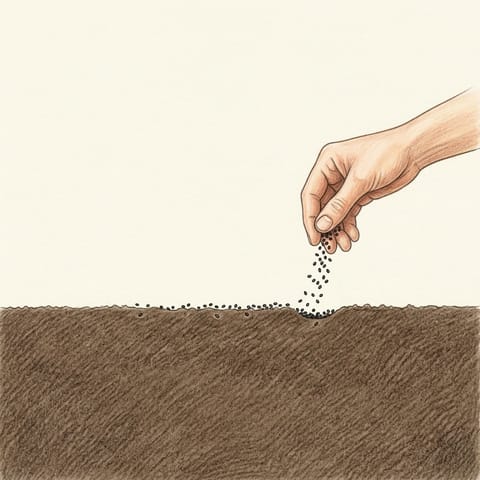 SowSeeds thinly in a shallow rowDay 0
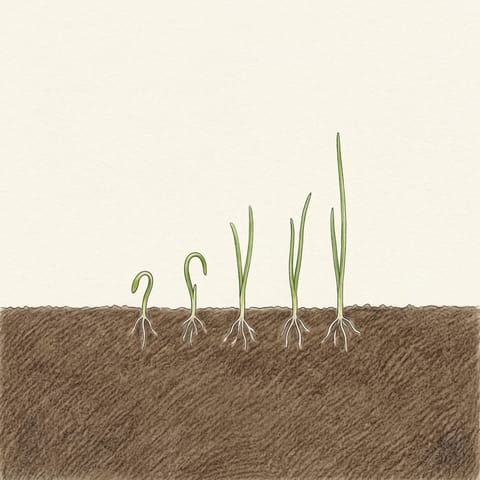 SeedlingsThin, grass-like leavesUp in 1–3 weeks
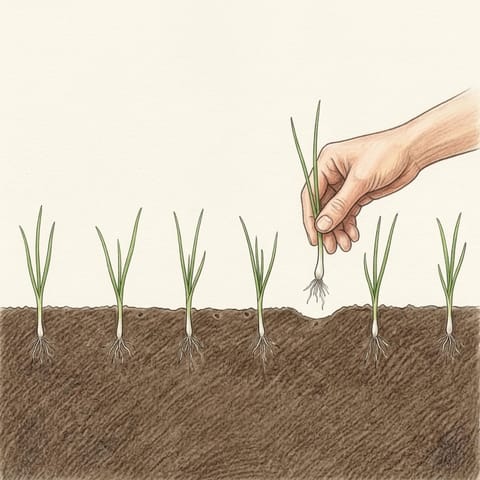 ThinThinned to 2.5 cm (1 in) apart2–4 weeks
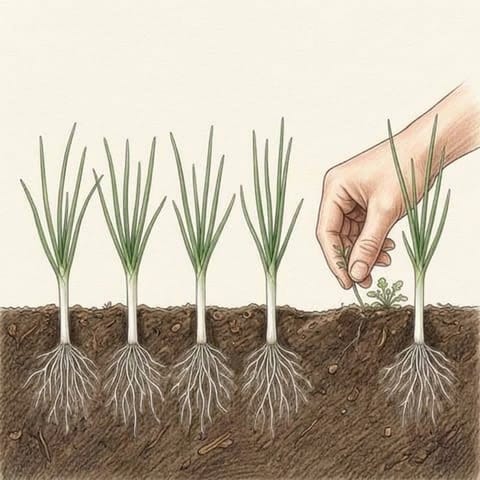 WeedWeeds pulled by hand while small3–5 weeks
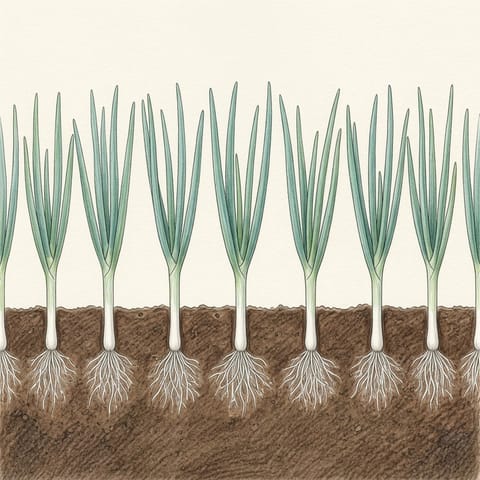 GrowLeaves lengthen, white stems thicken5–7 weeks
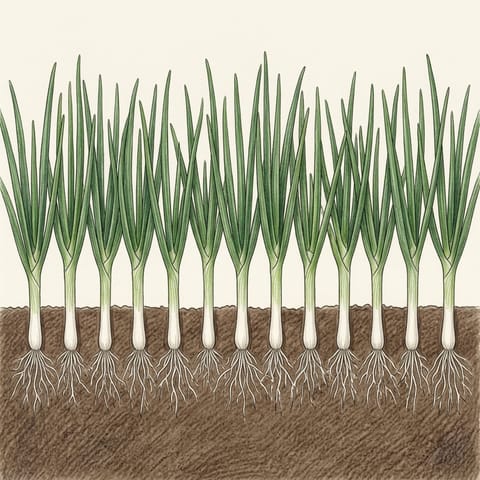 Ready15–20 cm (6–8 in) tallAbout 8 weeks
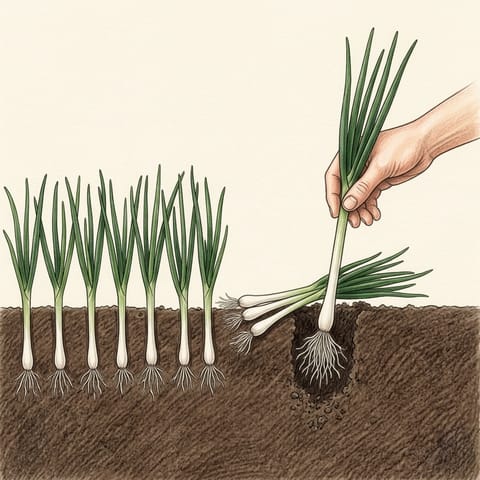 PullPulled as needed, a few at a timeOver several weeks
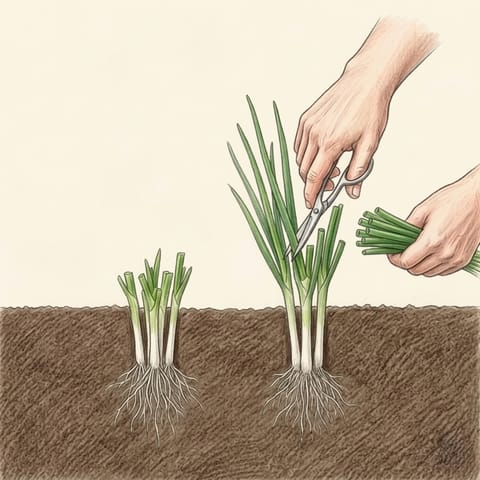 Cut againBunching kinds: leaves cut, they regrowEvery few weeks
Times run from sowing and vary with the kind and the weather; seedlings bought or raised in trays are ready about two weeks sooner. Growth is slowest in cold weather.
Growing it, step by step
Is it right for you?
- Spring onions are one of the quickest and easiest crops: about two months from sowing, in a short row, a pot or between slower crops. They take frost, and in mild places they grow most of the year.
- Two kinds are sold under the name. Bunching or Welsh onions never make a proper bulb and can be cut again or left to grow into a clump. Others are common onions, of quick white kinds, pulled young while the bulb is still small.
- Because they are eaten before a bulb forms, the day length that matters so much for bulb onions matters far less here: most kinds grow well almost anywhere.
- They grow well in pots at least 30 cm (12 in) across and 15 cm (6 in) deep. Pots dry out faster than beds, so water them more often.
When to plant
Sow straight into the bed once the soil is at least 10°C (50°F), or in trays to plant out later. Then sow a short row every two weeks or so, for a steady supply rather than a glut. Seedlings take frost, so they can go out while the weather is still cool. Where winters are mild, hardy kinds sown as summer ends stand through the cold and are ready early the next spring.
Cold winters: sow from spring, once the soil warms, until late summer. Hardy kinds sown at the end of summer stand through winter under fleece or a cloche. Mild climates: sow little and often for most of the year, missing only the coldest weeks. Hot or subtropical places: sow from autumn through to spring. In midsummer they grow slowly and need more water and a little afternoon shade. Tropics: the cooler, drier months suit them best, sown little and often.Prepare the bed
- A sunny, open spot with loose, well-drained soil. Dig in compost, but no fresh manure, and rake the soil fine for sowing.
- Slightly acid soil suits them, around pH 6.0–6.5. If a soil test shows it is more acid than that, add lime a few weeks before sowing. See soil pH.
- Weed the bed thoroughly first. Spring onions are small and slow to start, and can't compete with weeds.
- Avoid beds that grew onions, garlic, leeks or shallots in the last three or four years, and never sow where white rot has been.
Sow and plant
- Sow seeds thinly about 5 mm–1 cm (¼–½ in) deep, in rows 20 cm (8 in) apart, or scatter them in a wide band. They come up in one to three weeks.
- In trays or modules, sow a few seeds to each cell and plant out the little clump whole once it is growing strongly. Harden off seedlings raised indoors for a week first.
- Plant seedlings in a shallow furrow so the white part of the stem is covered, and firm the soil around them. Space them about 2.5 cm (1 in) apart, or small clumps 10 cm (4 in) apart.
- In a pot, scatter seed thinly over the mix and cover with about 1 cm (½ in) more.
Get it started
- Keep the soil moist, but not wet, until the seedlings are up and growing: about two weeks for seed, a week for planted seedlings.
- Thin seedlings to about 2.5 cm (1 in) apart, up to 5 cm (2 in) for thicker stems. Crowded rows are prone to mildew. The thinnings are good to eat.
- Two weeks after sowing or planting, sow or plant the next short row.
Keep it growing
- Weed: every two weeks or so, pull weeds by hand while they are small, and hoe shallowly between the rows. The thin leaves shade out nothing, so weeds soon smother young spring onions.
- Water: the roots are small and shallow, so water at the soil, not the leaves: a good soak about twice a week in dry spells. Keep the soil moist but never wet.
- Feed: none needed in soil dug with compost. In pots, a weak liquid feed every two or three weeks.
- Mulch: not needed: the plants grow close together and are pulled within a couple of months. Keep the soil clear of weeds instead.
- Flower stems: pull any plant that sends up a flower stem and eat it. Bunching kinds left to grow on make clumps that flower in their second year.
Watch for problems
The common ones, with a Garden help page each where there is one:
Harvest
- Start pulling when they are about 15–20 cm (6–8 in) tall and the white stems are about as thick as a pencil, about eight weeks from sowing. Larger ones are still good.
- Pull a few at a time as you need them, loosening the soil with a fork first if it is firm. Start with every other plant, so the rest have room to thicken.
- Bunching kinds can be cut instead: snip the leaves a few centimetres above the soil and they grow back several times.
After harvest
- Spring onions are best fresh. Trim the roots and keep them in a bag in the fridge for up to a week.
- A bunching clump left in the ground can be lifted and split into small pieces to replant.
- If white rot showed up (white fluffy mould on the base of the stems), bin those plants and keep the onion family out of that bed: it can last in the soil for 20 years or more.
- Next in that bed: the cabbage family, beans or peas. Keep spring onions, onions, garlic, leeks and shallots out for three or four years.
Sources
- RHS: How to grow salad onions
- Oregon State University Extension: Onions (bunching)
- Oregon State University: Green bunching onions
- Virginia Cooperative Extension: Onions, garlic and shallots
- Gardening Australia: Spring onions
Facts checked Friday 23 October 2026. General guidance only: local advice comes first.