Home › Vegetables › Parsnips
Vegetables
Growing parsnips
Pastinaca sativa. A slow, cool-season root crop, sown where it is to grow and left in the bed for months, and frost makes the roots sweeter. It wants deep, loose, stone-free soil and fresh seed, which is slow to come up. These steps work anywhere: they go by soil and weather, not by month.
How a parsnip grows
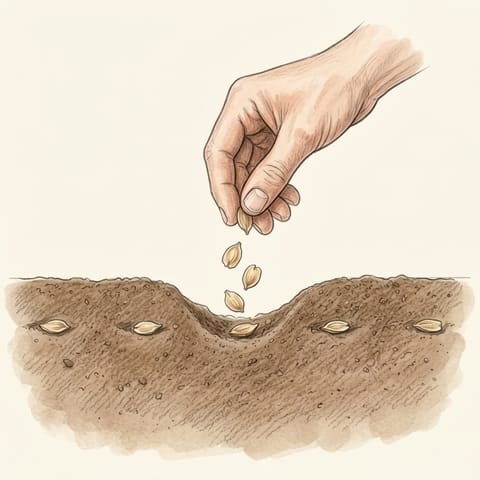 SowA few seeds at each spot, 1 cm deepDay 0
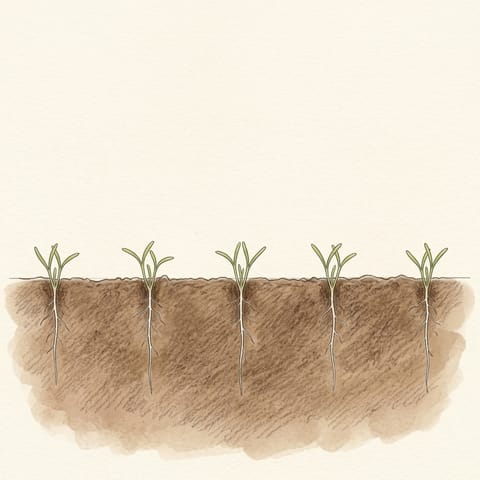 SeedlingsGrass-like seed leaves appearUp in 2–4 weeks
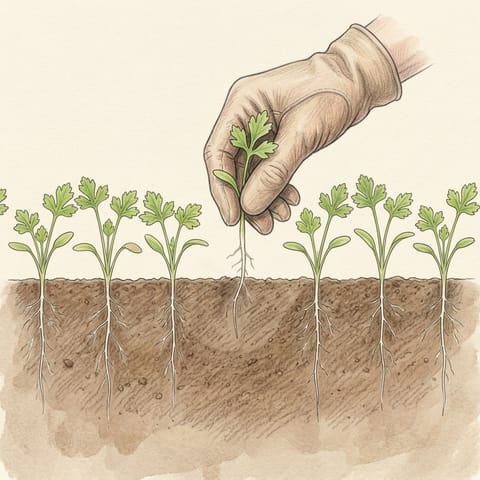 ThinOne or two kept at each spotAbout 5 weeks
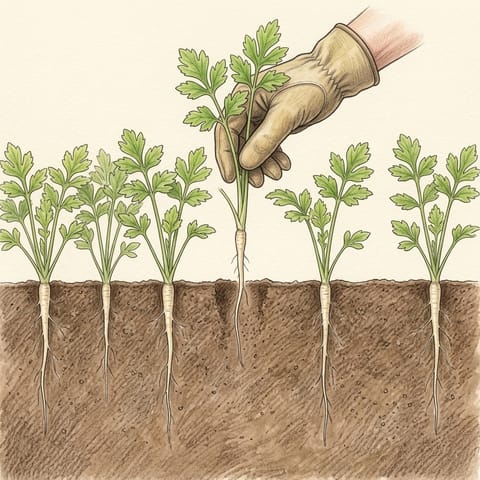 Thin againFinal spacing, 15 cm (6 in) apartAbout 8 weeks
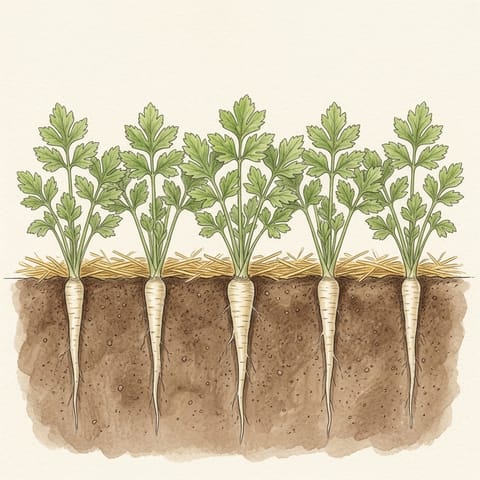 MulchStraw laid between the plantsAbout 9 weeks
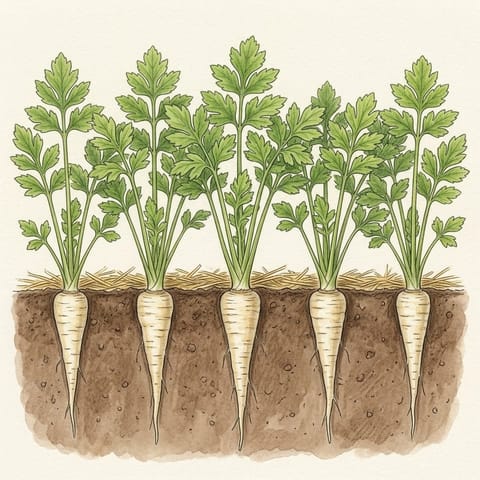 SwellRoots thicken and lengthen3–4 months
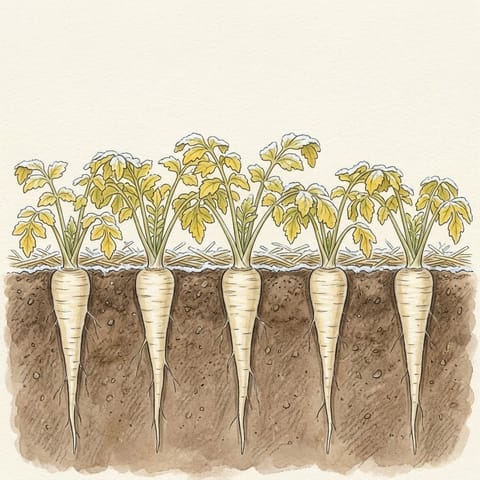 ReadyLeaves fade; frost sweetens the roots4–6 months
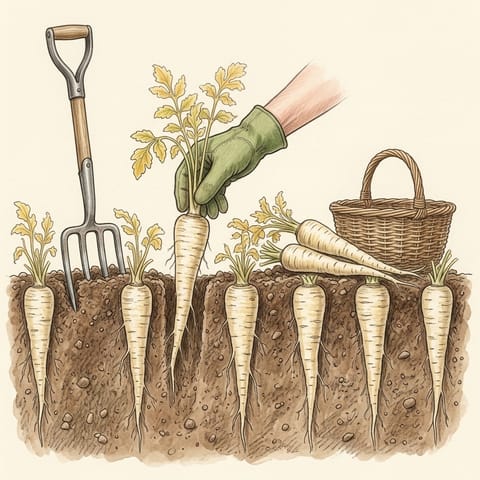 LiftLoosen with a fork, then ease outAfter frost, as needed
Times run from sowing and vary with the variety and the weather. Short, stumpy kinds are quickest; long kinds take the longest.
Growing it, step by step
Is it right for you?
- Parsnips like cool weather, with mild days under 24°C (75°F). The roots are very frost-hardy, and a few frosts make them sweeter. Summer heat slows them and dulls the flavour.
- They are slow: about 4–6 months from sowing, in the bed the whole time. The seed is slow too, often taking two to four weeks to come up.
- They need deep, loose soil. Stones, clods and heavy clay fork the roots. On heavy, shallow or stony soil, grow short, stumpy kinds, or use a raised bed.
- The roots are long, so they suit a bed better than a pot.
When to plant
Sow once the soil is at least 10°C (50°F). In cold soil the seed is slow and patchy; in warmer soil it comes up in about two weeks. Seed comes up poorly in hot soil, so avoid the hottest weeks. They need a long season: sow early enough that the roots are full-sized by the time the weather turns cold.
Cold winters: sow in spring once the soil warms, and leave the roots in the ground through winter under straw. Mild climates: sow in spring, or in late summer to early autumn while the soil is still warm. Hot or subtropical places: sow in late summer or autumn, once the worst heat has passed, so they grow in the cooler months. Tropics: hard to grow; try the highlands or the coolest months.Prepare the bed
- Full sun, and deep, loose, well-drained soil. Dig it over to about 30 cm (12 in) and remove stones and clods.
- Slightly acid to neutral soil suits them, about pH 6.0–7.0. See soil pH.
- Don't dig in manure, compost or fertiliser just before sowing: rich or freshly manured soil forks the roots. Use a bed that was enriched the year before, or one that grew a hungry crop such as potatoes or the cabbage family.
- Avoid a bed that grew parsnips, carrots, celery, celeriac or parsley in the last few years. They are relatives and share pests and diseases.
Sow
- Sow straight into the bed. Parsnips start a long taproot early and don't like being moved.
- Buy fresh seed every year: old seed comes up poorly.
- Sow 1 cm (½ in) deep, three seeds every 15 cm (6 in), or thinly along the row, in rows 30 cm (12 in) apart. Sow more than you need: the seed comes up patchily.
- Cover with fine soil, firm it gently and water with a fine spray. A crust on the surface stops the seedlings coming through.
- A few radish seeds in the row mark it while the parsnips come up. Pull the radishes before they crowd the parsnips.
Get it started
- Keep the surface moist every day until the seedlings are up, which can take up to four weeks. If it dries out, sprouting seed can die. Fleece or a cloche over the row helps; lift it as soon as the seedlings show.
- Weed carefully by hand while they are small. Parsnip seedlings are slow and look like grass, and weeds soon swamp them.
Keep it growing
- Thin: when the seedlings are big enough to handle, around five weeks after sowing, keep the strongest one or two at each spot. About three weeks later, thin to a single plant every 15 cm (6 in) so each root has room to swell.
- Water: once they are growing, a deep soak about once a week in dry weather, twice on sandy soil, is better than a little every day; they cope with short dry spells. Keep it even: a dry spell followed by a soaking splits the roots, and too much water gives hairy, forked roots.
- Mulch: after the final thinning, while the soil is warm and damp, lay straw about 5 cm (2 in) deep between the plants. It keeps moisture even and weeds down.
- Weed: by hand, not with a hoe. A nick in the top of the root lets in canker, a rot that spoils it.
- Feed: good soil needs none. Rich soil forks the roots, and extra feed grows leaves at the expense of the root. Only if the leaves turn pale on poor soil, give one light feed about 6–8 weeks after sowing.
- Carrot fly: where it is a pest, cover the bed with fine insect mesh from sowing day, edges buried, until you lift the crop. It keeps celery leaf miner off too. Thin and weed on a still evening and put the mesh straight back: the smell of bruised leaves draws the flies.
Wear gloves. Parsnip leaves and sap can blister skin in sunlight. Wear gloves and long sleeves to weed, thin and lift them, and if sap gets on your skin, wash it off and keep it out of the sun.Watch for problems
The common ones, with a Garden help page each where there is one:
Carrot flyParsnip cankerCelery leaf minerAphidsSlugs and snailsCutwormsPowdery mildewAster yellowsPoor germinationForked rootsSplit rootsBoltingHarvest
- Parsnips are ready about 4–6 months after sowing, when the leaves start to yellow and die back. Mark the row before the tops disappear.
- They taste sweetest after a few frosts, so where winters are cold, leave them in the ground and lift them as you need them.
- Water the day before if the soil is dry, then loosen the soil beside the row with a fork and ease them out. The roots are long and snap easily.
- Lift the last of them before they grow new leaves in spring: once they start to send up a flower stalk, the roots turn woody and poor.
After harvest
- Twist or cut off the leaves, leaving a short stub, about 2 cm (1 in), and brush off the soil. Eat any damaged roots first.
- Keep them cold and moist, close to 0°C (32°F): in a bag in the fridge they last a few weeks or more. For months, pack them unwashed in damp sand in a cool shed or cellar, away from apples and pears, which make them bitter.
- Where the ground freezes hard, lift some before it does, or cover the row with straw so you can still dig them.
- Next in that bed: cabbage family crops, beans, peas or leafy greens. Keep parsnips, carrots, celery, celeriac and parsley out for a few years.
Sources
- RHS: How to grow parsnips
- University of Minnesota Extension: Growing carrots and parsnips in home gardens
- Utah State University Extension: Parsnips in the garden
- University of Saskatchewan, Gardening at USask: Parsnips
- Gardening Australia: Parsnips in the patch
Facts checked Friday 23 October 2026. General guidance only: local advice comes first.