Home › Vegetables › Spinach
Vegetables
Growing spinach
Spinacia oleracea. A quick, cool-season leafy crop, sown where it grows. It likes cool weather and steady moisture and takes hard frost, but long days and heat make it run to seed. These steps work anywhere: they go by soil and weather, not by month. Also called English spinach (Australia).
How spinach grows
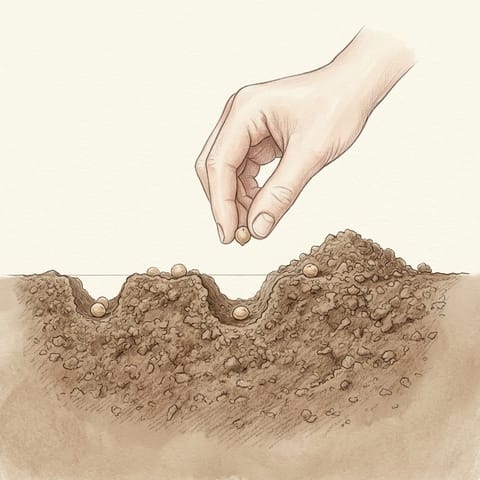 SowSeeds in a shallow row, where it will growDay 0
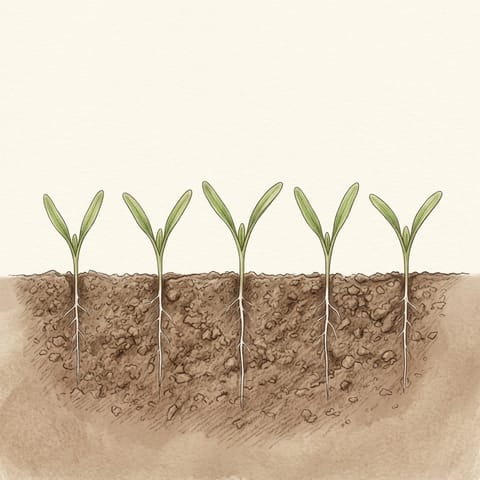 SeedlingsTwo long, narrow seed leavesUp in 7–10 days
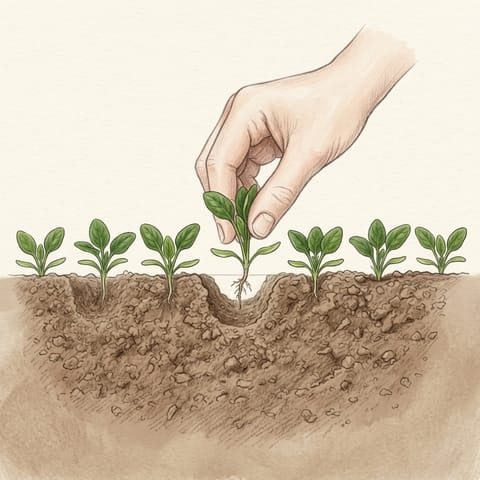 ThinThinned to 7.5 cm (3 in) apartAbout 2–3 weeks
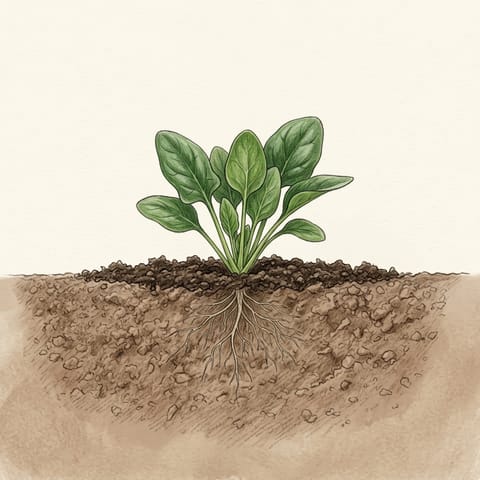 MulchCompost keeps the soil coolAbout 3 weeks
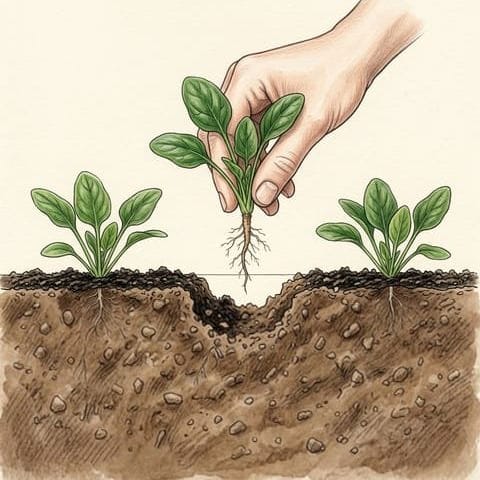 Thin againEvery other plant picked whole, to eatAbout 4–5 weeks
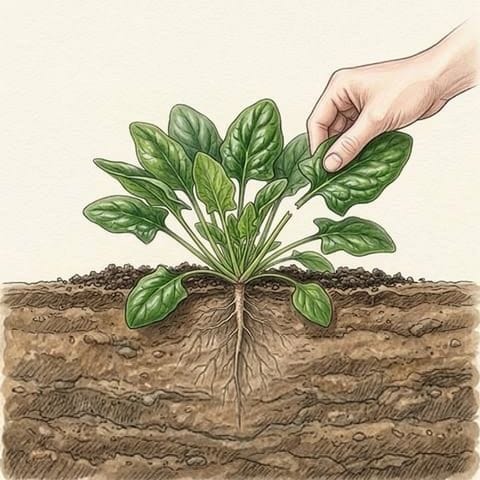 Pick leavesOuter leaves, a few at a timeFrom about 6 weeks
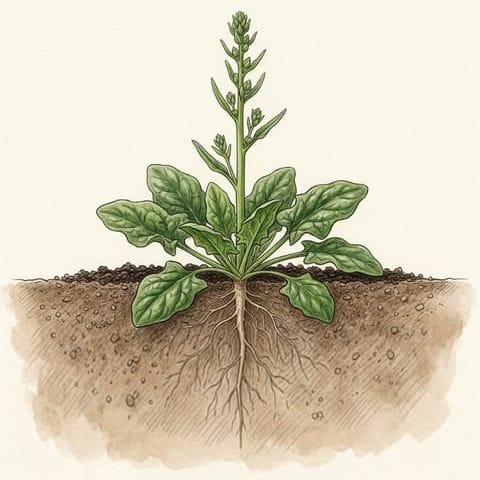 BoltingThe centre stretches up to flowerAs days lengthen or heat comes
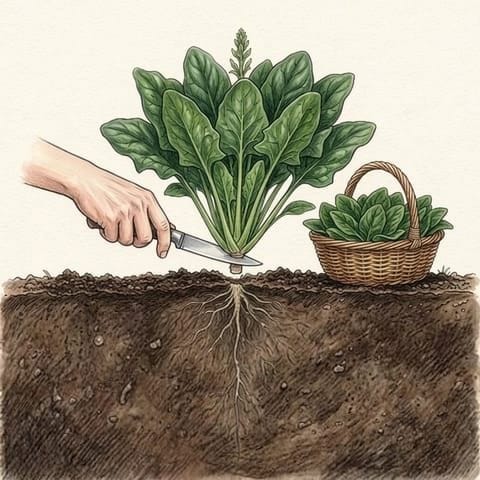 Last cutCut it all before it turns bitterAt the first sign of bolting
Times run from sowing and vary with the variety and the weather. Spinach grows slowly in cold weather and fast in mild weather; kinds sold as slow to bolt stand longest as the days lengthen. Planted seedlings are a couple of weeks ahead.
Growing it, step by step
Is it right for you?
- Spinach likes cool weather: days around 10–20°C (50–70°F). It is quick: baby leaves can be picked about four weeks after sowing, full-sized leaves in about six to eight.
- It takes frost well: young plants survive about -7°C (20°F). The season is what stops it. As the days lengthen towards midsummer it bolts, sending up a flower stalk, even in cool weather. Heat and dry soil make it bolt sooner, and the leaves turn bitter.
- This is true spinach, often called English spinach in Australia. Silverbeet, which some Australians call spinach, is a different plant: bigger, with thick white or coloured stalks, and it copes with warm weather far better. New Zealand spinach (warrigal greens) is a different plant again, grown in summer.
- It needs little room and copes with part shade. It also grows well in pots.
When to plant
Sow once the soil is at least 5°C (40°F). Seedlings come up in 7–10 days, more slowly in cold soil, and the seed sprouts poorly in soil above about 24°C (75°F). Spinach takes frost, so spring sowings can start a few weeks before the last frost. The aim is to pick it before the long days and heat of midsummer, or to sow again as summer ends, so it grows while the days shorten.
Cold winters: sow from early spring, and again in late summer for autumn. Under fleece or a cloche, autumn plants can stand through winter for early spring leaves. Mild climates: sow from late summer through autumn and winter, and in early spring. Autumn sowings crop longest; late spring sowings soon bolt. Hot or subtropical places: sow in autumn and winter only. The first warm spell makes it bolt. Tropics: the coolest, driest months or the highlands. A heat-loving leaf such as Ceylon spinach suits the rest of the year.Prepare the bed
- Full sun in cool weather, light shade in warm weather. Fertile soil that holds moisture but drains well: dig in plenty of compost before sowing.
- Spinach is sensitive to acid soil: aim for pH 6.0–7.0. If your soil is acid, lime it a few months before sowing. See soil pH.
- Loosen the soil deeply and rake it fine. The plant sends down a long taproot.
- Avoid a bed that grew spinach, silverbeet or beetroot last year. They are close relatives, and moving them on stops diseases building up.
Sow and plant
- Sow where it is to grow: moving it can make it bolt early. Sow 1–2 cm (½–¾ in) deep, about 5 cm (2 in) apart, in rows 30 cm (12 in) apart.
- Use fresh seed. Spinach seed more than a year old sprouts poorly.
- In a warm spell, wait for cooler weather, or shade the row and keep it moist until the seedlings are up.
- Seedlings raised in small pots or cells can be planted out at about 10 cm (4 in) tall, 15 cm (6 in) apart, at the same depth they grew. Disturb the roots as little as you can.
- For a steady supply, sow a short row every two to three weeks instead of one big sowing.
Get it started
- Keep the surface moist until the seedlings are up, then water daily for the first three weeks or so. Water new transplants daily for their first week.
- Thin when seedlings have three or four true leaves, to 7.5 cm (3 in) apart. Eat the thinnings.
- Guard against slugs and snails while the plants are small, and net the row if birds pull up the seedlings.
Keep it growing
- Water: keep the soil evenly moist: in dry weather, a good soak about three times a week. Dry soil makes it bolt early, and uneven watering makes the leaves tough. Water at the base, in the morning: leaves that stay wet overnight invite downy mildew and slugs.
- Mulch: once seedlings are 5–8 cm (2–3 in) tall, spread compost about 5 cm (2 in) deep around them. It keeps the soil cool and moist, which delays bolting. Keep it off the leaves.
- Thin again: a few weeks after the first thinning, pick every other plant whole, so the rest stand 15 cm (6 in) apart. Crowded plants bolt sooner and get downy mildew in damp weather.
- Feed: compost dug in before sowing is usually enough. On poor soil, or if the leaves turn pale or yellow, give one nitrogen-rich liquid feed about four weeks after sowing. In pots, a liquid feed every two weeks from three weeks after sowing, until it starts to flower.
- Shade: as the weather warms, shade cloth or a taller crop on the sunny side keeps it cooler and slows bolting. Kinds sold as slow to bolt help too.
- Weed: pull weeds by hand or hoe very shallowly. Spinach can't compete with weeds, and deep hoeing damages its roots.
Watch for problems
The common ones, with a Garden help page each where there is one:
Harvest
- Baby leaves: from about four weeks after sowing. Pick them young for salads, and eat the whole plants you pull when thinning.
- Full-sized leaves: from about six weeks, pick a few outer leaves from each plant every week and leave the centre to keep growing.
- Or, once the plant is well grown, cut the whole thing 2–5 cm (1–2 in) above the base. A plant with good roots often regrows for one more cut.
- Watch the centre. When it starts to stretch upwards, the plant is about to bolt: cut the lot straight away, before the leaves turn bitter. Once a flower stalk has formed, pull the plant out.
After harvest
- Spinach is best eaten fresh. Keep it in a bag in the fridge and use it within a week or so. The leaves shrink a lot when cooked, so pick more than you think you need.
- Pull out plants once they bolt. Compost healthy ones; bin any with downy mildew.
- Next in that bed: a warm-season crop such as beans, tomatoes or capsicum, since spinach is usually finished as summer arrives. Grow the next spinach, silverbeet or beetroot somewhere else.
Sources
- RHS: How to grow spinach
- Penn State Extension: Growing spinach, a cool-season vegetable
- Utah State University Extension: How to grow spinach in your garden
- Clemson Cooperative Extension: Spinach
- Gardening Australia: Spinach
Facts checked Wednesday 21 October 2026. General guidance only: local advice comes first.