Home › Vegetables › Oregano
Vegetables
Growing oregano
Origanum vulgare. A hardy perennial herb from the Mediterranean, grown for its strongly flavoured leaves and picked for years from one plant. Its pink or white summer flowers bring bees and butterflies. It wants full sun and soil that drains freely, and wet soil rots it. Most people start with a small plant, and an old clump is divided or replaced every three or four years once it turns woody. These steps work anywhere: they go by soil and weather, not by month. Also called wild marjoram (UK, Europe).
New to growing vegetables? Start with the beginner's guide.
How oregano grows
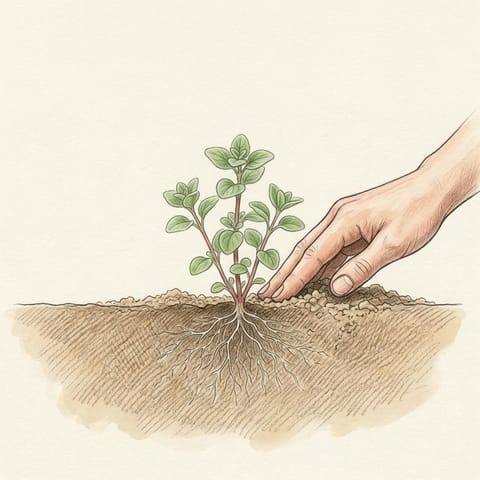 PlantA small plant, at the same depthSpring, after the last frost
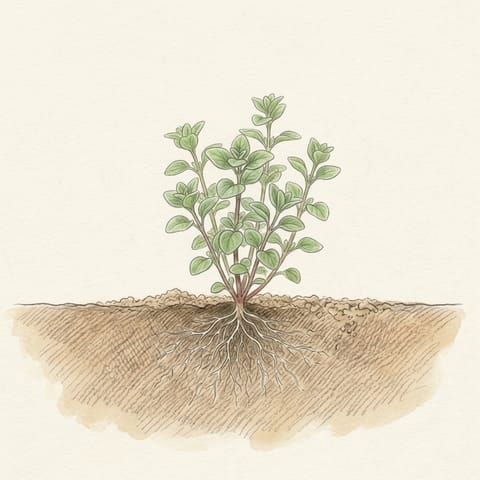 Settle inNew shoots; water only in dry spells2–4 weeks after planting
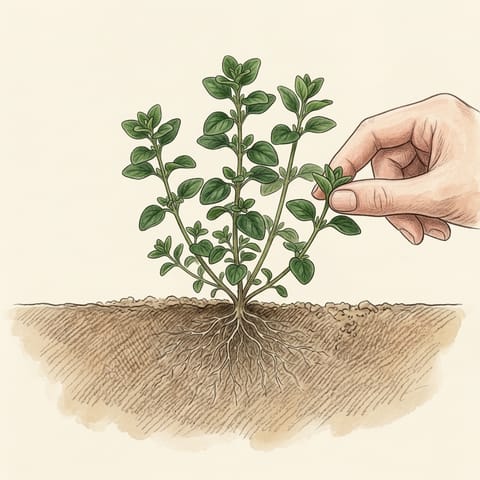 PinchTips pinched out for a bushy plant4–6 weeks after planting
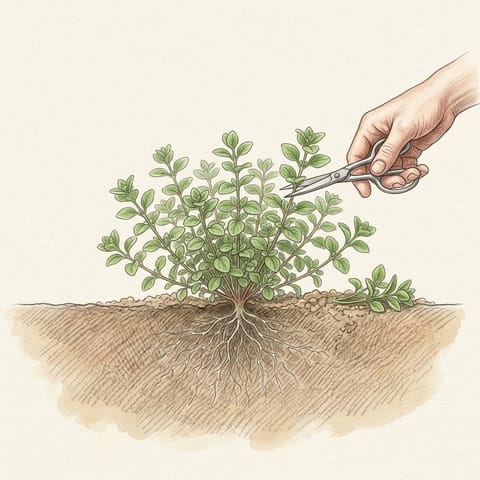 First picksSprigs snipped as you need themAbout 6–8 weeks after planting
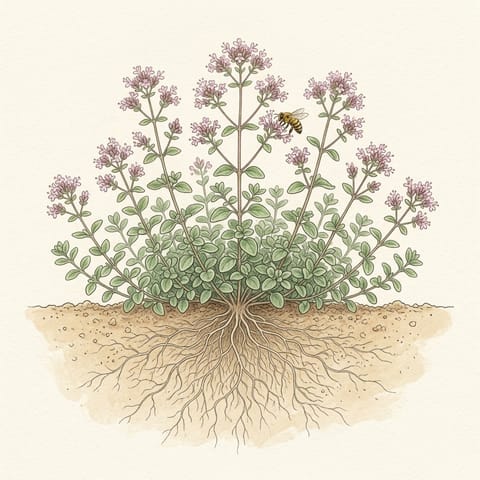 FlowersPink flowers; best flavour just beforeSummer into early autumn
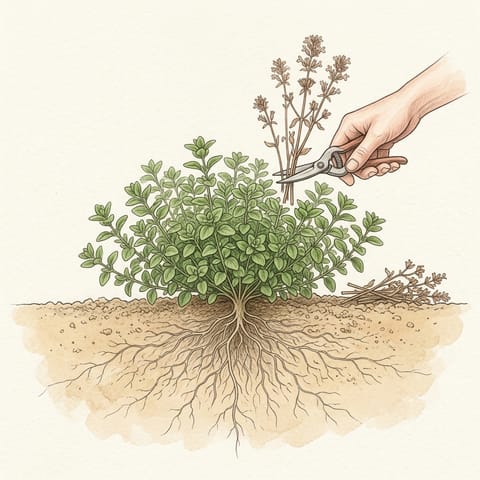 Cut backFaded flower stems cut offAfter flowering
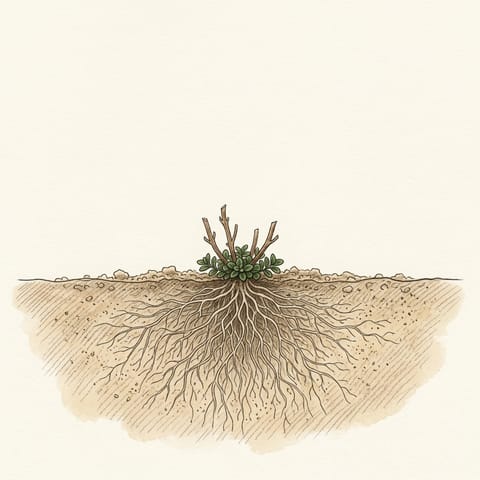 WinterDies down low; roots rest in dry soilFirst winter, in cold places
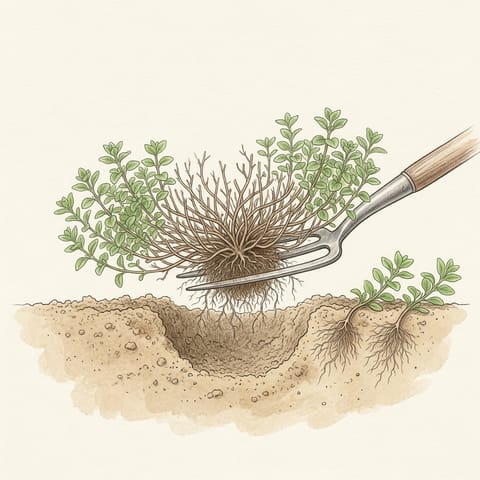 DivideAn old, woody clump lifted and splitEvery 3–4 years, spring or autumn
Times run from planting a small plant and vary with the weather. Plants raised from seed take about two months from sowing to reach planting size.
Growing it, step by step
Is it right for you?
- Oregano is a hardy perennial grown for its strongly flavoured leaves, fresh or dried. One plant gives leaves for years, picked a little at a time.
- It comes from dry, sunny Mediterranean hillsides. It takes frost and cold winters well, but wet soil in winter rots its roots.
- A plant grows 30–60 cm (1–2 ft) tall and as wide. After three or four years it tends to go woody in the middle with fewer leaves, and is divided or replaced.
- Plants raised from seed vary in flavour, so for the strongest taste start with a plant or a cutting from one you like. Greek oregano is a well-known strong kind.
- It grows well in a pot at least 15 cm (6 in) wide and deep, with drainage holes, a gritty, free-draining mix and full sun. It also grows indoors on a bright, sunny sill or in an indoor growing kit.
- Sweet marjoram is a close cousin with a milder, sweeter flavour. It is grown the same way but is not as hardy, and is often kept in a pot where winters are cold and wet.
When to plant
Plant in spring once the last frost has passed and the soil is warm and workable, or in early autumn where winters are mild. To grow from seed, sow indoors in spring, kept warm at about 20°C (68°F), and plant out after the last frost. Divide old plants in spring, or in late summer or early autumn after flowering.
Cold winters: plant in spring. It dies down in winter and grows back from the roots. Sharp drainage matters most; in cold, wet places grow it in a raised bed or a pot moved to shelter, and mulch over the roots once the soil freezes. Mild climates: plant in spring or early autumn. It may keep some leaves through winter; water less in the cool months. Hot or subtropical places: plant in autumn or early spring. It takes heat and dry spells well; give golden kinds afternoon shade, and keep it out of soggy soil in humid, wet summers. Tropics: plant in the drier months, in a raised bed or a pot of gritty mix that can be moved out of heavy rain.Prepare the bed
- A warm spot in full sun, with soil that drains freely. Oregano grows well in fairly poor soil: a little compost is plenty.
- Too much rich, wet soil rots the roots. On heavy clay soil, plant in a raised bed or a pot.
- Near-neutral soil suits it, about pH 6.5–7.5. See soil pH.
- Weed the spot well first: grass growing into a spreading clump is hard to get out later.
Sow and plant
- Plant bought plants and cuttings at the same depth they sat in the pot, 20–30 cm (8–12 in) apart, in rows 50–60 cm (20–24 in) apart.
- To grow from seed, scatter the tiny seeds thinly on top of moist seed-raising mix and press them in. Do not cover them: they need light to sprout. Keep them warm and bright and they come up in one to three weeks.
- When the seedlings have several leaves, move each into a small pot, about 7.5 cm (3 in) across. Harden them off for a week or so before planting out: outside by day, in at night.
- To make new plants from a favourite, take soft cuttings 8–12 cm (3–5 in) long from new shoots in late spring or summer, and root them in a sandy, free-draining mix.
Get it started
- Water in well, then water new plants in dry spells while they settle. Let the top of the soil dry between waterings.
- Keep seedlings bright and don't overwater them: soggy mix brings damping off.
- Pinch the tips out once the shoots reach about 15 cm (6 in), to make a bushy plant.
Keep it growing
- Pick and pinch: snip sprigs as you need them. Cut each stem back to just above a pair of leaves, leaving four to six pairs below, so it branches and stays bushy.
- Water: established plants in the ground rarely need water except in long dry spells. Let the soil dry out between waterings. Pots dry out faster and need water more often, but the mix must never stay soggy. Water less in the cool months.
- Mulch: a thin layer around the plant helps the shallow roots in hot, windy weather. Keep it clear of the stems.
- Feed: plants in the ground need no feeding: rich, wet soil makes it more likely to rot. Pots more than a year old benefit from a light general feed in late spring.
- Flowers: pink, mauve or white flowers come in summer and bees and butterflies love them. The leaves taste best just before the flowers open. Cut the flower stems back once they fade, to keep the plant neat and leafy.
- Trim: in late winter or spring, as new growth starts, cut out dead, straggly or old woody stems to keep the plant compact.
Watch for problems
The common ones, with a Garden help page each where there is one:
Harvest
- Start picking about six to eight weeks after planting, once the plant is growing strongly. In the first year, pick lightly.
- Snip whole sprigs and strip the leaves, rather than picking single leaves. Pick from spring to autumn, as you need it.
- For drying, cut just before the flowers open, when the flavour is strongest. You can take up to three-quarters of the season's new growth at one time.
- Oregano is one of the few herbs with a stronger flavour dried than fresh.
After harvest
- To dry it, hang small bunches in a dark, airy place for a few weeks. Strip the dry leaves off and keep them in an airtight jar; they are best used within about six months.
- Use fresh sprigs soon after picking. Leaves can also be frozen, for shorter keeping than dried.
- Where winters are cold, the plant dies down and grows back in spring. Keep it out of wet soil over winter; in a pot, move it to a sheltered spot.
- Every three or four years, when the middle of the clump goes woody and bare, lift it in spring or early autumn. Replant young pieces from the outside edge and throw away the old centre, or start again with a new plant or cuttings.
- Next in that bed: once a clump is lifted for good, any vegetable or a fresh herb. If it had rust, keep oregano, marjoram and mint out of that spot for a few years.
Sources (5, from RHS, Penn State Extension, University of Illinois Extension and others)
- RHS: How to grow oregano
- Penn State Extension: Herb garden plants, oregano
- University of Illinois Extension: Oregano
- NC State Extension: Origanum vulgare
- Sustainable Gardening Australia: Marjoram and oregano
Facts checked Friday 30 October 2026. General guidance only: local advice comes first.