Home › Vegetables › Dill
Vegetables
Growing dill
Anethum graveolens. A tall, feathery herb grown for its leaves and seeds, sown where it is to grow because it dislikes being moved. It likes mild weather, sun and soil that drains well, takes a light frost, and runs to flower in heat. These steps work anywhere: they go by soil and weather, not by month. Also called dill weed (US, for the leaves).
How dill grows
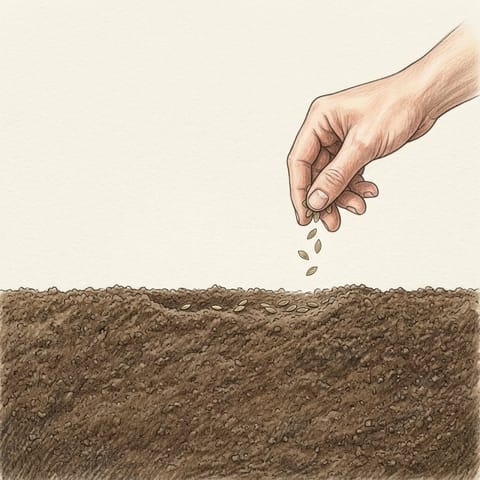 SowSeeds in a shallow row, where it will growDay 0
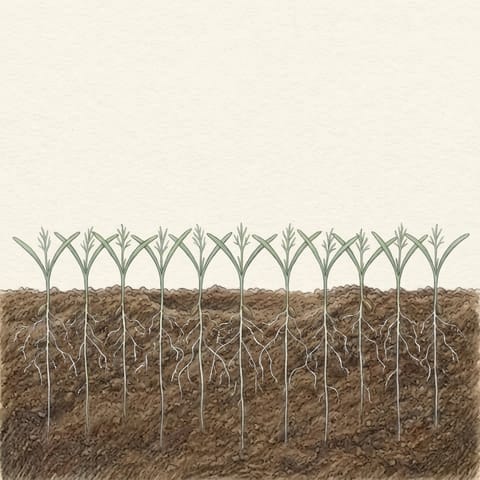 SeedlingsTwo long, narrow seed leavesUp in 1–3 weeks
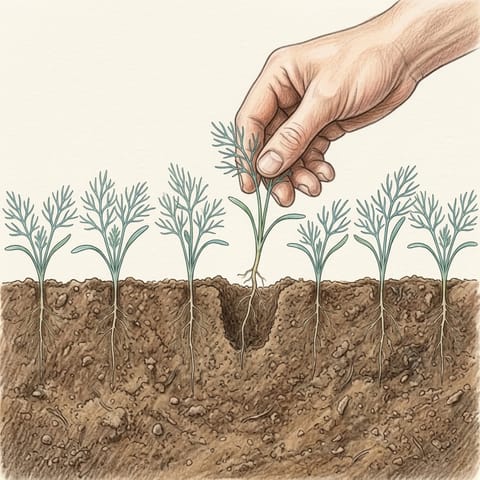 ThinThinned to 20 cm (8 in) apartAbout 3 weeks
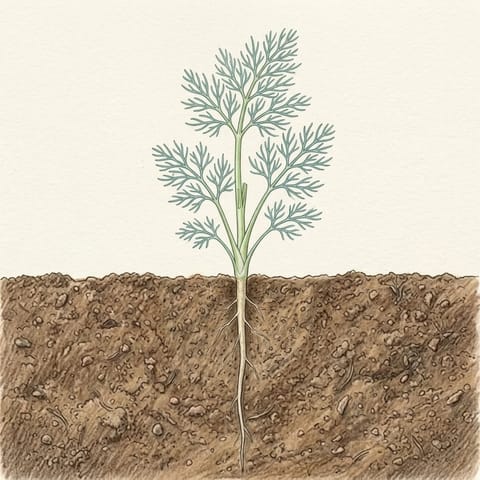 GrowOne upright stem, soft feathery leaves4–6 weeks
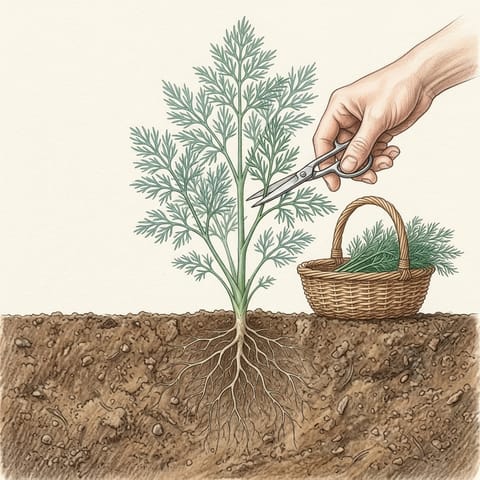 PickLeaves snipped close to the stemFrom about 6 weeks
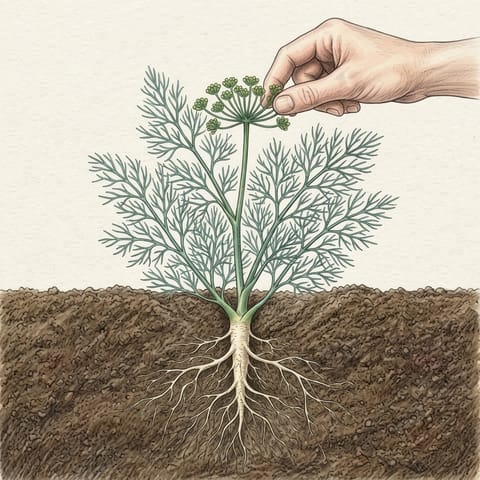 PinchFlower stems cut off for more leavesFrom about 7 weeks
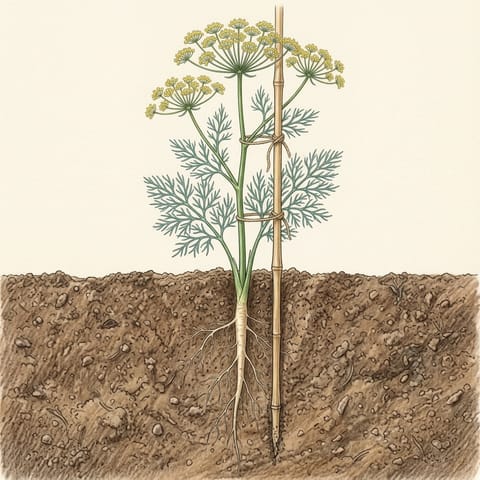 FlowerLeft to flower: flat yellow headsAbout 8–12 weeks
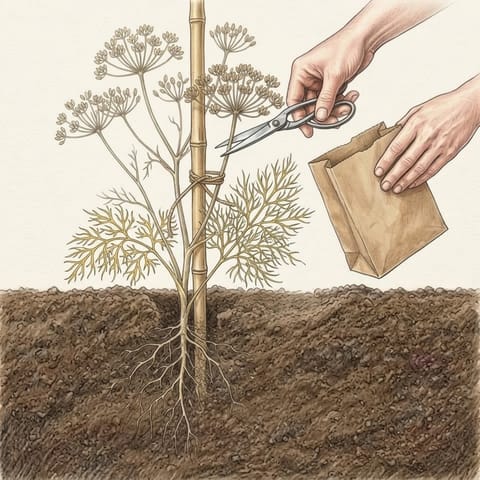 SeedHeads turn brown; cut for seed2–3 weeks after flowering
Times run from sowing and vary with the variety and the weather. In hot weather dill flowers sooner; kinds sold as slow to bolt give leaves for longer.
Growing it, step by step
Is it right for you?
- Dill likes mild weather: days around 15–21°C (60–70°F). Leaves can be picked about six weeks after sowing.
- Established plants take a light frost, down to about -4°C (25°F). Heat is the problem: hot, dry weather and crowding make it run to flower, and then it gives few new leaves. Sow a little every few weeks instead of one big sowing.
- It grows tall, usually about 90 cm (3 ft) and sometimes up to 1.5 m (5 ft), with hollow stems that snap in strong wind. Give it a sheltered spot.
- It grows well in a pot at least 30 cm (12 in) wide and deep. It has a long taproot, so a deep pot is best.
When to plant
Sow where it is to grow once the soil is at least 10°C (50°F), around the last frost; it comes up faster in warmer soil, best at 15–21°C (60–70°F). Seedlings take one to three weeks to appear. Keep sowing every few weeks while the weather stays mild, and sow again as the heat of summer eases.
Cold winters: sow from spring, once the soil has warmed, until early summer. Mild climates: sow in spring and again from late summer to autumn. Summer sowings flower fast; give them light afternoon shade. Hot or subtropical places: sow from autumn to spring; summer is usually too hot. Tropics: the coolest, driest months or the highlands.Prepare the bed
- A sunny spot, sheltered from strong wind, with well-drained soil. Dill doesn't need very rich soil: compost dug in before sowing is plenty. It dislikes cold, soggy soil: on heavy clay soil, use a raised bed or a pot.
- Slightly acid soil suits it, pH 5.5–6.5. See soil pH.
- Rake the surface fine and level, and pull out weeds. Dill seedlings are slow and can't compete.
Sow
- Sow thinly where it is to grow, about 1 cm (½ in) deep, in rows 40 cm (16 in) apart. Dill has a long taproot and dislikes being moved.
- If you raise it in modules instead, plant it out young, about four weeks after sowing, at the same depth, without disturbing the roots. Harden it off first.
- Sow a short row every two to four weeks for a steady supply of leaves.
Get it started
- Keep the soil damp until the seedlings are up, then water often for the first few weeks until they are growing strongly.
- Thin seedlings in stages to 20 cm (8 in) apart. Crowded plants run to flower sooner. Eat the thinnings.
- Guard young plants against slugs and snails. Cold, wet soil invites damping off.
Keep it growing
- Water: once it is growing, a good soak once or twice a week in dry weather, more in pots. Dry soil makes it bolt. Don't overwater: soggy soil invites powdery mildew.
- Pinch: for leaves, pinch out the tips and cut off flower stems as they form. It slows flowering and keeps leaves coming. Growing it for seed? Let it flower.
- Stake: in windy spots, push in a cane beside each tall plant and tie the stem loosely. The hollow stems snap easily.
- Feed: soil improved with compost before sowing needs none. On poor soil, one light liquid feed when plants are about 10 cm (4 in) tall is enough. In pots, a weak liquid feed every four weeks.
- Mulch: not usually needed. In hot, dry weather, a light layer helps keep the soil evenly moist.
- Weed: pull weeds by hand or hoe shallowly while the plants are small.
Watch for problems
The common ones, with a Garden help page each where there is one:
Harvest
- Start picking leaves about six weeks after sowing. Snip them close to the stem, in the cool of the morning, and always leave at least a third of the plant to keep growing.
- Pick little and often. Regular picking keeps the plant bushy and slows flowering. The leaves have the most flavour just before the flowers open.
- For seed, cut the heads when the seeds are dry and brown, about two to three weeks after flowering. Put them head-first into a paper bag and hang it somewhere cool, dry and airy: the seeds fall into the bag as they dry.
After harvest
- Fresh dill wilts quickly, so pick it just before you use it. Add it at the end of cooking: heat dulls its flavour. To keep it longer, freeze sprigs in a bag, or dry the leaves.
- Store the dried seed in an airtight container, somewhere cool and dark.
- Dill self-sows freely. Leave a head or two to drop seed if you want plants next year, and move self-sown seedlings while they are small, before the taproot forms. Otherwise cut the heads before the seed falls, or it can turn into a weed.
- Pull the plants out once they finish. The flowers feed bees and other helpful insects while they last.
- Next in that bed: beans, peas or leafy greens. Grow the next dill, and its relatives such as carrots, parsley and celery, somewhere else.
Sources
- RHS: How to grow dill
- Utah State University Extension: How to grow dill in your garden
- University of Illinois Extension: Dill
- Texas A&M AgriLife Extension: Easy gardening, dill
- Penn State PlantVillage: Dill
Facts checked Friday 23 October 2026. General guidance only: local advice comes first.