Home › Garden pests › Caterpillars
Garden pests
Caterpillars
Larvae of many moths and butterflies (Lepidoptera) · Insect
Also called loopers, budworms and armyworms (common kinds) (Worldwide), heliothis (budworms) (Australia).
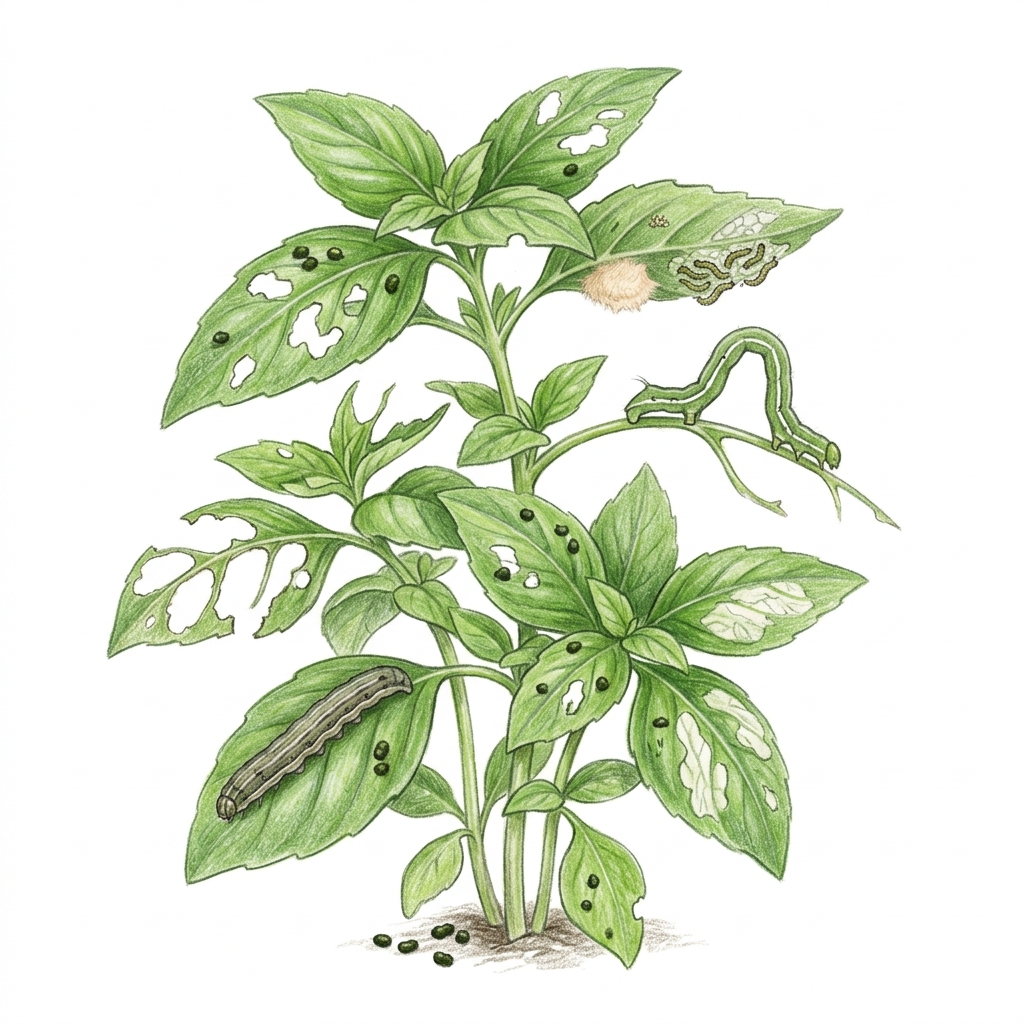
Illustration
Caterpillars, the young of moths and butterflies, chew holes in the leaves of vegetables and herbs, and some bore into buds and fruit. Check plants often and pick them off, cover crops with fine mesh before the moths lay their eggs, and let birds and wasps help.
How to spot it
- Holes chewed in leaves, sometimes see-through like window panes, or whole leaves eaten.
- Small dark droppings (frass) on the leaves and on the ground below.
- Soft, tube-shaped grubs with three pairs of small legs near the head and up to five pairs of stubby legs further back. Many hide by day and feed at night.
- Loopers: green, with a pale stripe along each side, up to about 38 mm (1½ in) long, that arch their backs into a loop as they walk.
- Armyworms: young ones feed in groups near a fluffy egg mass, then spread out; older ones are smooth, with stripes along the body. Budworms bore into buds, flowers, pods and fruit.
Easily confused with
Cabbage white caterpillars
Velvety green caterpillars with a faint yellow stripe down the back, on cabbages, broccoli, kale and other brassicas.
Tomato hornworm
Much bigger, up to 10 cm (4 in), with white V-shaped marks along the sides and a horn at the tail, on tomatoes and their relatives.
Cutworms
Grey-brown caterpillars that hide in the soil by day, curl into a C when disturbed, and cut seedlings off at ground level.
Slugs and snails
Ragged holes too, but with silvery slime trails and no droppings.
Where it's a problem
- Worldwide: Moth and butterfly caterpillars feed on vegetables and herbs everywhere. Damage is often minor, and caterpillars are an important food for birds and other garden wildlife.
- Australia: Native budworm and cotton bollworm (Helicoverpa, once called heliothis) bore into buds, flowers, pods and fruit. Cotton bollworm resists many insecticides, so identify it before reaching for a spray.
- United Kingdom: The RHS advises tolerating caterpillars where damage is minor. Angle shades moth caterpillars, which feed at night on many garden plants, are most common from May to October.
- North America: Cabbage loopers and beet armyworms are common on vegetables, with several generations each season.
What to do
- Check plants every few days, under the leaves and in shoot tips and buds; droppings on the leaves below are a clue. Look again with a torch at night for kinds that hide by day.
- Pick caterpillars off by hand as soon as you find them, and squash them or drop them into soapy water.
- Cover crops with fine insect mesh or row cover before moths and butterflies start laying, tucked in at the edges. Take it off fruiting crops when they flower, so bees can reach them.
- Leave birds, wasps, hedgehogs and ground beetles to help: predators and tiny parasitic wasps often keep caterpillars in check.
- Pull weeds, clear away old crops after harvest, and dig over the soil, where many caterpillars turn into pupae.
- Tolerate light damage where you can.
If you use an insecticide, choose one labelled for caterpillars and follow the label and local rules. Sources say sprays, including the bacterial kind, work best on small young caterpillars that eat the treated leaves. Broad-spectrum sprays also kill the wasps and predators that keep caterpillars down.
Vegetables it affects
Free account, no card needed. You sign up or sign in first, then the scanner opens.
Sources
- RHS: Angle shades moth
- Utah State University Extension: Loopers
- University of California IPM: Armyworms
- Business Queensland: Helicoverpa
- Texas A&M AgriLife Extension: A key to common caterpillar pests of vegetables (B-6110)
- Sustainable Gardening Australia: Basil
Facts checked Wednesday 21 October 2026. General guidance only: follow your local council, agency and product label.