Home › Vegetables › Sweet potatoes
Vegetables
Growing sweet potatoes
Ipomoea batatas. A warm-season crop grown from slips, leafy shoots taken from a tuber. It wants a long, hot summer, full sun and loose soil, and frost kills it. These steps work anywhere: they go by soil and weather, not by month. Also called kumara (New Zealand, and for orange kinds in Australia), yam (US, for orange-fleshed kinds, though true yams are a different plant).
How a sweet potato grows
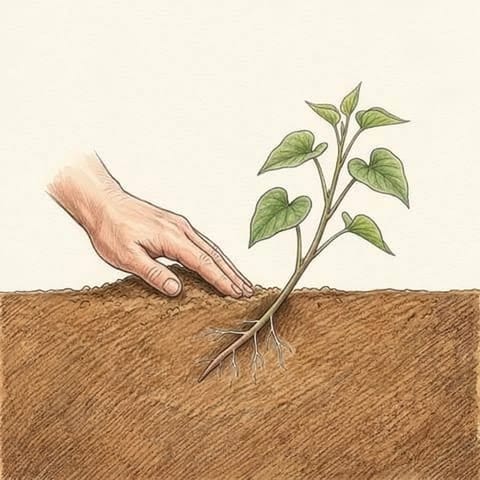 PlantSlip in, most of the stem buriedDay 0
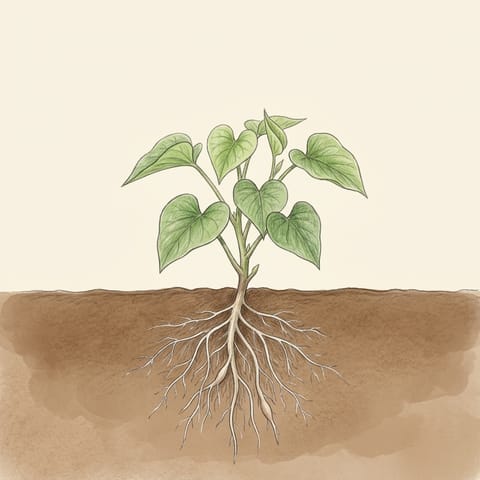 Root inNew roots, new leaves1–3 weeks
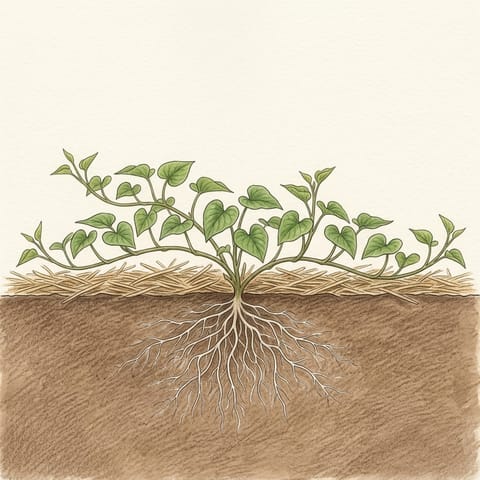 SpreadVines run, straw mulch down3–6 weeks
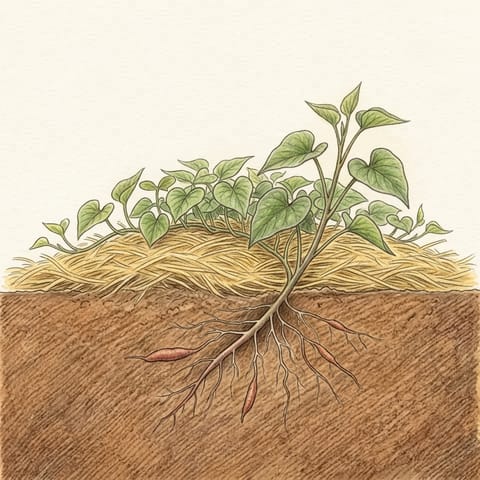 Tubers formSome roots start to swell6–8 weeks
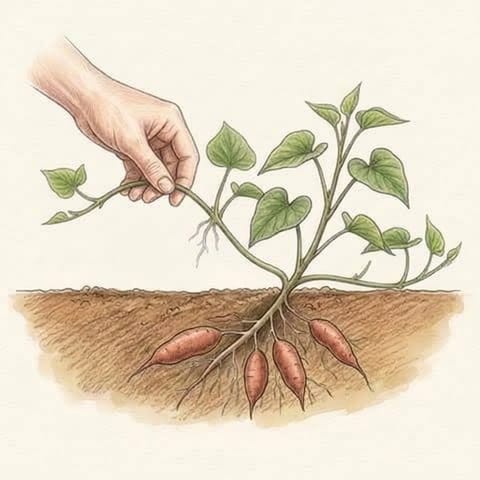 Lift vinesStems that root are pulled upFrom about 8 weeks
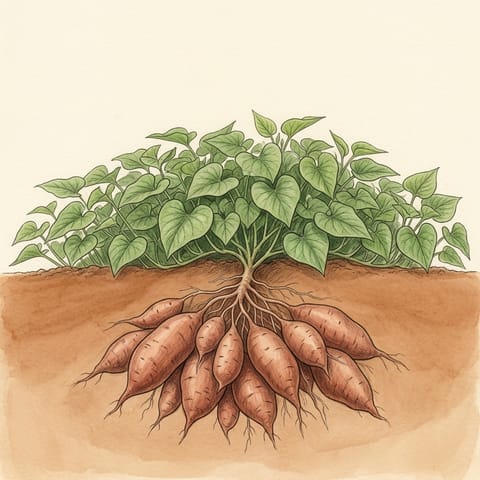 SwellTubers fill out10–16 weeks
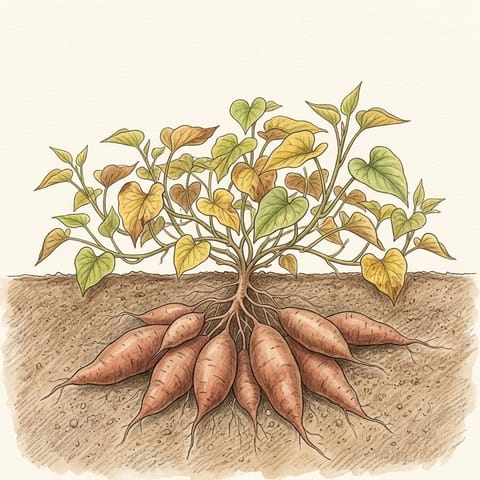 ReadyLeaves start to yellowAbout 3–5 months
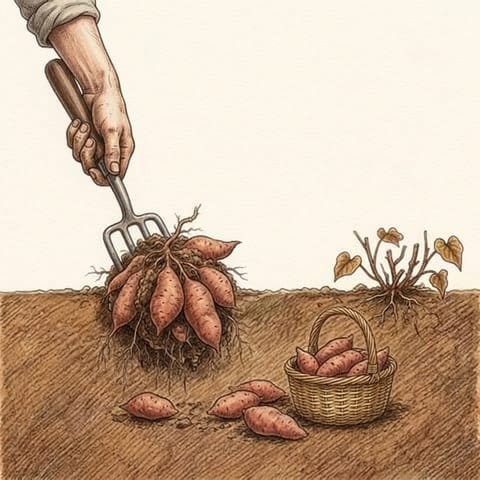 DigLift gently, before frostBefore the soil turns cold
Times run from planting and vary with the variety and the weather. In cooler summers they take longer and the tubers stay smaller.
Growing it, step by step
Is it right for you?
- Sweet potatoes need a long, warm season: three to five frost-free months with days around 21–29°C (70–85°F).
- Frost kills them, and cold soil spoils the tubers. Where summers are short or cool, they need a greenhouse, a tunnel or the warmest, most sheltered spot you have.
- The vines spread a long way, so give each plant 30–40 cm (12–16 in) of row, in rows 90 cm (36 in) apart. Where space is short, they can climb a frame of canes about 1.8 m (6 ft) tall. They also grow in large pots, at least 30 cm (12 in) across.
When to plant
Plant once the soil is at least 18°C (65°F), all danger of frost has passed and nights stay above about 10°C (50°F). Slips planted into cold soil sit still or rot. They need three to five warm months before the soil turns cold again, so plant as soon as it is warm enough.
Short, cool summers: grow them under cover or in pots in a greenhouse, with quick kinds. Mild climates: plant in late spring, once the soil has warmed. Hot or subtropical places: plant from spring to early summer. Tropics: any time of year, best at the start of the warm, wet months.Prepare the bed
- Full sun and loose, well-drained, sandy or loamy soil. Dig in compost before planting. Heavy clay gives small, misshapen tubers.
- Plant on a ridge or mound about 20–30 cm (8–12 in) high, especially on heavy soil. It drains better and warms up sooner.
- Slightly acid soil suits them best, pH 5.5–6.5. See soil pH. Dig any manure in well ahead of planting: rich soil grows leaves instead of tubers.
- Avoid beds that grew sweet potatoes in the last two years.
Plant
- Start with slips: leafy shoots grown from a tuber, about 20–30 cm (8–12 in) long. Buy certified slips, or grow your own from a healthy tuber you kept. Shop tubers may be treated to stop them sprouting, or carry pests.
- To grow your own, half-bury a tuber in moist sand or potting mix in a warm spot about six to eight weeks before planting time. Cut off the shoots once they are 20–30 cm (8–12 in) long; they root quickly in water or damp potting mix.
- Plant 5–10 cm (2–4 in) deep, burying most of the stem and leaving only the top few leaves above the soil. Space them 30–40 cm (12–16 in) apart, in rows 90 cm (36 in) apart.
Get it started
- Water in well, then keep the soil moist but not wet for the first two weeks or so, until new leaves show.
- If a cold night is forecast soon after planting, cover them with fleece.
Keep it growing
- Mulch: about two weeks after planting, spread straw about 5 cm (2 in) deep. It holds moisture, keeps weeds down and helps keep weevils away from the tubers. Weed by hand until the vines cover the ground.
- Water: once growing, a deep soak about once a week, keeping the soil evenly moist while the tubers swell. Never soggy, or the tubers rot. Stop watering about two weeks before you dig.
- Lift the vines: from about eight weeks, gently pull up stems that have rooted into the soil along their length, so the plant fills its main tubers. Do it again if they root down again.
- Feed: compost at planting is enough. Extra feed, especially nitrogen, grows leaves instead of tubers. In pots, a high-potash liquid feed every two weeks through summer.
- Trim: no pruning needed. Trim stems that run too far. The young leaves and tips are good to eat, cooked like spinach.
Watch for problems
The common ones, with a Garden help page each where there is one:
Sweet potato weevilWirewormsRoot-knot nematodesWhiteflySpider mitesCaterpillarsFusarium wiltScurfSplit rootsCold damageHarvest
- Most kinds are ready about three to five months after planting, when the leaves start to yellow. Dig before the first frost and before the soil drops below about 15°C (60°F): cold soil spoils them.
- Tubers can sit 30 cm (12 in) or more from the plant. Push the fork in well away from the base and lift gently: the skins bruise and tear easily. Eat any damaged ones first.
- Dig on a dry day.
After harvest
- Let them dry on the soil for a few hours. Don't wash them.
- Cure them before storing: keep them somewhere warm and humid, about 27–32°C (80–90°F), for one to two weeks. Curing heals small wounds and turns starch to sugar, so they keep longer and taste sweeter.
- Then store them somewhere dark and cool, about 13–16°C (55–60°F). Never in the fridge: cold gives them hard cores and a poor taste.
- Clear every piece from the bed, small ones too. Leftover tubers sprout again and shelter weevils.
- Next in that bed: beans, peas or leafy greens. Keep sweet potatoes out of it for at least two years.
Sources
- RHS: How to grow sweet potatoes
- Mississippi State University Extension: Growing sweetpotatoes at home
- UC Master Gardeners of Santa Clara County: Sweet potatoes
- Gardening Australia: One potato, two potato
- UF/IFAS Extension: Insect management for sweet potatoes
Facts checked Friday 23 October 2026. General guidance only: local advice comes first.