Home › Vegetables › Pak choy
Vegetables
Growing pak choy
Brassica rapa subsp. chinensis. A quick, cool-season leafy crop of the cabbage family, grown for its crisp stems and leaves and usually sown where it grows. It wants mild weather, steady moisture and netting against caterpillars, and heat, long days or a cold snap make it run to seed. These steps work anywhere: they go by soil and weather, not by month. Also called bok choy (US and Canada, and often in Australia too), pak choi (UK), buk choy (Australia, for the white-stemmed kinds).
How pak choy grows
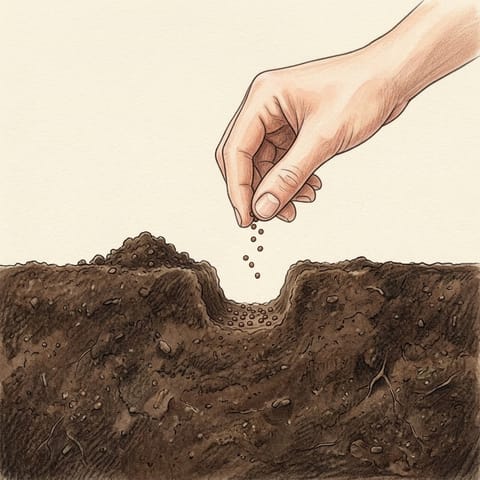 SowSeeds in a shallow row, where it will growDay 0
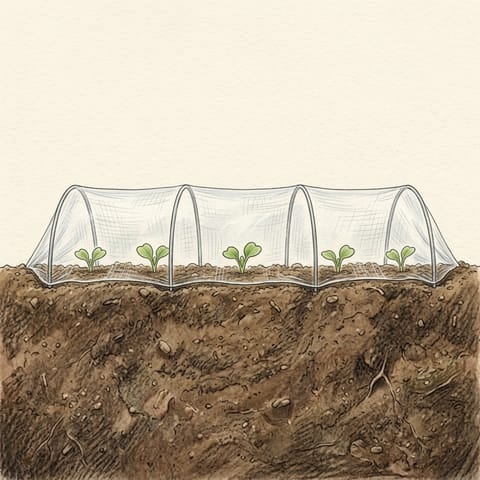 NetFine mesh on hoops, from sowing dayUp in about a week
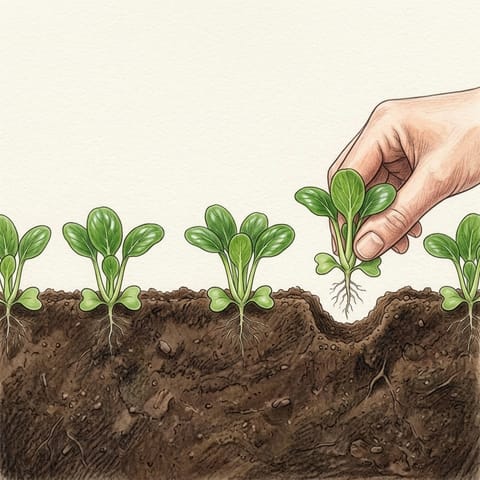 ThinThinned to 8–10 cm (3–4 in) apartAbout 2 weeks
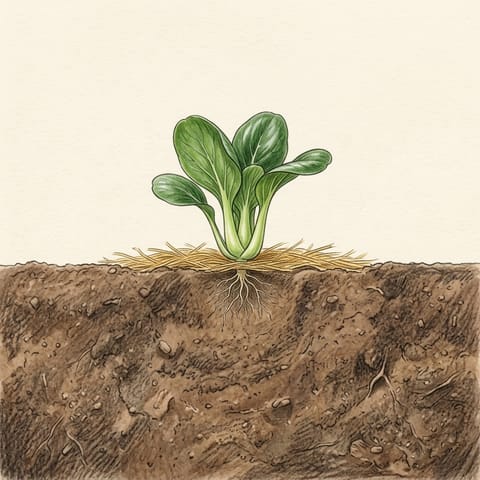 MulchStraw keeps the soil cool and moistAbout 3 weeks
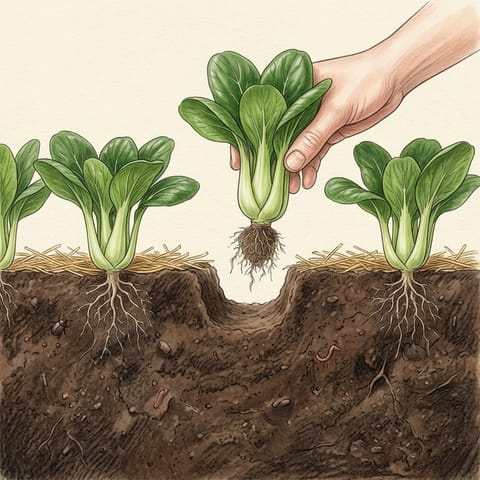 Thin againEvery other plant lifted whole, to eatAbout 4 weeks
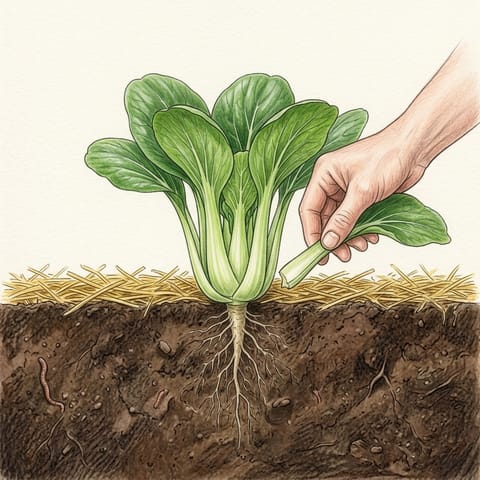 Pick leavesOuter leaves, a few at a timeFrom about 5 weeks
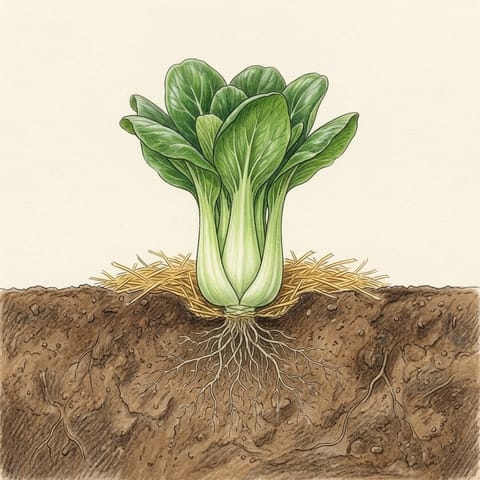 Full sizeA firm, upright clump of thick stems6–10 weeks
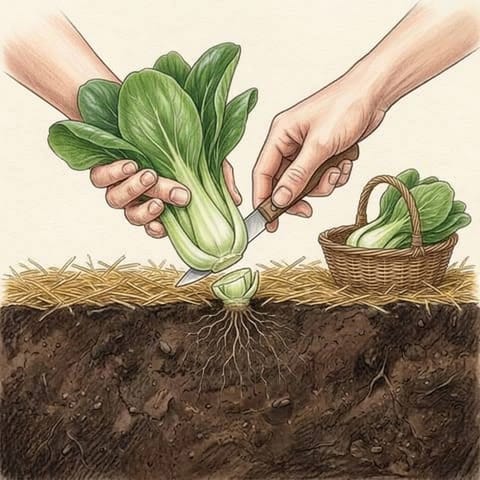 CutWhole head cut at the baseBefore it flowers
Times run from sowing and vary with the variety and the weather. Baby and dwarf kinds are ready first; full-sized kinds take the longest. Seedlings planted from modules are a couple of weeks ahead.
Growing it, step by step
Is it right for you?
- Pak choy likes cool, mild weather: days around 15–20°C (59–68°F). It is quick: baby leaves can be picked about four weeks after sowing, whole heads in six to ten weeks.
- It takes light frost, down to about −3°C (27°F). It bolts easily: it sends up a flower stalk and stops making leaves. Heat, dry soil and long summer days set it off, and so does cold: a late frost, or a week or more of nights below about 10°C (50°F) while the plants are young, makes them bolt once warm weather returns.
- It needs little room and copes with light shade. It grows well in pots at least 30 cm (12 in) wide.
When to plant
Sow once the soil is at least 7°C (45°F); the seed comes up faster above 10°C (50°F), in about a week. Young plants that sit through a run of cold nights tend to bolt later, so in spring wait until nights are milder, or start them under cover. It does best when it grows up in cool weather and is picked before the heat, and in many places the most reliable crop is sown in late summer for picking in autumn.
Cold winters: sow in mid to late summer so it grows in the cooling days of autumn; spring sowings often bolt. Under cover, sowings carry on into autumn. Mild climates: sow in spring once nights are mild, and again from late summer into autumn. Summer sowings suit baby leaves in light shade. Hot or subtropical places: sow from autumn to spring; summer is usually too hot. Tropics: much of the year, best in the cooler, drier months; in the heat, give it light shade and pick it young.Prepare the bed
- A sunny spot, with light shade from hot afternoon sun. Fertile soil that drains well but holds moisture: dig in plenty of compost or well-rotted manure before sowing.
- Slightly acid to neutral soil suits it, pH 6.0–7.0. Club root is worse in acid soil: if yours is below 6, lime it a few months before sowing. See soil pH.
- Rake the surface fine and level. The seed is small and needs close contact with the soil.
- Avoid beds that grew any of the cabbage family in the last four years: cabbage, broccoli, cauliflower, kale, Brussels sprouts, Chinese cabbage, turnips, swedes or radishes. They share club root and other soil-borne problems.
Sow and plant
- Sow thinly, about 1 cm (½ in) deep, straight into the bed in rows 30 cm (12 in) apart. Or sow one or two seeds to a module and pull out the weaker seedling.
- Plant module seedlings when they are about 10 cm (4 in) tall, at the same depth they grew in the module, 20–30 cm (8–12 in) apart. Harden them off for a week or so first: outside by day, in at night. Young, unstressed seedlings settle best; old, root-bound ones bolt sooner.
- For a steady supply, sow a little every two to three weeks instead of one big sowing.
Get it started
- Keep the surface moist until the seedlings are up, then water daily for the first two weeks or so. Water new transplants daily for their first ten days.
- On the day you sow or plant, cover the row with fine insect mesh on hoops, tucked in at the edges. It keeps out cabbage white caterpillars, flea beetles and pigeons. Leave it on until harvest.
- Thin in two goes: to 8–10 cm (3–4 in) about two weeks after sowing, then to 20–30 cm (8–12 in) about two weeks later for whole heads. For baby leaves, stop at 8–10 cm (3–4 in). Eat the thinnings.
- Guard seedlings against slugs and snails, especially after rain.
Keep it growing
- Water: the roots are shallow, so keep the soil moist all the time: every one to two days in warm weather. Water at the base, in the morning: evening watering draws slugs. Dry soil makes the stems tough and bitter and sends it to flower.
- Mulch: after the first thinning, a thin layer of straw about 3 cm (1 in) deep keeps the soil cool and moist. Keep it off the stems.
- Feed: compost dug in before sowing is enough for this quick crop. If the leaves turn pale, give one liquid feed. In pots, a liquid feed every one to two weeks from two weeks after the seedlings come up, stopping a week before harvest.
- Check: every week, look under the leaves for caterpillars and yellow eggs, even under the net, and for the tiny round holes flea beetles leave.
- Weed: pull weeds by hand or hoe very shallowly: the roots sit near the surface.
Watch for problems
The common ones, with a Garden help page each where there is one:
Cabbage white caterpillarsLoopers and other caterpillarsFlea beetlesAphidsSlugs and snailsCabbage root flyBirdsClub rootDowny mildewAlternaria leaf spotBlack rotDamping-offBoltingHarvest
- Leaves: from about four weeks after sowing, pick a few outer leaves from each plant every week and leave the centre to keep growing.
- Whole heads: cut at the base with a sharp knife while the clump is still compact and firm and the outer stems are tender. Dwarf kinds are ready at about 15 cm (6 in) tall, full-sized kinds at about 30 cm (12 in).
- Don't leave grown heads standing: they soon turn tough and bitter.
- A flower stalk rising from the centre means it is finishing: cut that plant, and the rest of that sowing, before the flowers open. The young flower stalks cook like broccoli.
After harvest
- Keep it in a bag in the fridge and use it within a week or so. It doesn't store for long.
- Pull out the stumps and roots once you finish. Bin any with swollen, distorted roots rather than composting them: that is club root.
- Next in that bed: anything outside the cabbage family, such as potatoes, onions, carrots, beans or peas. Keep pak choy, cabbage, broccoli, cauliflower, kale, Brussels sprouts, turnips, swedes and radishes out for four years.
Sources
- RHS: How to grow pak choi
- University of Minnesota Extension: Growing Chinese cabbage and bok choy in home gardens
- University of Florida IFAS Extension: Bok choy, an Asian leafy green vegetable
- Ontario Ministry of Agriculture, Food and Rural Affairs: Bok choy
- Washington State University Extension: Pacific Northwest Gardener's Handbook, vegetable gardening
Facts checked Friday 23 October 2026. General guidance only: local advice comes first.