Home › Vegetables › Kale
Vegetables
Growing kale
Brassica oleracea (Acephala Group). A hardy leafy crop of the cabbage family that forms no head: you pick its lower leaves a few at a time, for months. It needs firm, fertile soil, steady water and netting against caterpillars, and it takes hard frost far better than heat. These steps work anywhere: they go by soil and weather, not by month. Also called borecole (UK, an older name).
How kale grows
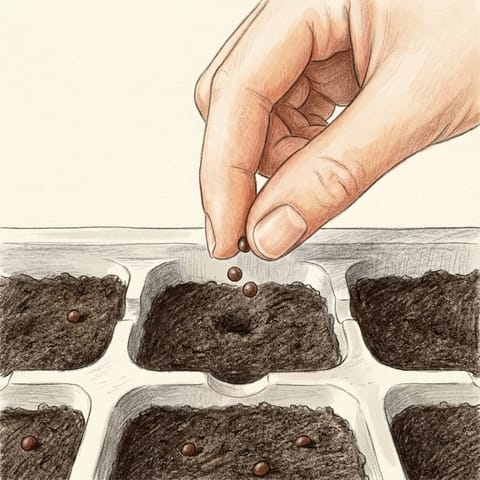 SowTwo seeds to each moduleUp in about a week
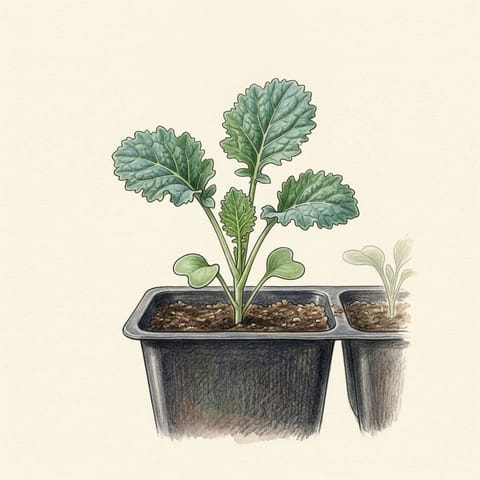 SeedlingTrue leaves form in the tray2–4 weeks
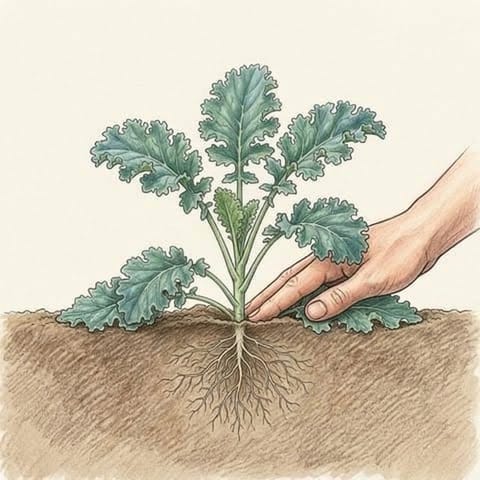 Plant outDeep, lowest leaves at soil level4–6 weeks from sowing
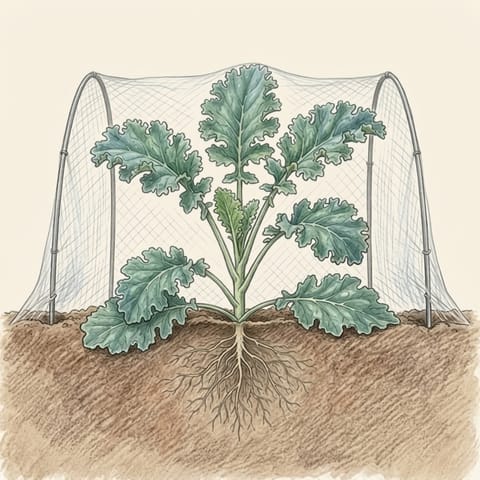 NetFine mesh on hoops keeps pests offOn planting day
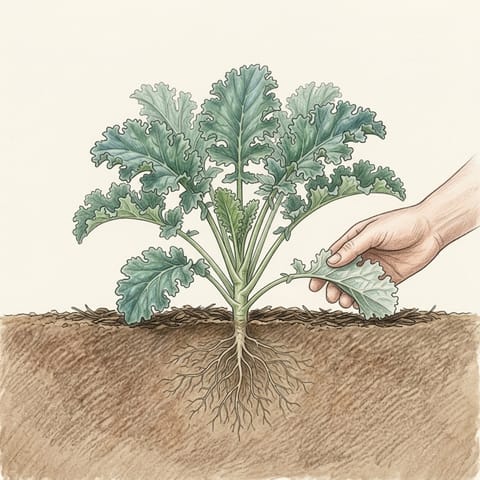 GrowLeaves fill out; mulch and check2–5 weeks after planting
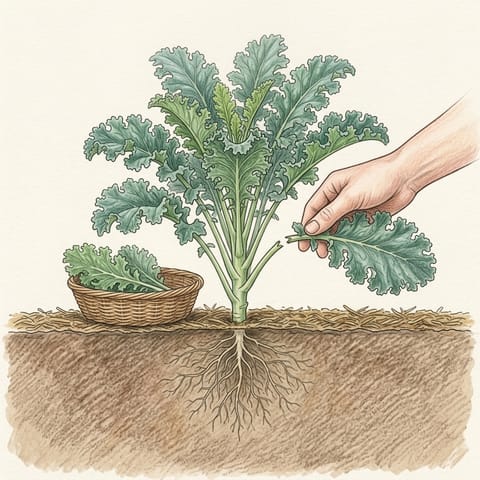 First pickTwo or three lower leaves6–8 weeks after planting
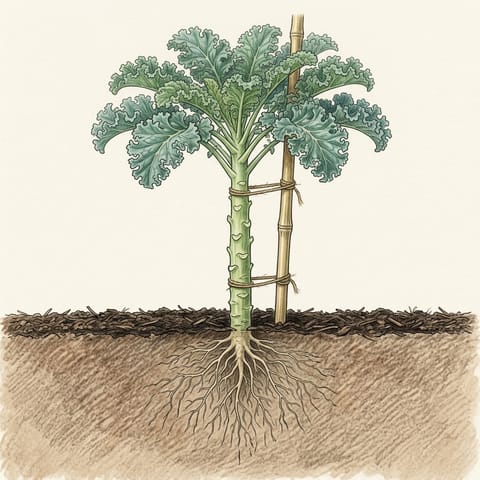 StakeTall kinds tied to a cane for winterThrough the cold months
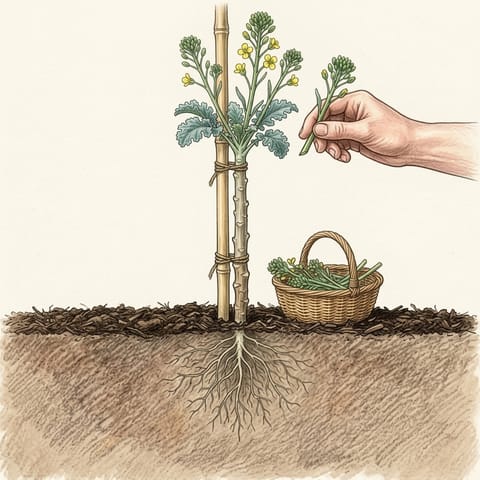 ShootsYoung flower shoots to eat; then it is doneWhen it flowers in spring
Times run from sowing for the first three, then from planting out, and vary with the variety and the weather. Seed sown straight into the bed takes about two weeks longer to the first pick. Curly, flat-leaved and dark, crinkled Tuscan kinds (cavolo nero) all grow the same way.
Growing it, step by step
Is it right for you?
- Kale likes cool weather and grows best below about 24°C (75°F). The first leaves are ready about six to eight weeks after planting out, and a plant keeps cropping for months.
- It is one of the hardiest vegetables. Young plants take frost to about −4°C (25°F), grown plants much more, and frost sweetens the leaves. Heat and dry soil are the problem: they make the leaves tough and bitter.
- Each plant needs about 45 cm (18 in) of room, compact kinds 30 cm (12 in). One compact kale grows well in a pot 30 cm (12 in) across and deep.
When to plant
Sow in modules or small pots about four to six weeks before planting out, or straight into the bed once the soil is at least 7°C (45°F). Plant out when seedlings are 10–15 cm (4–6 in) tall. Hardened-off seedlings take frost, so they can go out a few weeks before your last frost. For leaves through autumn and winter, sow in summer, so the plants are well grown before the cold.
Cold winters: start seedlings indoors in spring for summer leaves, and sow again in early summer for plants that crop on through the frosts. Mild climates: sow in spring, and again in mid to late summer for leaves through autumn and winter until the plants flower in spring. Hot or subtropical places: sow from late summer into autumn, so the plants grow through the cool months. As the heat returns the leaves turn bitter. Tropics: the cool, dry season only, picking the leaves young. In hot weather they turn tough and bitter.Prepare the bed
- A sunny, open spot with fertile soil that drains well but holds moisture. Dig in plenty of compost or well-rotted manure, ideally a few months ahead.
- Slightly acid to neutral soil suits it, pH 6.0–7.0. Club root is worse in acid soil: if yours is below 6, lime it a few months before planting. See soil pH.
- Firm the soil after digging, then rake the surface fine. Kale wants firm ground, and tall kinds stand through winter winds.
- Avoid beds that grew any of the cabbage family in the last four years: cabbage, broccoli, cauliflower, Brussels sprouts, turnips, swedes or radishes. They share club root and other soil-borne problems.
Sow and plant
- Sow 1 cm (½ in) deep, two seeds to a module or small pot, and pull out the weaker seedling.
- Or sow straight into the bed: three seeds every 45 cm (18 in), 1 cm (½ in) deep. About three weeks after sowing, thin each group to the strongest seedling.
- Plant out at four to six weeks old, when seedlings are 10–15 cm (4–6 in) tall. Harden them off for a week or so first: outside by day, in at night.
- Plant deeper than they sat in the tray, with the lowest leaves at soil level, and firm the soil well around them. Space them 45 cm (18 in) apart, in rows 60 cm (24 in) apart; compact kinds 30 cm (12 in).
Get it started
- Water in well, then water daily for the first week or so until the plants settle. Seed sown in the bed needs the soil kept moist for its first three weeks.
- On planting day, or the day you sow, cover the bed with fine insect mesh on hoops, tucked in at the edges. It keeps out cabbage white caterpillars, pigeons, whitefly and, in cool climates, cabbage root fly. Leave it on all season.
- Guard young plants against slugs and snails, especially after rain.
Keep it growing
- Water: a deep soak at the base about twice a week in dry weather while the plants are young. Once they are established, a good soak each week in dry spells. Thirsty plants turn tough and bitter, and draw aphids.
- Mulch: about a week after planting, spread compost about 5 cm (2 in) deep on moist soil. It keeps moisture even and smothers weeds.
- Feed: good soil needs little, and none before picking starts if compost went in first. On poorer soil, once you are picking, a light nitrogen-rich feed about once a month keeps new leaves coming, best after a heavy pick. In pots, a liquid feed every two weeks while it grows.
- Stake: tall kinds only: before winter winds, tie the stem to a sturdy cane so the plant does not rock loose.
- Check: every week or two, look under the leaves for yellow eggs, caterpillars and clusters of grey aphids, even under the net. Pull off yellowing lower leaves.
- Weed: hoe shallowly or pull weeds by hand: the roots run near the surface.
Watch for problems
The common ones, with a Garden help page each where there is one:
Cabbage white caterpillarsLoopers and other caterpillarsAphidsWhiteflyFlea beetlesCabbage root flySlugs and snailsBirdsClub rootBlack rotAlternaria leaf spotDowny mildewWhite blisterBoltingHarvest
- Start picking when the plant has plenty of full-sized leaves, about six to eight weeks after planting out. Every week or two, take two or three of the lower leaves from each plant, snapping or cutting them off close to the stem.
- Never take the growing tip at the top: the new leaves come from there. The more you pick, the more it makes.
- Small young leaves are tender enough to eat raw; older ones are better cooked. In cold weather the leaves taste sweeter, and you can pick them even after a frost.
- When the plant runs to flower as the days warm in spring, pick and eat the young flower shoots while the buds are tight. After that the plant is finished.
After harvest
- Kale is best picked as you need it. Leaves keep about a week in a bag in the fridge, and freeze well once blanched.
- Dig out the stumps and roots once the plants finish: left in, they carry cabbage-family diseases on. If the roots are swollen and knobbly, that is club root: bin them rather than composting them.
- Next in that bed: anything outside the cabbage family, such as potatoes, onions, carrots, beans or peas. Keep kale, cabbage, broccoli, cauliflower, Brussels sprouts, turnips, swedes and radishes out for four years.
Sources
- RHS: How to grow kale
- University of Minnesota Extension: Growing collards and kale in home gardens
- West Virginia University Extension: Growing kale
- Utah State University Extension: How to grow kale in your garden
- Gardening Australia: Top tip, growing kale
Facts checked Friday 23 October 2026. General guidance only: local advice comes first.