Home › Vegetables › Parsley
Vegetables
Growing parsley
Petroselinum crispum. A hardy herb grown for its leaves, sown where it is to grow and cut a few stems at a time for months. Curly parsley is milder and neater; flat-leaf (Italian) parsley has a stronger flavour. It is slow to come up, it takes light frost, and it lives two years, flowering and finishing in its second. These steps work anywhere: they go by soil and weather, not by month.
How parsley grows
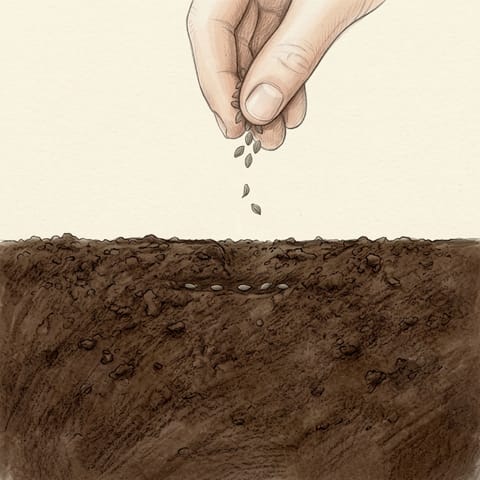 SowSoaked seed in a shallow rowDay 0
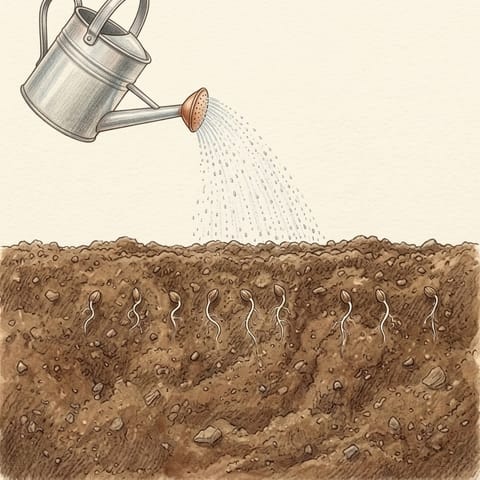 Keep dampWatered while the seed slowly sproutsUp to 6 weeks
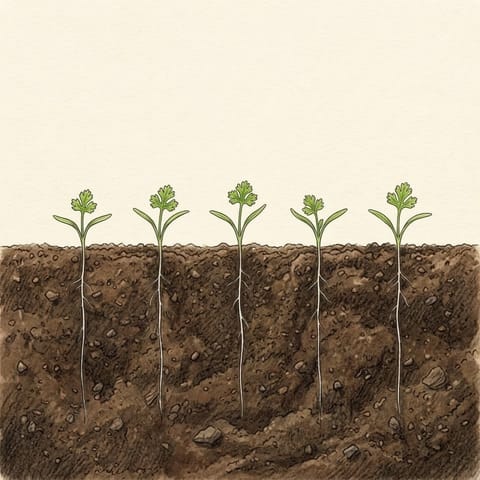 SeedlingsNarrow seed leaves, then a frilly true leafUp in 2–6 weeks
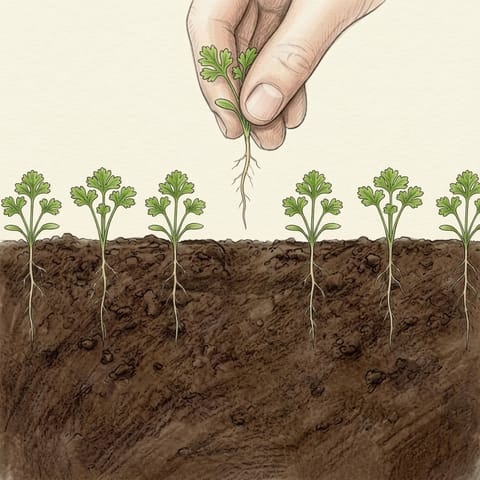 ThinOne plant left every 20–30 cm (8–12 in)About 6 weeks
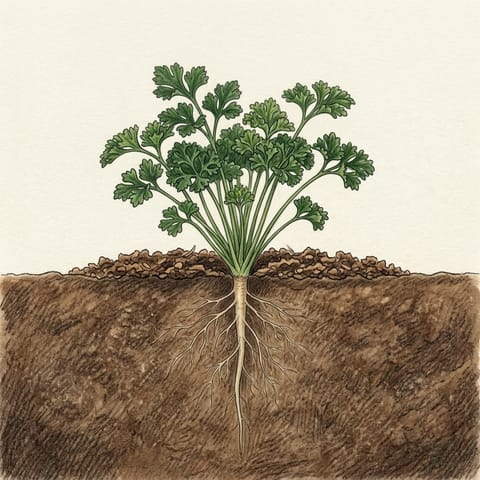 GrowLeafy clump, compost mulch around it6–10 weeks
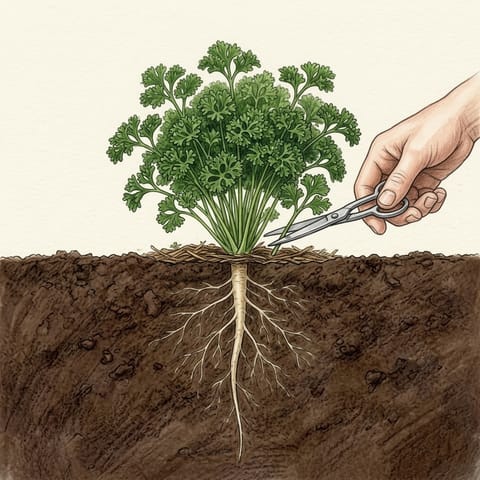 CutOuter stems cut at the baseFrom 10–12 weeks
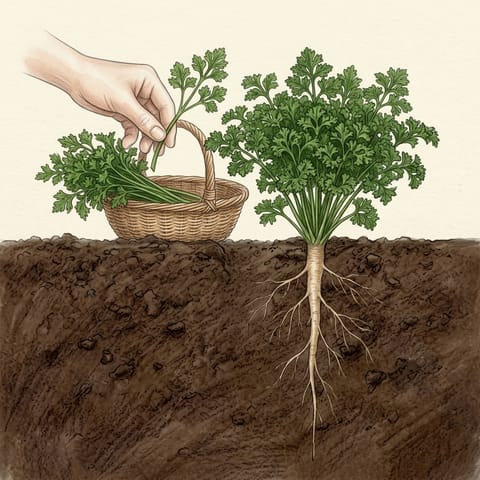 Keep cuttingA stem or two at a time, for monthsThrough its first year
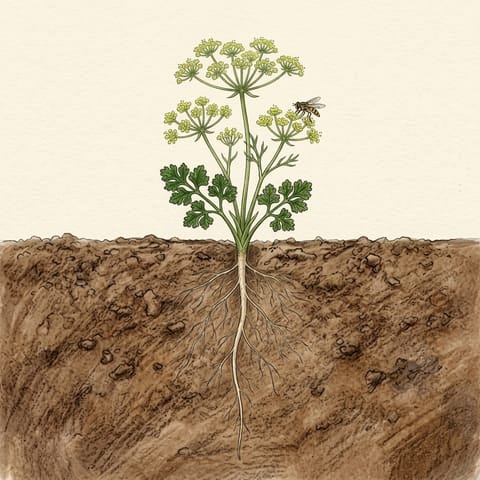 FlowersA tall flower stem: it is finishingIts second spring
Times vary with the variety and the weather. Seed comes up in about two weeks in warm soil and can take six in cold soil. Flat-leaf kinds grow taller than curly ones.
Growing it, step by step
Is it right for you?
- Parsley grows in a wide range of weather, best with days around 7–29°C (45–85°F). Long spells above about 32°C (90°F) slow it badly. It takes light frost, and with some cover it keeps giving leaves into winter.
- It is slow to come up from seed, often three to six weeks, so it needs patience and a seedbed kept damp all that time.
- It lives two years. The first year it makes leaves. In its second spring it sends up a flower stem, the leaves turn tough and bitter, and it is finished, so most gardeners sow a fresh batch each year.
- Each plant needs 20–30 cm (8–12 in) of space. It grows well in a pot at least 25 cm (10 in) wide and deep.
When to plant
Sow where it is to grow once the soil is at least 10°C (50°F). Seed comes up fastest in soil at 20–30°C (68–86°F), in about two weeks; in cold soil it can take six. For an earlier start, sow in modules about six to eight weeks before you plan to plant out, kept warm and bright, and plant out once the hard frosts are over. Sow small batches every few weeks through the warm months for a steady supply.
Cold winters: sow from spring, once the soil warms, until late summer. Hard winters usually kill it: cover plants, or pot one up for a bright windowsill. Mild climates: sow in spring and again in late summer or autumn, for leaves through most of the year. Hot or subtropical places: sow in autumn and again in late winter or early spring, so plants grow through the cooler months; give afternoon shade in summer. Tropics: the cooler, drier months. Flat-leaf kinds take sun and heat better than curly.Prepare the bed
- Sun or part shade, in fertile, moist soil that drains well. Dig in compost before sowing, and rake the surface fine and free of stones.
- Slightly acid to neutral soil suits it, pH 6.0–7.0. See soil pH.
- Choose a bed where carrots, parsnips, celery, celeriac or parsley didn't grow in the last few years. They are relatives and share pests and diseases.
Sow and plant
- Soak the seed in water overnight. It comes up sooner and more evenly.
- Sow thinly along a shallow row, 5 mm–1 cm (¼–½ in) deep, rows 30 cm (12 in) apart. Cover the seed lightly and water gently.
- The seed is slow, so mark the row, and keep it free of weeds while you wait.
- To start it in modules of seed-raising mix, sow 5 mm–1 cm (¼–½ in) deep. Plant out when the seedlings are 10–15 cm (4–6 in) tall, after hardening them off: outside by day, in at night, for a week or so.
- Plant at the same depth as they grew in the module, 20–30 cm (8–12 in) apart. Parsley has a long taproot that dislikes being disturbed, so move it while it is young and with its root ball whole.
Get it started
- Keep a sown row damp every day until the seedlings are up, which can take up to six weeks.
- The seedlings look like grass at first: two narrow seed leaves. The frilly true leaves follow.
- About six weeks after sowing, once the seedlings have two or three true leaves, thin them to 20–30 cm (8–12 in) apart. Eat the thinnings.
- Water young plants in well after planting out, then daily for the first week or so until they settle.
Keep it growing
- Water: deeply once or twice a week, more in hot, dry spells. Don't let the soil dry out completely: dry plants flower early. Keep it damp, not waterlogged. Pots dry out faster and need water more often.
- Mulch: once the plants are about 5 cm (2 in) tall, a layer of compost about 5 cm (2 in) deep keeps moisture even and weeds down. Keep it off the centre of the plant.
- Feed: good soil needs none. If growth slows after several cuttings, a weak liquid feed once a month keeps the leaves coming. In pots, a weak, balanced liquid feed every two to four weeks while you are cutting.
- Tidy: snip off yellowing lower leaves, and pull weeds while they are small.
- Winter: it takes light frost. Where winters are hard, cover plants to keep the leaves coming longer, or pot one up for a bright, cool windowsill.
- Sow more: a fresh batch each year, before the old plants flower, keeps leaves coming. In warm climates, sow every six months or so.
Watch for problems
The common ones, with a Garden help page each where there is one:
Harvest
- Start cutting once a plant has formed a full clump of strong stems, about 10–12 weeks after sowing.
- Cut the outer stems low down, near the base, and leave the young centre stems to grow. Cutting off just the tops leaves bare stalks and slows new growth.
- Take one or two stems from each plant at a time, every week or two. Regular cutting keeps new leaves coming.
- For a big batch, cut the whole plant down to just above the centre. It grows back for another cutting.
- Keep cutting until the plant sends up a flower stem in its second spring. After that the leaves turn tough and bitter.
After harvest
- Wash cut stems, let them drip dry and keep them in a bag in the fridge. Fresh parsley has the best flavour.
- To keep it longer, freeze it: chopped leaves in an ice cube tray topped with water, or in small bags. Dried parsley loses much of its flavour.
- Let a plant or two flower if you like: the flowers bring bees, hoverflies and other helpful insects, and plants left to seed often come up again around the garden. Then pull the plants out and compost them.
- Next in that bed: cabbage family crops, beans, peas or leafy greens. Keep parsley, carrots, parsnips, celery and celeriac out for a few years.
Sources
- RHS: How to grow parsley
- University of Minnesota Extension: Growing parsley in home gardens
- University of Wisconsin–Madison Extension: Parsley
- Texas A&M AgriLife Extension: Parsley
- University of Arkansas Cooperative Extension: Parsley
- Sustainable Gardening Australia: Parsley
Facts checked Friday 23 October 2026. General guidance only: local advice comes first.