Home › Vegetables › Okra
Vegetables
Growing okra
Abelmoschus esculentus. A tall, heat-loving summer crop, a relative of hibiscus, grown for its young pods. It's sown straight into warm soil, or raised in pots where summers are short. It wants a long hot season, full sun and steady water, and frost kills it. These steps work anywhere: they go by soil and weather, not by month. Also called lady's fingers (UK, India and elsewhere), bhindi (India and Pakistan), gumbo (parts of the US).
How okra grows
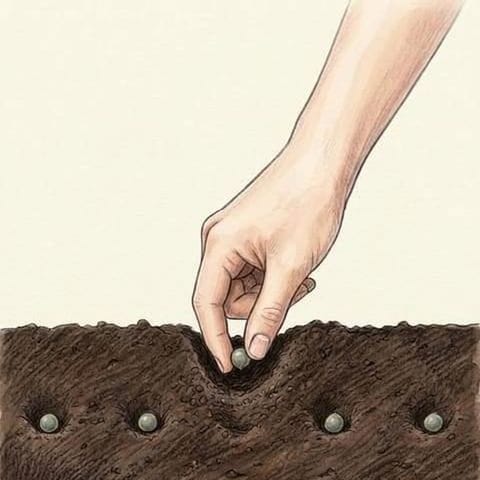 SowSoaked seeds, 2 cm (¾ in) deepUp in 1–2 weeks
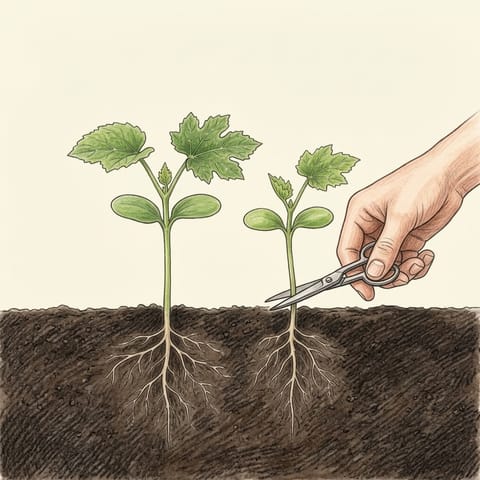 ThinOne plant every 30 cm (12 in)About 2–3 weeks
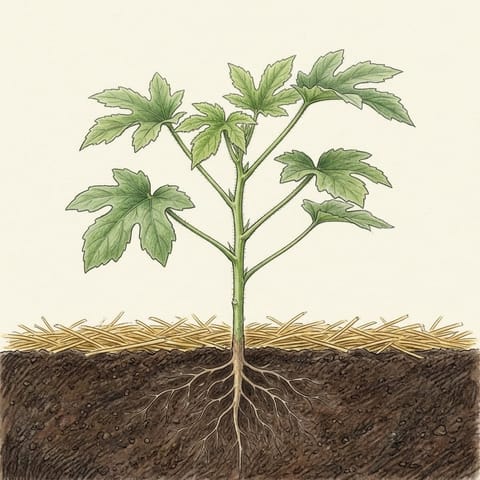 GrowTall stem, big leaves, mulch goes down4–7 weeks
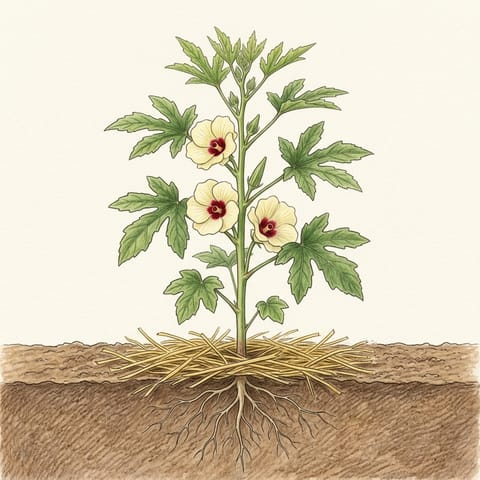 FlowerPale yellow flowers, dark red centresAbout 8 weeks
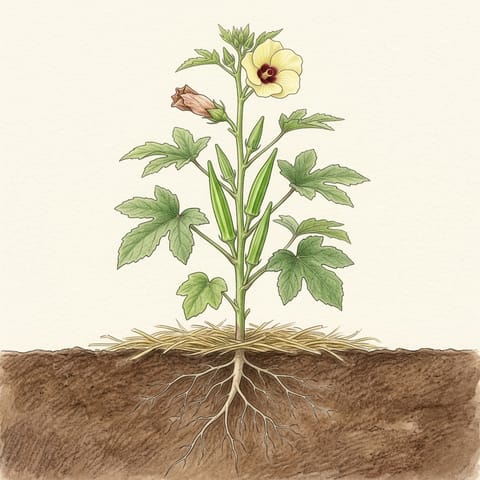 Pods formPods point up behind the flowersA few days after flowering
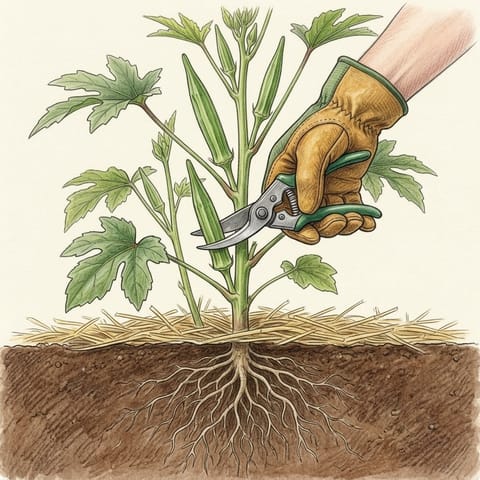 PickAt 5–8 cm (2–3 in), with glovesFrom about 8–10 weeks
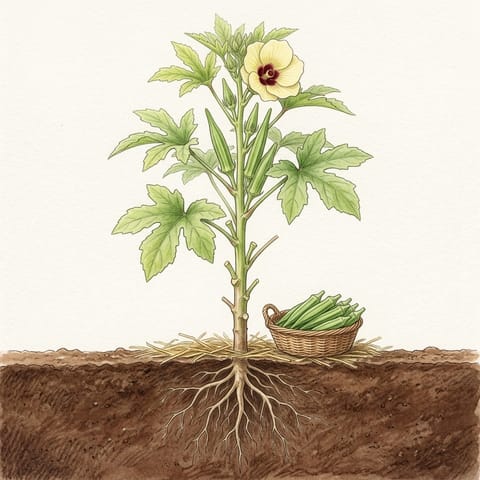 Keep pickingEvery day or two, for weeksUntil the weather cools
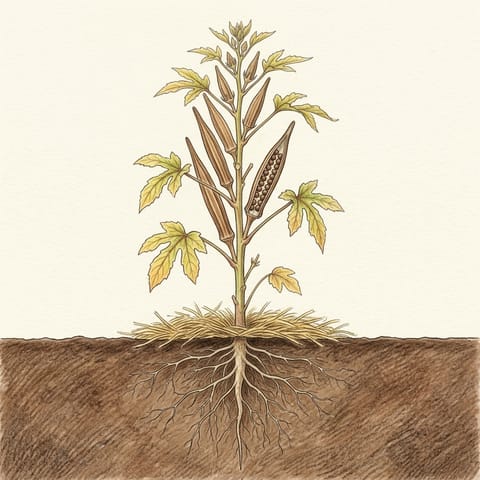 Seed podsA few left to dry for seedAt the end of the season
Times run from sowing in warm soil and vary with the variety and the weather. Dwarf kinds stay shorter; tall kinds can pass 2 m (6 ft). Raised in pots and planted out, okra starts cropping a few weeks after planting.
Growing it, step by step
Is it right for you?
- Okra needs a long, hot season: about two months of warm weather before the first pods, with days around 24–32°C (75–90°F), then weeks of picking.
- Frost kills it, and cold soil stops it in its tracks. Where summers are short and cool, it crops only under cover or in the warmest, most sheltered spot.
- Most kinds grow 1–2 m (3–6 ft) tall; dwarf kinds stay smaller. Four or five plants keep most families in pods. A dwarf kind grows well in a pot at least 30 cm (12 in) across and deep.
When to plant
Sow straight into the bed once the soil is at least 20°C (68°F) at 10 cm (4 in) down and frost is well past; seed comes up best in soil at 21–35°C (70–95°F). In colder soil it rots or comes up slowly and the seedlings die. Where summers are short, sow in small pots indoors about four to six weeks before, kept warm, and plant out into soil just as warm.
Short, cool summers: start seeds indoors in small pots and grow the plants under cover. Outdoors, plant out into soil warmed under a cloche, in the most sheltered sunny spot, and expect a smaller crop. Mild climates: sow or plant out in late spring or early summer, once the soil is truly warm, so the plants have a long enough season. Hot or subtropical places: sow from spring to midsummer. If cropping stalls in the hottest weeks, cut the plants back to 15–30 cm (6–12 in), water well, and they crop again until it turns cold. Tropics: it grows most of the year; sow at the start of the warmer months, in soil that drains well.Prepare the bed
- A sunny, sheltered spot with well-drained soil. Dig in compost before sowing, or spread a layer on top and sow or plant through it.
- Slightly acid to neutral soil suits it. See soil pH.
- Where springs are cool, cover the bed with a cloche or plastic for a week or two before sowing to warm the soil.
- Avoid a bed that grew okra in the last few years. Where root-knot nematodes are a problem, also avoid one that just grew tomatoes, capsicum, the pumpkin family or sweet potato.
Sow and plant
- Soak the seed in warm water for a few hours, or overnight, to soften its hard coat. Then sow it about 2 cm (¾ in) deep.
- Sow two or three seeds at each spot, 30–45 cm (12–18 in) apart, in rows 90 cm (36 in) apart.
- In pots, sow one or two seeds to a small pot, kept warm. Before planting out, harden the seedlings off for a week: outside by day, in at night.
- Plant at the same depth as in the pot, without disturbing the roots, once the plants are 10–15 cm (4–6 in) tall.
Get it started
- Water the bed after sowing and keep it just moist, not wet, until the seedlings are up: cold, soggy soil rots the seed. Water new plants daily for the first week.
- When the seedlings are about 8 cm (3 in) tall, thin to one strong plant every 30 cm (12 in) or so. Snip the spares at soil level. Crowded plants give far fewer pods.
Keep it growing
- Water: a deep soak at the base about twice a week, in the morning, so the soil is wet 15 cm (6 in) down. Light, frequent sprinkles make shallow roots. Keep it even once pods form; pots may need water every day in hot weather.
- Mulch: once the soil is warm and the plants are up, spread straw or compost 5–7 cm (2–3 in) deep to hold moisture and keep weeds down. Keep it off the stem.
- Weed: keep weeds down while the plants are small, by hand or with a shallow hoe. The roots run near the surface.
- Feed: good soil needs little. If growth is pale or slow, give a light balanced feed when the first flowers open and again about four weeks later. Too much nitrogen early grows leaves instead of pods. In pots, a liquid feed every two weeks from the first flowers.
- Support: no pruning is needed. Tall kinds in windy spots may need a stake, with the stem loosely tied to it.
Wear gloves. The leaves, stems and pods carry short hairs and prickles that irritate bare skin. Wear gloves and long sleeves when picking.Watch for problems
The common ones, with a Garden help page each where there is one:
Harvest
- Pods are ready a few days after the flower opens. Pick them young, at 5–8 cm (2–3 in) long, while they are tender.
- Pick every day or two. Okra grows fast: a pod missed for a few days turns tough and stringy, and pods left to ripen slow the plant down.
- Cut the short stalk with secateurs or a sharp knife. If the stalk is hard to cut, the pod is too old. Handle them gently: they bruise.
- Picked often, plants crop for up to three months, until the weather turns cold.
After harvest
- Keep pods dry and unwashed in the fridge, and use them within a few days. Wet pods go mouldy and slimy.
- To save seed, leave a few pods on an open-pollinated kind until they dry and turn brown, then shell out the seeds. Seed from F1 hybrids won't grow true.
- Pull the plants out when they finish. If plants were stunted or yellow, check the roots for knobbly swellings, the sign of root-knot nematodes. Bin diseased plants rather than composting them.
- Next in that bed: a cool-season crop such as leafy greens or onions. Move okra to a different bed each year, so wilt and root-knot nematodes don't build up.
Sources
- RHS: How to grow okra
- Clemson Cooperative Extension: Okra
- University of Illinois Extension: Okra
- Texas A&M AgriLife Extension: Growing okra
- Gardening Australia: Okra
Facts checked Friday 23 October 2026. General guidance only: local advice comes first.