Home › Vegetables › Chillies
Vegetables
Growing chillies
Capsicum annuum. A warm-season crop grown for its hot fruit, usually raised from seed in trays and planted out once the weather warms. It wants sun, warmth, steady water and a long season, frost kills it, and where winters are frost-free it can crop for more than one year. These steps work anywhere: they go by soil and weather, not by month. Also called chilli pepper (UK), hot pepper or chili pepper (US), chile (Mexico and the US Southwest).
How a chilli grows
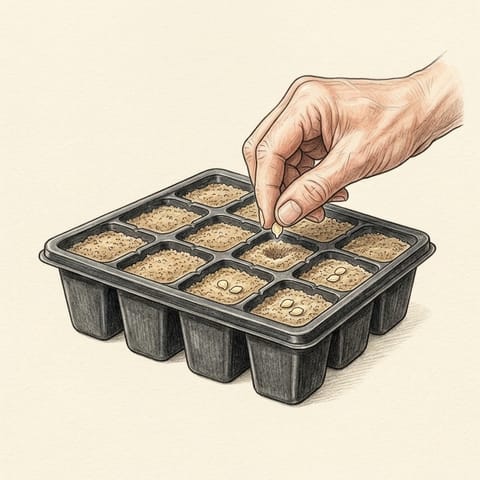 SowSeeds in a tray, kept warmUp in 1–3 weeks
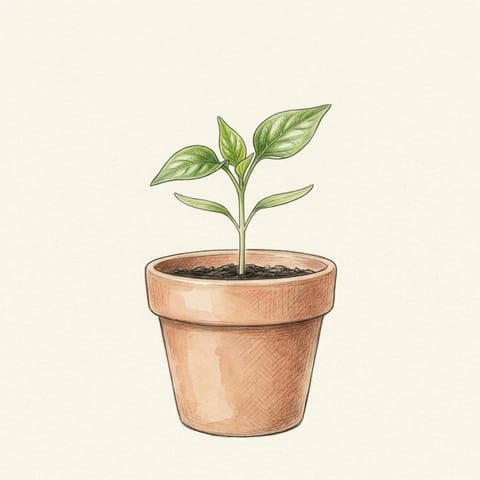 SeedlingMoved to its own pot3–5 weeks
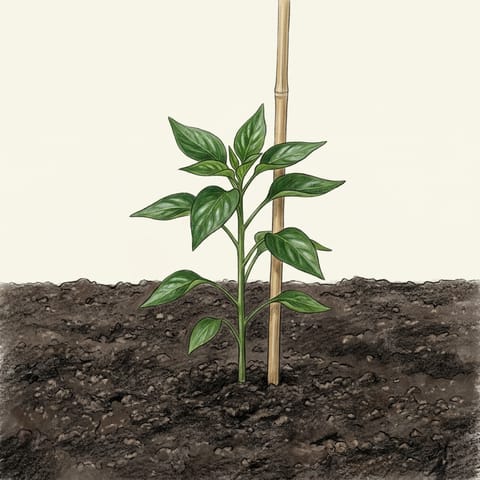 Plant outInto warm soil, cane beside itAbout 8 weeks from sowing
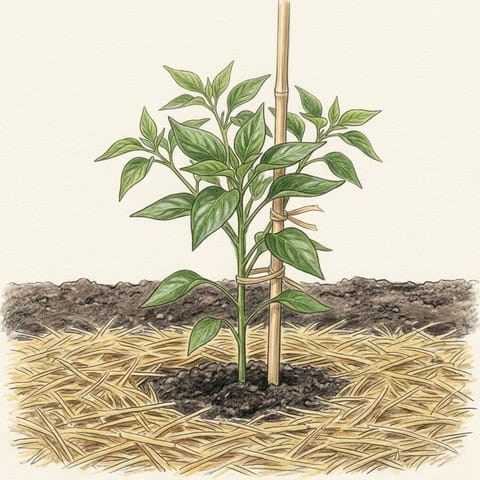 GrowBranches out, mulch goes down2–4 weeks after planting
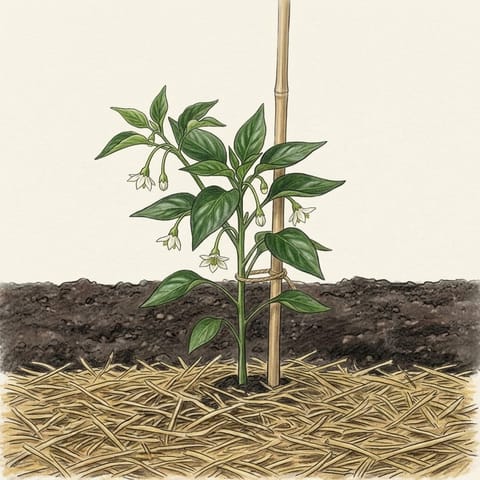 FlowerSmall white flowers open3–5 weeks after planting
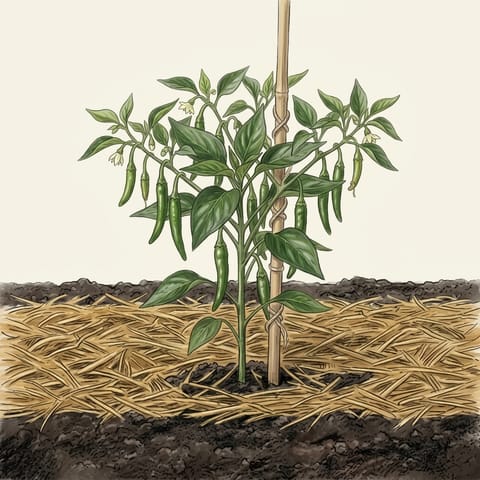 Fruit setsGreen chillies form and lengthen5–8 weeks after planting
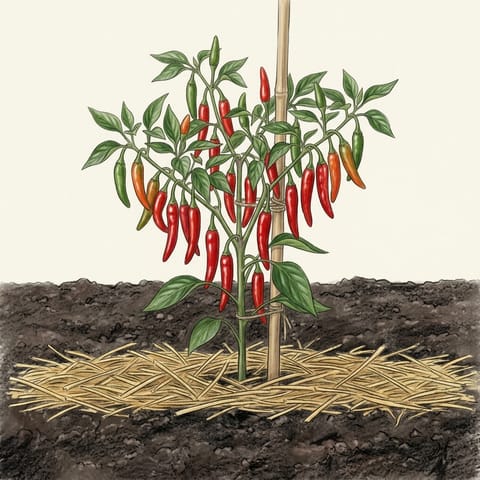 RipenGreen to orange to redAbout 8–10 weeks after flowering
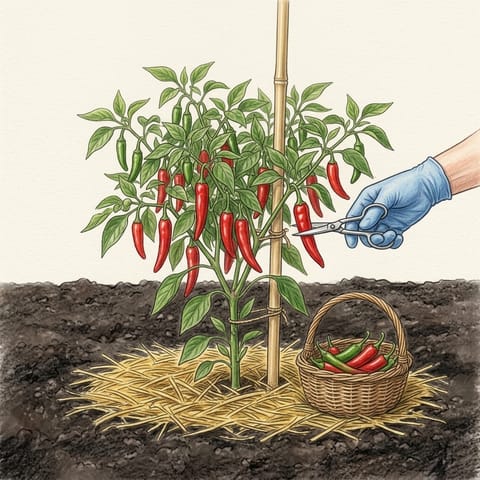 PickCut off, green or red, wearing glovesFor months, until the weather cools
Times vary with the variety and the weather. Very hot kinds, such as habaneros, are the slowest at every stage.
Growing it, step by step
Is it right for you?
- Chillies need a long, warm season: about three months of days around 21–29°C (70–85°F) and nights above about 12°C (54°F) after planting out, on top of about two months in trays.
- Frost kills them, and cold nights stop them growing. Very hot weather is a problem too: above about 32°C (90°F) by day, or nights that stay above about 21–24°C (70–75°F), the flowers drop without setting fruit.
- Where winters are frost-free, a plant can keep cropping for more than one year. Elsewhere they are grown for one summer.
- They grow well in pots, which can come under cover when frost is on the way. One plant needs a pot at least 22 cm (9 in) across.
When to plant
Sow seeds in trays about eight weeks before you plan to plant out, a little earlier for very hot kinds, and keep them warm: they come up best at about 21–27°C (70–80°F). Plant out once the soil is at least 16°C (60°F), the last frost has passed and nights stay above about 12°C (54°F).
Short, cool summers: start seeds early indoors, choose small-fruited, quick kinds, and grow them in a greenhouse or in pots against a warm, sunny wall. Mild climates: plant out in late spring, once the nights are warm. Hot or subtropical places: plant in spring and give them some afternoon shade; plants often live through winter and crop again. Tropics: they grow all year; in the wet season, plant on mounds so the roots drain.Prepare the bed
- A sunny, sheltered spot with well-drained soil. Dig in plenty of compost.
- Slightly acid to neutral soil suits them, pH 6.0–7.0. See soil pH.
- Avoid beds that grew chillies, capsicum, tomatoes, potatoes or eggplant in the last three years. They share the same diseases.
Sow and plant
- Sow seeds 5 mm (¼ in) deep in trays or small pots, one or two to a cell, and keep them warm. A heated propagator or a warm windowsill helps.
- When the seedlings are 2–3 cm (1 in) tall, move each one into its own small pot and grow it on somewhere bright and warm.
- Over about two weeks before planting out, harden them off: put them outside by day and bring them in at night.
- Plant at the same depth as in the pot, or a little deeper. There is no need to bury the stem like a tomato. Space them 45 cm (18 in) apart, in rows 60 cm (24 in) apart.
- Put a cane in beside each plant at planting time; big plants need several. The stems are brittle and snap under a heavy crop.
Get it started
- Water in well, then water daily for the first week or so until the plants settle.
- If a cold night is forecast soon after planting, cover them with fleece or a cloche.
Keep it growing
- Water: deeply at the base, about three times a week in warm weather, and keep the soil evenly moist. If it dries out the flower buds drop, and uneven watering causes blossom end rot. Pots may need water every day in hot weather.
- Mulch: about two weeks after planting, once the soil is warm, spread compost or straw at least 5 cm (2 in) deep to hold moisture and keep weeds down. Keep it off the stem.
- Feed: good soil needs little, but from the first flowers a high-potash liquid feed every two weeks gives a bigger crop; in pots, every week. Too much nitrogen grows leaves instead of chillies.
- Tie in: tie the main stem and heavy branches to their canes as the fruit builds.
- Pinching: not needed. Pinching out the tip at about 30 cm (12 in) gives a bushier plant with more, smaller fruit, but the crop comes later.
Wear gloves. Hot chillies burn skin and eyes. Wear rubber or disposable gloves to pick and cut them, keep your hands away from your face, and wash your hands well afterwards.Watch for problems
The common ones, with a Garden help page each where there is one:
AphidsSpider mitesWhiteflyThripsFruit flyCaterpillarsRoot-knot nematodesBlossom end rotFlower dropSunscaldBacterial leaf spotAnthracnoseMosaic virusGrey mouldHarvest
- Pick chillies green once they are full-sized and firm, or leave them on the plant to colour fully. Picking them green gives a bigger crop: fruit left to ripen early in the season slows new flowers.
- Cut them off with a short stalk, using scissors or secateurs. The branches are brittle and break if you pull.
- Before the first frost, pick what is left, or pull up the whole plant and hang it upside down somewhere warm and dry so the last fruit ripens.
After harvest
- Fresh chillies keep for one to three weeks somewhere cool. To keep them longer, dry, freeze or pickle them.
- Where winters are frost-free, leave plants in to crop again. In cold places, a plant in a pot can spend winter indoors somewhere warm and bright: cut it back and water sparingly. Often it is easier to start again from seed.
- Pull out plants that have finished. Bin diseased ones rather than composting them.
- Next in that bed: beans, peas or leafy greens. Keep chillies, capsicum, tomatoes, potatoes and eggplant out for three years.
Sources
- RHS: How to grow chilli peppers
- Gardening Australia: Chillies
- University of Maryland Extension: Growing peppers in the home garden
- University of Illinois Extension: Peppers
- Oregon State University Extension: Grow your own peppers
Facts checked Wednesday 21 October 2026. General guidance only: local advice comes first.