Home › Vegetables › Cauliflower
Vegetables
Growing cauliflower
Brassica oleracea (Botrytis Group). A cool-season crop grown for its white head, the curd, usually raised in trays and planted out. It is the fussiest of the cabbage family: it wants firm, rich soil that stays damp, and cool, steady weather, and any check in growth gives small, loose heads. These steps work anywhere: they go by soil and weather, not by month.
How a cauliflower grows
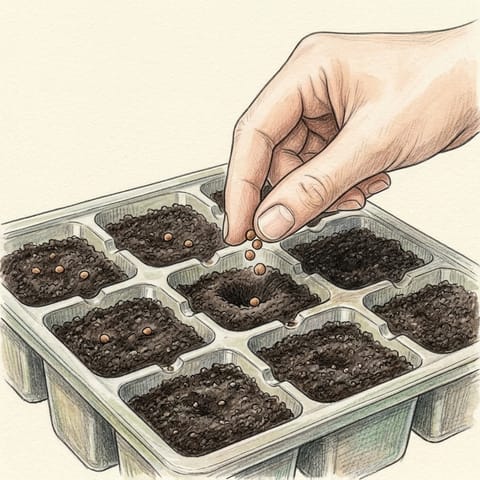 SowTwo seeds to a cell, in a trayUp in about 2 weeks
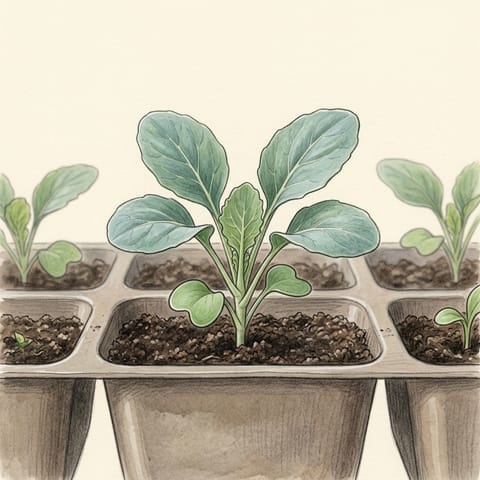 SeedlingTrue leaves form; one per cell3–5 weeks
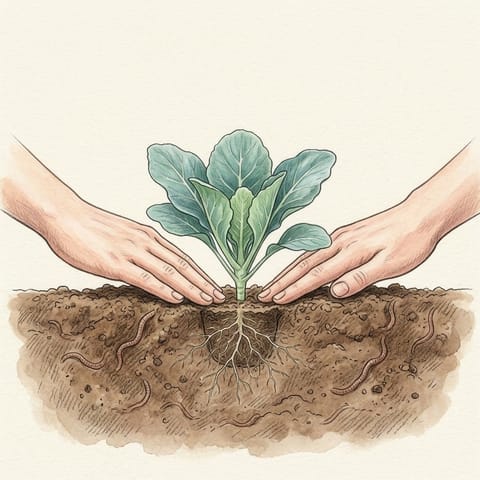 Plant outDeep, lowest leaves at soil level4–6 weeks from sowing
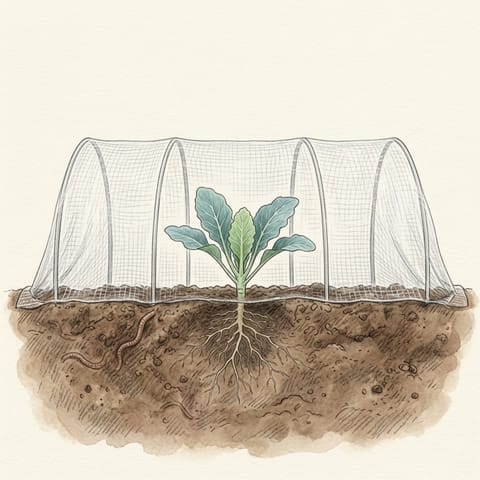 NetFine mesh on hoops keeps pests offOn planting day
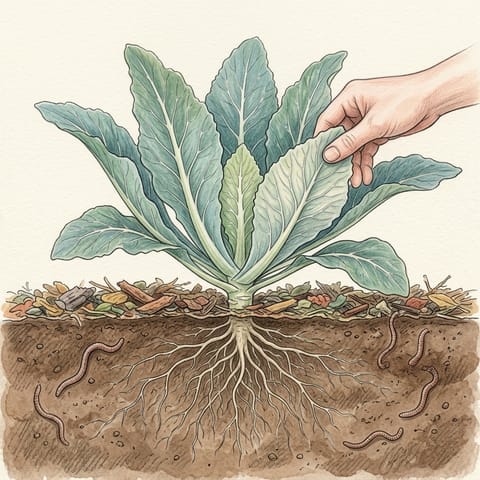 GrowBig leaves; mulch, water, check under them2–6 weeks after planting
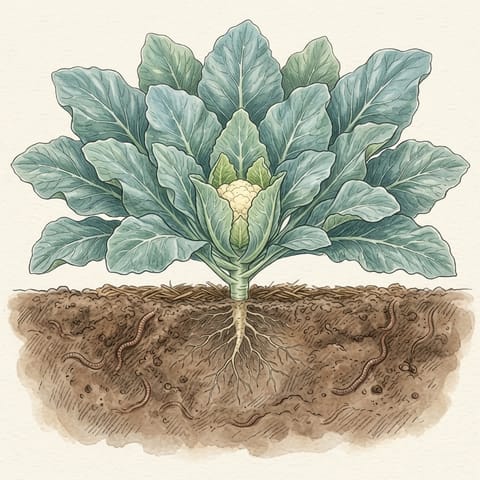 Head formsA small white curd in the centre6–9 weeks after planting
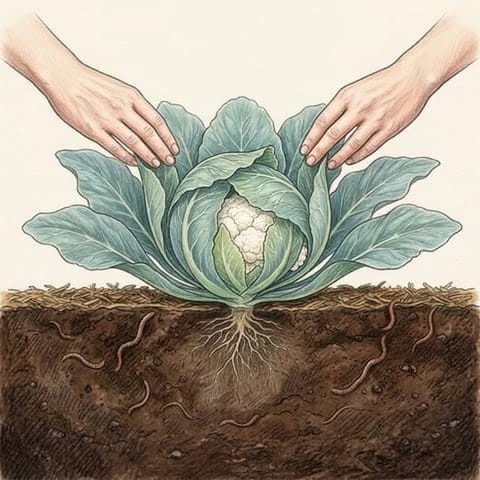 BlanchLeaves folded over to keep it whiteAbout 1–2 weeks before cutting
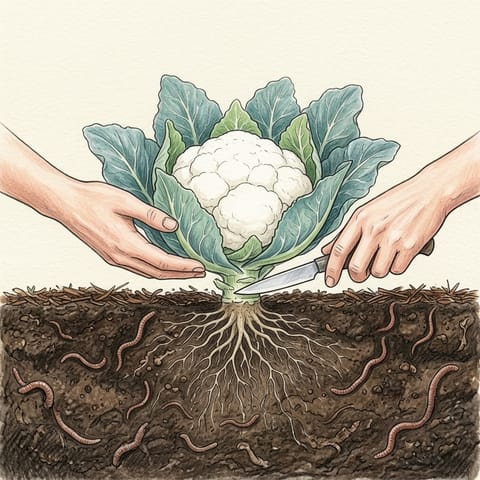 CutFirm white head, with a ring of leaves8–12 weeks after planting
Times run from sowing for the first three, then from planting out, and vary with the variety and the weather. Quick summer and mini kinds can be ready about seven weeks after planting; big winter kinds take six months or more from sowing.
Growing it, step by step
Is it right for you?
- Cauliflower needs two to three months of cool, steady growth after planting out, with days around 10–21°C (50–70°F) as the heads form. It is the hardest of the cabbage family to grow well: anything that checks its growth, such as drought, cold, heat or a late move from the tray, can spoil the head.
- Young plants take light frost, and hardy winter kinds stand through cold winters. Heat is the bigger problem: hot spells as the head forms give small, loose or discoloured heads, and in a heatwave a head may not form at all.
- It is a big plant: each needs about 60 cm (24 in) of room. Mini kinds, cut at tennis-ball size, fit 15 cm (6 in) apart, and a few grow well in a large, deep pot.
When to plant
Sow in trays or modules four to six weeks before you plan to plant out, or in a seedbed outdoors once the soil is at least 7°C (45°F). Plant out when seedlings are 10–15 cm (4–6 in) tall, from a few weeks before your last frost, or in summer for an autumn crop. Time it so the heads form in cool weather, not in the hottest weeks.
Cold winters: start quick kinds indoors in spring for heads before the heat, and sow again in early summer for an autumn crop, which is usually the most reliable. Mild climates: sow from late winter to early summer for heads from summer into autumn. Hardy winter kinds sown in late spring stand the winter and head from late winter into spring. Hot or subtropical places: sow from late summer into autumn, so the heads form in the cool of winter. Tropics: the cool, dry season only, with quick heat-tolerant kinds. Heads that form in heat go loose and discoloured.Prepare the bed
- A sunny, open spot with deep, fertile soil that holds moisture but drains well. Dig in plenty of compost or well-rotted manure, ideally a few months ahead so the ground can settle.
- Cauliflowers want firm ground: loose soil is one cause of small heads. If the bed is freshly dug, tread it down before raking it level.
- Slightly acid to neutral soil suits it, pH 6.0–7.0. Club root is worse in acid soil: if yours is below 6, lime it a few months before planting. See soil pH.
- Avoid beds that grew any of the cabbage family in the last four years: cabbage, broccoli, kale, Brussels sprouts, turnips, swedes or radishes. They share the same pests and diseases, and club root lasts in the soil for many years.
Sow and plant
- Sow about 1 cm (½ in) deep, two seeds to a module or small pot, and keep the stronger seedling. Or sow thinly in a seedbed outdoors and move the young plants later.
- A week or so before planting out, harden seedlings off: put them outside by day and bring them in at night.
- Plant out at four to six weeks old, 10–15 cm (4–6 in) tall with four or five true leaves. Don't hold them back in the tray: older, crowded seedlings are likely to button. Water them well before the move.
- Plant deeper than they sat in the tray, with the lowest leaves at soil level, and firm the soil well around them. Space them 60 cm (24 in) apart, in rows 70 cm (28 in) apart; mini kinds 15 cm (6 in) each way.
- A row planted together tends to be ready all at once, so sow a few every three weeks or so rather than many at a time.
Get it started
- Water in well, then water daily for the first week to ten days until the plants settle.
- On planting day, cover them with fine insect mesh on hoops, tucked in at the edges, and keep it on. It keeps out cabbage white caterpillars, pigeons and, in cool climates, cabbage root fly.
- Guard young plants against slugs and snails, especially in damp weather.
- In spring, cover young plants with fleece on frosty nights: a cold snap can make them button or bolt.
Keep it growing
- Water: a deep soak at the base about twice a week in dry weather, more often in sandy soil, so the soil stays damp at all times. Cauliflower is the thirstiest of the cabbage family: any dry spell gives small, loose heads.
- Mulch: about a week after planting, spread compost about 5 cm (2 in) deep on moist soil, leaving a small gap around the stems. It keeps moisture even and weeds down.
- Feed: good soil with plenty of compost needs little. On poorer soil, give a light scatter of nitrogen-rich feed three to four weeks after planting out and again a month later. Stop once the head is about half size. Too much grows leaves instead of heads.
- Blanch: for white kinds, when the head is about 5 cm (2 in) across, fold two or three big outer leaves over it, or snap their stalks so they bend over, and tie them loosely with soft string. It keeps the head white: sun turns it yellow, and in frost the same leaves protect it. Leave orange, green, purple and pointed green kinds uncovered: they need sun to colour.
- Weed: hoe shallowly or pull weeds by hand: the roots run near the surface. Once the heads start, disturb the soil around the plants as little as you can.
- Check: once a week, look under the leaves for eggs and caterpillars, even under the net, and squash them. Pull off yellowing lower leaves.
Watch for problems
The common ones, with a Garden help page each where there is one:
Cabbage white caterpillarsLoopers and other caterpillarsAphidsWhiteflyFlea beetlesCabbage root flySlugs and snailsBirdsClub rootBlack rotDowny mildewAlternaria leaf spotBoltingButtoningHarvest
- Cut when the head is a good size and still firm, tight and smooth, before it starts to separate into loose florets. Cut white kinds before they yellow. Mini kinds are ready at tennis-ball size.
- Once the head is covered, peek under the leaves every two or three days: most are ready within one to two weeks, and in warm weather a head can go loose and grainy in days.
- Cut through the stem just below the head with a sharp knife, keeping a ring of a few leaves around it to protect the curd.
- If a row is coming ready all at once, start cutting some before they reach full size to spread the harvest.
After harvest
- Cauliflower is best eaten fresh. It keeps about a week in the fridge, better with a few leaves left on, and freezes well once the florets are briefly boiled.
- Each plant gives one head, so pull the plant out once it is cut. If the roots are swollen and knobbly, that is club root: bin them rather than composting them.
- Next in that bed: anything outside the cabbage family, such as potatoes, onions, carrots, beans or peas. Keep cabbage, broccoli, cauliflower, kale, Brussels sprouts, turnips, swedes and radishes out for four years.
Sources
- RHS: How to grow cauliflowers
- University of Minnesota Extension: Growing cauliflower in home gardens
- University of Maryland Extension: Growing cauliflower in the home garden
- Northern Territory Government: Cauliflower (Agnote)
- Alabama Cooperative Extension: Soil temperature conditions for vegetable seed germination
Facts checked Friday 23 October 2026. General guidance only: local advice comes first.