Home › Vegetables › Broccoli
Vegetables
Growing broccoli
Brassica oleracea (Italica Group). A cool-season crop grown for its green flower heads, usually raised in trays and planted out. It likes cool, steady weather, firm fertile soil and even moisture, and takes frost, but heat as the heads form spoils them. These steps work anywhere: they go by soil and weather, not by month. Also called calabrese (UK, for the kind with one big head).
How broccoli grows
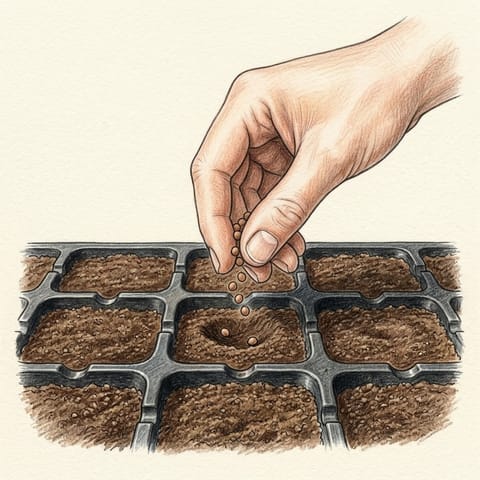 SowTwo seeds to a cell, in a trayUp within 2 weeks
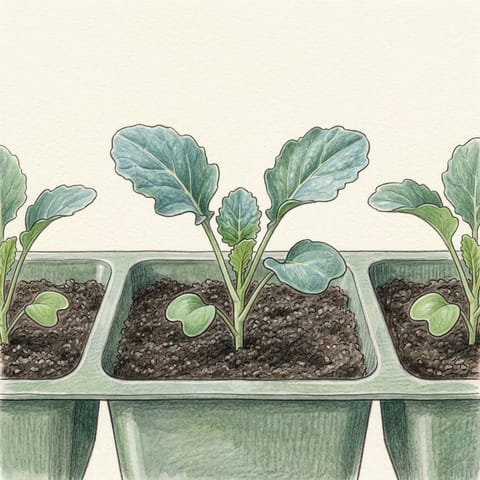 SeedlingTrue leaves form; one per cell2–4 weeks
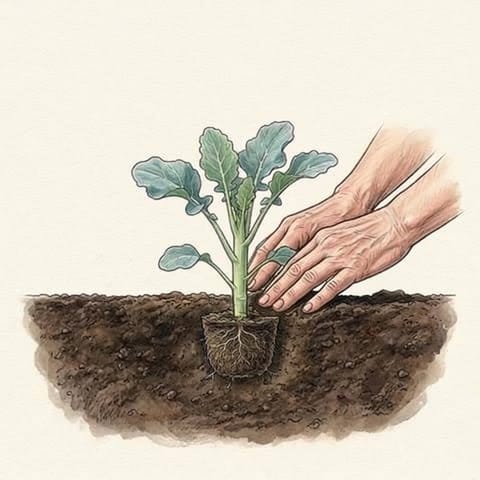 Plant outDeep, to the lowest leaves, firmed in4–6 weeks from sowing
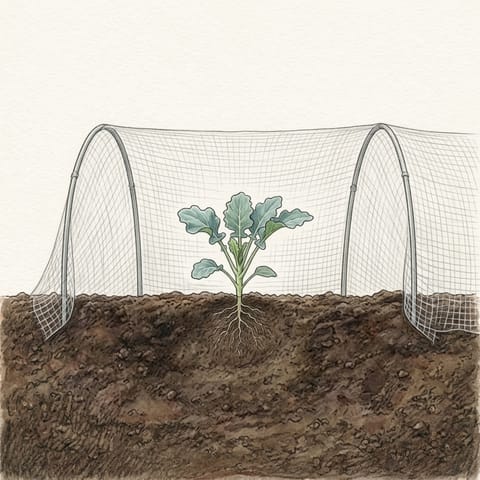 NetFine mesh on hoops keeps pests offOn planting day
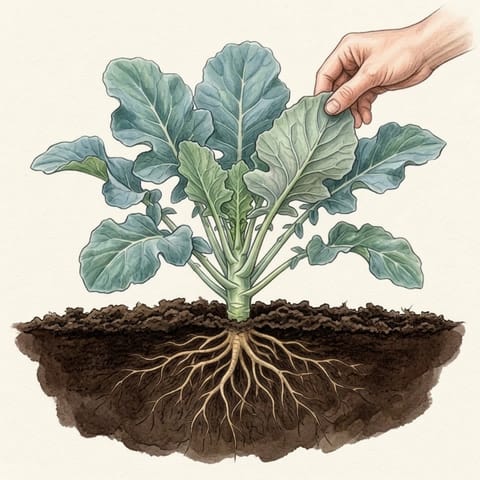 GrowBig leaves; mulch, feed, check for caterpillars2–5 weeks after planting
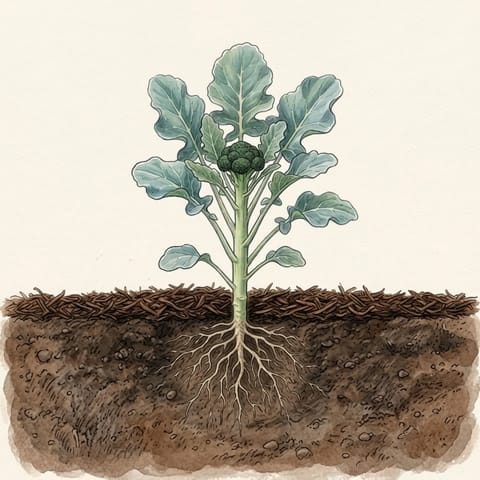 Head formsA small, tight head in the centre5–7 weeks after planting
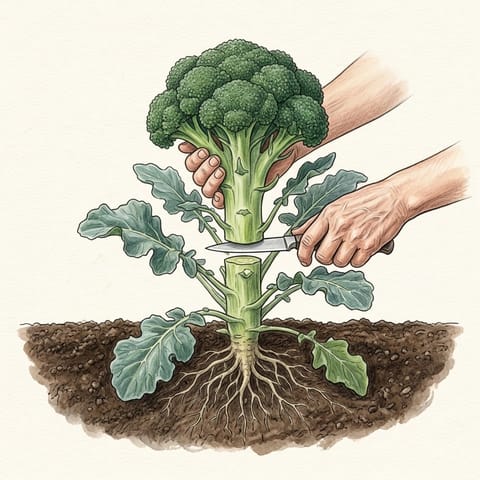 CutMain head, firm, with its stalk8–10 weeks after planting
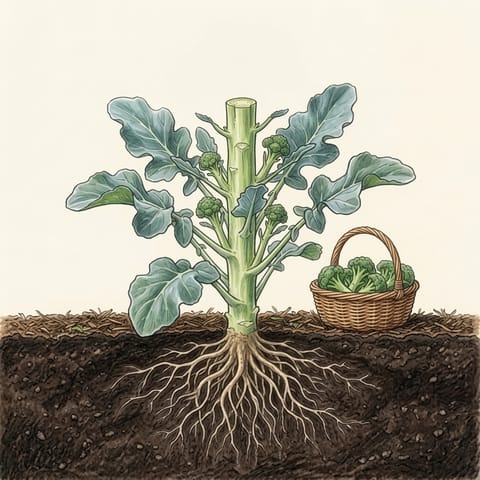 Side shootsSmall shoots, picked every few daysFor several weeks after
Times run from sowing for the first three, then from planting out, and vary with the variety and the weather. Quick kinds can be ready about seven weeks after planting; slower kinds take up to three months. Sprouting broccoli, grown for many small shoots, is slower again and stands through winter.
Growing it, step by step
Is it right for you?
- Broccoli needs two to three months of cool, steady growth after planting out, with days around 18–24°C (65–75°F). Heat while the plant is still leafy does little harm; heat as the heads form does.
- Hardened-off plants take frost down to about −2°C (28°F). Hot weather as the heads form gives small, loose, bitter heads that flower early, and in a heatwave a head may not form at all.
- Cold can spoil it too: days on end below about 10°C (50°F) can make young plants form a tiny, early head instead of a full one (buttoning).
When to plant
Sow in trays or modules four to six weeks before you plan to plant out: the seed comes up within two weeks with no extra heat. Seed sown straight into the bed needs soil of at least 7°C (45°F). Plant out from two to four weeks before the last frost, or in mid to late summer for an autumn crop, so the heads form in cool weather.
Cold winters: plant out in spring, a few weeks before the last frost, and again in mid to late summer for an autumn crop. Mild climates: sow in spring and again in late summer; heads that form as the weather cools are usually the best. Hot or subtropical places: plant in autumn for heads through winter, with quick or heat-tolerant kinds; summer is too hot. Tropics: the cool, dry season or the highlands, with heat-tolerant kinds.Prepare the bed
- A sunny, sheltered spot: plants grow 60–90 cm (2–3 ft) tall. Fertile, well-drained soil that holds moisture suits it best. Dig in plenty of compost or well-rotted manure, ideally a few months before planting.
- Broccoli likes firm ground. If the bed is freshly dug, tread it down before raking it level.
- Neutral to slightly acid soil suits it, pH 6.0–7.0. Club root is worse in acid soil: if yours is below 6, lime it a few months before planting. See soil pH.
- Avoid beds that grew any of the cabbage family in the last four years: cabbage, cauliflower, kale, Brussels sprouts, turnips, swedes or radishes. They share the same pests and diseases, and club root lasts in the soil for many years.
Sow and plant
- Sow about 1 cm (½ in) deep, two seeds to a module or small pot, and keep the stronger seedling. Or sow in a seedbed outdoors and move the young plants later.
- A week or so before planting out, harden seedlings off: put them outside by day and bring them in at night.
- Plant out at four to six weeks old, with four to six true leaves and 10–15 cm (4–6 in) tall. Don't hold them back in the tray: older, bigger plants are more likely to button. Water them well before and after the move.
- Plant deeper than they sat in the tray, burying the stem up to the lowest leaves, and firm the soil well around them. Space them 45 cm (18 in) apart, in rows 60 cm (24 in) apart.
Get it started
- Water in well, then water daily for the first week until the plants settle.
- On planting day, cover them with fine insect mesh on hoops, tucked in at the edges, and keep it on. It keeps out cabbage white butterflies, birds such as pigeons, aphids and, in cool climates, cabbage root fly. Check under it for eggs in the first couple of weeks.
- Guard young plants against slugs and snails, especially in damp weather.
Keep it growing
- Water: a deep soak at the base about twice a week in dry weather, so the soil stays evenly moist. Never let it dry out once the heads start: dry spells then give small, loose heads that flower early.
- Mulch: about two weeks after planting, once the plants have settled, spread compost about 5 cm (2 in) deep on moist soil. It keeps moisture even and weeds down. Keep it off the stems.
- Feed: broccoli is hungrier than most crops. Besides the compost dug in, give a light feed rich in nitrogen about three weeks after planting out, again as the heads start to form, and once after the main head is cut, for the side shoots. Too much grows leaves instead of heads.
- Weed: hoe shallowly or pull weeds by hand: the roots spread close to the surface.
- Check: once a week, look under the leaves for eggs and caterpillars and squash them. Pull off yellowing lower leaves.
Watch for problems
The common ones, with a Garden help page each where there is one:
Cabbage white caterpillarsLoopers and other caterpillarsAphidsWhiteflyFlea beetlesCabbage root flySlugs and snailsBirdsClub rootDowny mildewBlack rotBoltingButtoningHarvest
- Cut the main head when it is full-sized and firm, with the buds still tight and green, before any yellow flowers open. Most kinds head at 10–20 cm (4–8 in) across.
- As the head nears full size, check it every two or three days. If yellow starts to show, cut it straight away.
- Cut with a sharp knife, taking 10–15 cm (4–6 in) of stalk, and leave the plant in the ground.
- Side shoots follow in a few weeks. Pick them every three to five days, before any yellow shows: the more you cut, the more it makes, often for several weeks.
After harvest
- Broccoli is best eaten fresh. It keeps a few days to a week in a bag in the fridge, and freezes well once blanched.
- The leaves are good to eat too: cook them like kale.
- Pull the plants out once the side shoots stop. If the roots are swollen and knobbly, that is club root: bin them rather than composting them.
- Next in that bed: potatoes, or beans, peas, onions or carrots. Keep the cabbage family, including turnips, swedes and radishes, out for four years.
Sources
- RHS: How to grow broccoli
- University of Minnesota Extension: Growing broccoli in home gardens
- University of Maryland Extension: Growing broccoli in a home garden
- Utah State University Extension: How to grow broccoli in your garden
- Gardening Australia: Bountiful brassicas
Facts checked Wednesday 21 October 2026. General guidance only: local advice comes first.