Home › Vegetables › Basil
Vegetables
Growing basil
Ocimum basilicum. A tender summer herb grown for its leaves, raised from seed and picked a little at a time. Sweet basil is the usual kind. It wants warmth, sun and soil that drains well, and frost kills it. These steps work anywhere: they go by soil and weather, not by month.
How basil grows
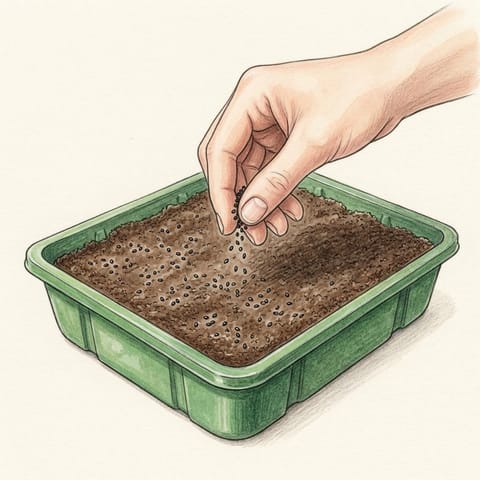 SowSeeds on the surface, kept warmUp in 5–10 days
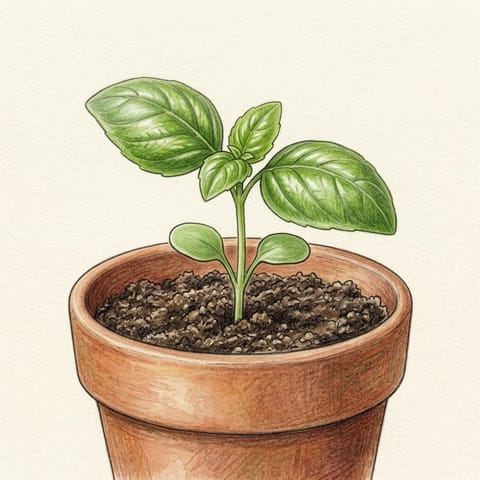 SeedlingFirst true leaves, potted on2–4 weeks
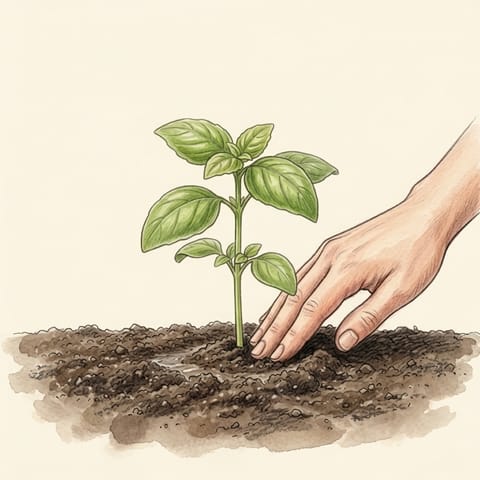 Plant outInto warm soil, once nights are mild4–6 weeks from sowing
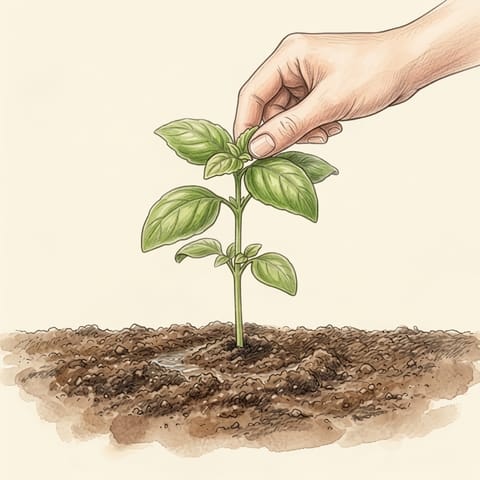 PinchTip cut just above a pair of leavesAbout 2 weeks after planting
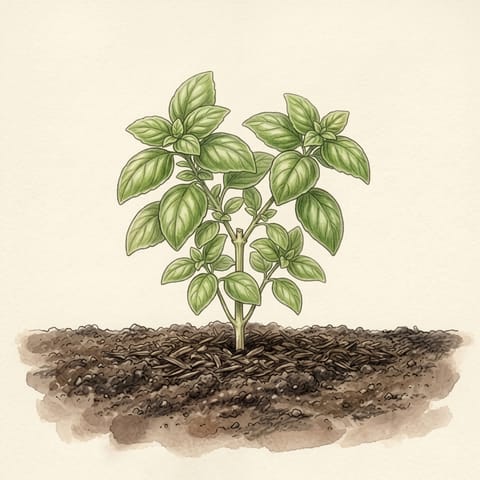 BranchTwo shoots grow from each cut3–5 weeks after planting
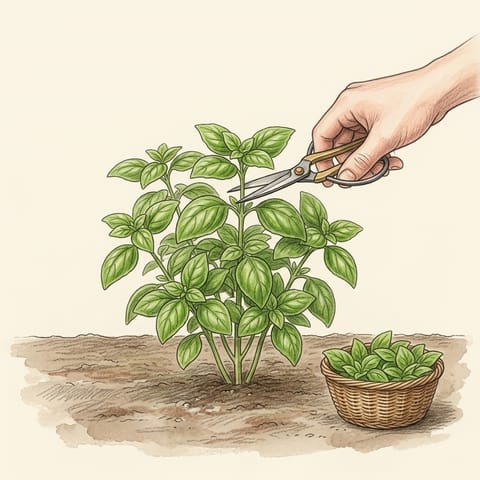 PickStem tips picked from the topFrom 4–6 weeks after planting
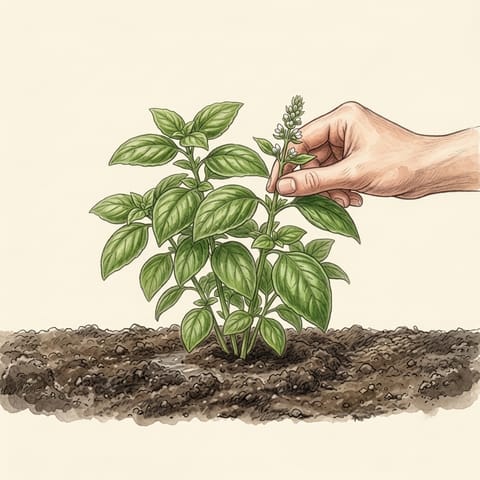 Flower budsPinched off as soon as they showThrough the warm months
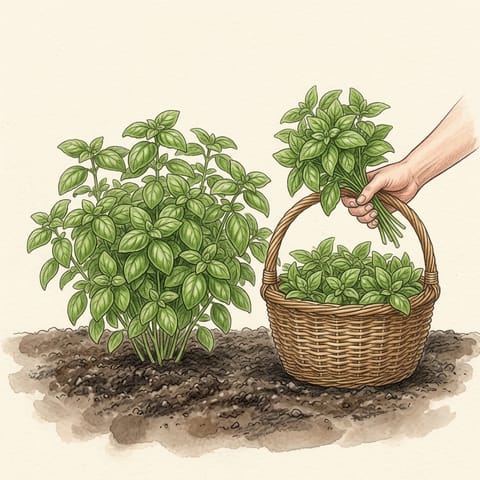 Big harvestWhole stems cut for a big batchBefore nights turn cold
Times vary with the variety and the weather. Basil grows slowly in cool weather and fast in summer heat.
Growing it, step by step
Is it right for you?
- Basil needs warmth: days around 21–30°C (70–86°F) and nights above about 10°C (50°F). It grows slowly in cool weather and fast in summer.
- Frost kills it, and cold nights set it back. Heat and dry soil push it into flower early, and once it flowers the leaves lose their flavour.
- Each plant needs about 25 cm (10 in) of space. It also grows well in a pot at least 20 cm (8 in) wide and deep, in a warm, sunny spot.
When to plant
Sow seeds in trays about four to six weeks before you plan to plant out, kept warm: they come up fastest at about 20–25°C (68–77°F). Plant out once the last frost has passed, the soil is at least 16°C (60°F) and nights stay above about 10°C (50°F). Seed can also go straight into the bed once nights stay that warm, but the first picking comes about a month later.
Short, cool summers: raise seedlings indoors and plant out once nights are warm, or grow it in pots or under cover. Mild climates: plant out in late spring, and sow more through summer. Hot or subtropical places: spring to autumn, with light afternoon shade in the hottest weeks. Tropics: all year round, where a plant can keep going for years.Prepare the bed
- A warm, sunny, sheltered spot with rich, well-drained soil. Dig in compost before planting.
- Slightly acid to neutral soil suits it, pH 6.0–7.5. See soil pH.
- Basil needs free drainage: soil that stays wet rots the roots. On heavy clay soil, use a raised bed or a pot.
- Avoid a bed where basil wilted and died before. The wilt lives on in the soil.
Sow and plant
- Sow seeds on the surface of trays or small pots of seed-raising mix and barely cover them, 3 mm (⅛ in) at most. Keep them warm and damp, not wet.
- Move each seedling to its own small pot once it has one or two pairs of true leaves.
- A week or so before planting out, harden seedlings off: put them outside by day and bring them in at night.
- Plant at the same depth as they sat in the pot, 25 cm (10 in) apart, in rows 40 cm (16 in) apart.
- To sow straight into the bed, sow thinly and barely cover the seed. Thin the seedlings to 25 cm (10 in) apart once they have two or three pairs of true leaves, and eat the thinnings.
Get it started
- Water in well, then water the soil daily for the first week or so until the plants settle.
- Seed sown in the bed needs the soil kept damp, not wet, until the seedlings show. Cold, wet soil invites damping off.
- If a cold night is forecast soon after planting, cover the plants with fleece, or bring pots indoors.
Keep it growing
- Pinch: about two weeks after planting, cut the tip of each stem just above a pair of leaves. Two new shoots grow from each cut. Do it again every two weeks or so to keep the plant bushy.
- Flower buds: pinch them off as soon as they show. Once basil flowers, the leaves lose their flavour and the plant makes fewer new ones.
- Water: water the soil, not the leaves, and in the morning rather than at night. Keep it damp, not wet: soggy soil rots the roots, and dry soil makes it flower early. Pots dry out faster and need water more often.
- Mulch: once the soil is warm, a layer of compost about 5 cm (2 in) deep keeps moisture even and weeds down. Keep it off the stems.
- Feed: good soil needs none. If the leaves turn pale, give a weak, balanced liquid feed, never a tomato feed: it pushes basil into flower. Too much feed also dulls the flavour. In pots, a weak liquid feed every two to four weeks once you start picking.
- Sow more: a few new plants every two to four weeks keep fresh leaves coming until the nights turn cold.
Watch for problems
The common ones, with a Garden help page each where there is one:
Harvest
- Start picking once a plant is growing strongly with several pairs of leaves, about four to six weeks after planting out. Take only a little at first.
- Pick from the top: cut a stem tip just above a pair of leaves, rather than pulling off single leaves. Leave a pair or two of leaves at the base of each stem to grow again.
- Pick little and often. The more you pick, the bushier it grows.
- For a big batch, such as for pesto, cut whole stems or whole plants. Do it before cold nights arrive: frost blackens the lot.
After harvest
- Stand cut stems in a jar of water out of direct sun, like cut flowers. Fresh leaves don't keep long, so use them within a few days.
- To keep it longer, freeze it: whole leaves, chopped leaves in an ice cube tray topped with water, or pesto made without the cheese. Air-dried basil turns brown and loses flavour.
- Basil lives for one season where winters are cold. Pull it out once the cold ends it, or root a few stem cuttings in a jar of water and keep them on a bright windowsill.
- Next in that bed: a cool-season crop such as peas, lettuce or the cabbage family. If basil wilted there, grow it somewhere else next time.
Sources
- RHS: How to grow basil
- University of Minnesota Extension: Growing basil in home gardens
- Clemson Cooperative Extension: Basil
- Sustainable Gardening Australia: Basil
- University of Illinois Extension: Basil
Facts checked Wednesday 21 October 2026. General guidance only: local advice comes first.