Home › Vegetables › Brussels sprouts
Vegetables
Growing Brussels sprouts
Brassica oleracea (Gemmifera Group). A tall, slow cool-season crop of the cabbage family, grown for the small sprouts up its stem, usually raised in trays and planted out. It needs a long cool season, firm fertile soil, netting against caterpillars and, in windy spots, a stake, and frost sweetens the sprouts. These steps work anywhere: they go by soil and weather, not by month.
How Brussels sprouts grow
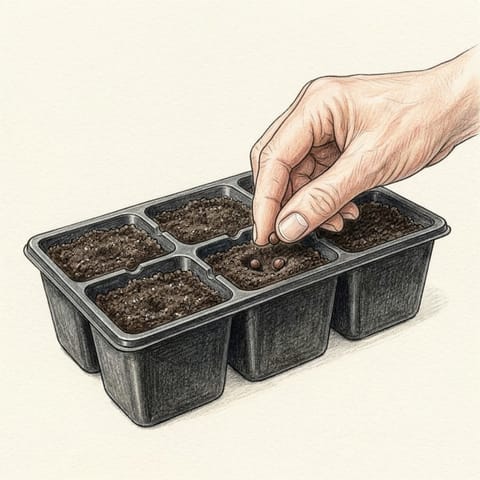 SowTwo seeds to each moduleUp in about a week
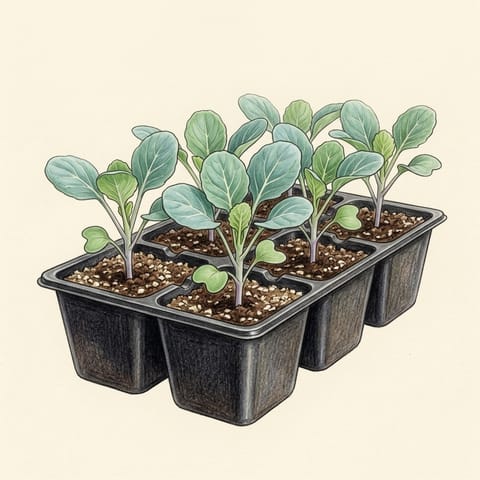 SeedlingTrue leaves form in the tray2–4 weeks
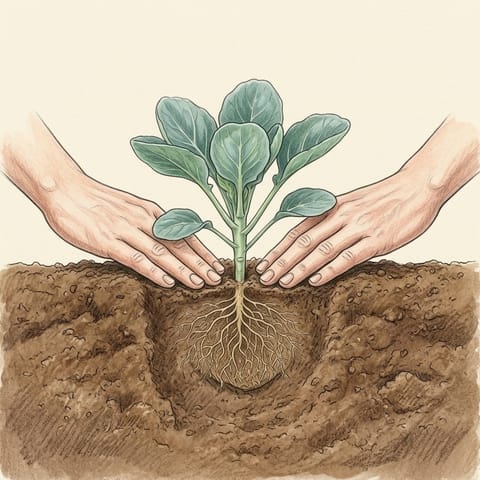 Plant outDeep, and firmed in hard4–6 weeks from sowing
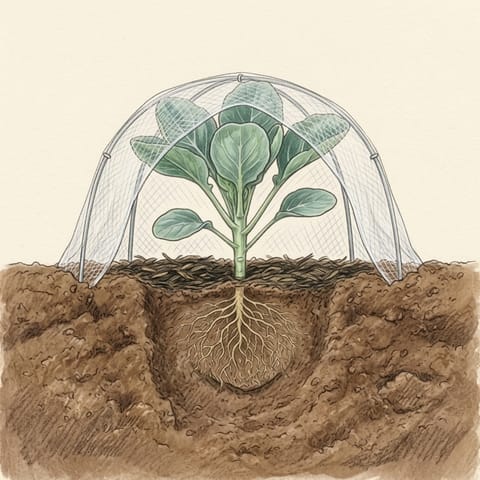 NetFine mesh on hoops, compost belowOn planting day
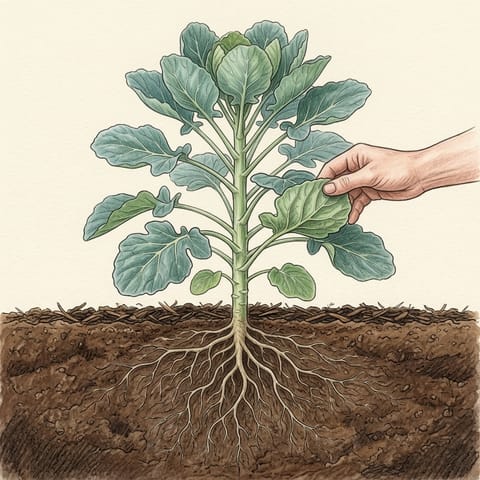 GrowA tall stem with big leaves1–2 months after planting
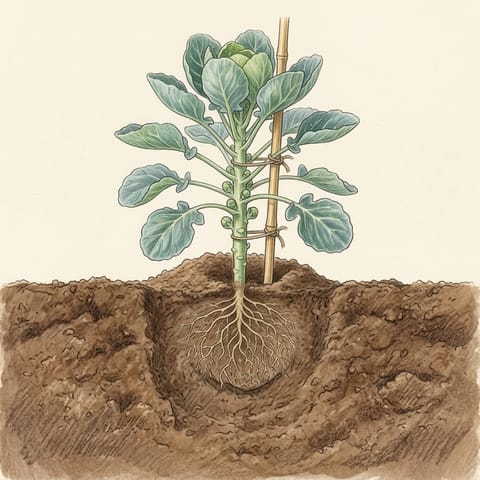 StakeTied to a cane, soil drawn up2–3 months after planting
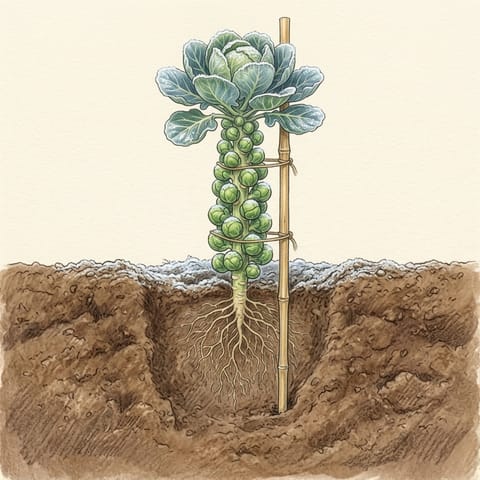 SproutsFirm buttons fill the stem3–5 months after planting
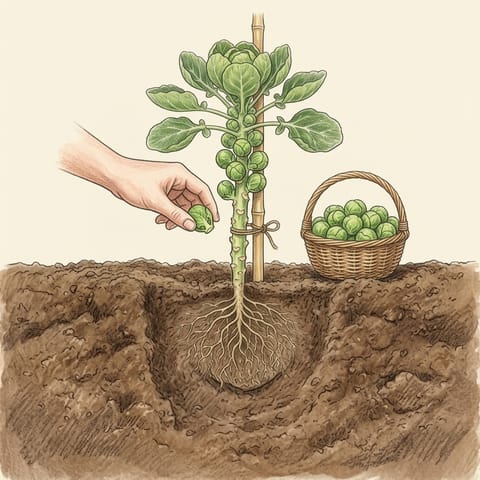 PickFrom the bottom up, a few at a timeFor 2 months or more
Times run from sowing for the first three, then from planting out, and vary with the variety and the weather. Early kinds are ready from autumn, as the weather cools; late kinds stand in the garden and are picked through the winter.
Growing it, step by step
Is it right for you?
- Brussels sprouts are slow: three to five months from planting out, then weeks of picking. They want cool weather, days around 15–21°C (60–70°F), as the sprouts form.
- They take hard frost, and a frost sweetens the sprouts. Heat is the problem: sprouts that form in hot or dry weather stay loose and leafy and taste bitter.
- Plants grow 60–90 cm (2–3 ft) tall, some kinds more, and each needs about 60 cm (24 in) of room. One plant grows in a pot at least 30 cm (12 in) across, staked.
When to plant
Sow in modules or small pots four to six weeks before planting out, or in a seedbed outdoors once the soil is at least 7°C (45°F). Plant out early enough for three to four months of growth before the weather turns cold, so the sprouts form in cool weather, not in summer heat. Where you get frost, that means planting out at least 90–100 days before the first one.
Cold winters: start seedlings indoors in spring and plant out in late spring or early summer, for sprouts from autumn until hard freezes. Mild climates: plant out from late spring to midsummer. Sprouts form as the weather cools and plants stand through the winter for picking. Hot or subtropical places: difficult: plant early, quick kinds in late summer or early autumn, so the sprouts form in the coolest weeks. Tropics: rarely successful, except in cool highlands in the cool, dry season.Prepare the bed
- A sunny, sheltered spot: the plants are tall and top-heavy. Fertile soil that drains well but holds moisture. Dig in plenty of compost or well-rotted manure, ideally a few months ahead.
- Slightly acid to neutral soil suits it, pH 6.0–7.0. Club root is worse in acid soil: if yours is below 6, lime it a few months before planting. See soil pH.
- Firm the soil after digging: tread it down, then rake the surface fine. Sprouts want firm ground to anchor their tall stems.
- Avoid beds that grew any of the cabbage family in the last four years: cabbage, broccoli, cauliflower, kale, Brussels sprouts, turnips, swedes or radishes. They share club root and other soil-borne problems.
Sow and plant
- Sow about 1 cm (½ in) deep, two seeds to a module or small pot, and pull out the weaker seedling. Or sow thinly in a seedbed outdoors and move them later.
- Plant out at four to six weeks old, when seedlings are 10–15 cm (4–6 in) tall. Harden them off for a week or so first: outside by day, in at night. Water them well the day before the move.
- Plant deeper than they sat in the tray, with the lowest leaves at soil level, and firm the soil hard around them: a tug on a leaf should tear the leaf, not lift the plant. Space them 60 cm (24 in) apart, in rows 75 cm (30 in) apart.
Get it started
- Water in well, then water daily for the first week or so until the plants settle.
- On planting day, cover them with fine insect mesh on hoops, tucked in at the edges. It keeps out cabbage white caterpillars, pigeons, aphids and, in cool climates, cabbage root fly. Keep it on all season, raising it on taller canes or a frame as the plants grow.
- Guard young plants against slugs and snails, especially after rain.
Keep it growing
- Water: never let young plants dry out. Once settled, a deep soak at the base once or twice a week in dry weather, more often in sandy soil. Hot, dry spells give bitter, loose sprouts.
- Mulch: about a week after planting, spread compost about 5 cm (2 in) deep on moist soil. It keeps moisture even and smothers weeds.
- Feed: good soil needs little. Give one light scatter of nitrogen-rich feed about a month after planting out, and none once the sprouts start to form.
- Stake and earth up: as the plants grow tall, before the sprouts form, tie each stem to a strong cane and draw soil up around the base of the stem. Plants that rock in the wind loosen their roots and can fall over.
- Check: every week, look under the leaves for eggs and caterpillars, even under the net, and among the sprouts for grey aphid colonies.
- Lower leaves: once the sprouts start to form, snap off yellowing lower leaves every couple of weeks. It lets air in and keeps mould away. Leave the healthy green leaves above: they feed the sprouts.
- Pinch out the top: only if you want one big, even pick: when the lowest sprouts are about 1 cm (½ in) across, snap off the growing tip. The sprouts fill out together over the next few weeks, but no new ones form. Skip it for a long picking season.
Watch for problems
The common ones, with a Garden help page each where there is one:
Cabbage white caterpillarsLoopers and other caterpillarsAphidsWhiteflyFlea beetlesCabbage root flySlugs and snailsBirdsClub rootBlack rotDowny mildewWhite blisterLoose sproutsHarvest
- Start picking when the lowest sprouts are firm, tightly closed and about the size of a walnut, 2.5–4 cm (1–1½ in) across. Sprouts form from the bottom of the stem up.
- Snap them off with a sharp downward tug, or cut them, taking a few from each plant at a time, and pull off the leaf below as you go.
- The sprouts taste sweetest after a frost. Plants stand in the garden through cold weather, so pick them as you need them over two months or more.
- At the end, cut the whole stem. The leafy top is good to eat too: cook it like cabbage.
After harvest
- Keep sprouts in a bag in the fridge, where they last a few weeks, though they are best eaten fresh. A whole cut stem keeps for days stood in water, or hung somewhere cool and frost-free.
- Dig out the stems and roots once you finish: left in, they carry cabbage-family diseases on. Chop the tough stems before composting them, and bin any with swollen, distorted roots.
- Next in that bed: anything outside the cabbage family, such as potatoes, onions, carrots, beans or peas. Keep cabbage, broccoli, cauliflower, kale, Brussels sprouts, turnips, swedes and radishes out for four years.
Sources
- RHS: How to grow Brussels sprouts
- RHS: Brussels sprouts problems
- Iowa State University Extension: Growing Brussels sprouts in the home garden
- University of Illinois Extension: Brussels sprouts
- Gardening Australia: Future proof
Facts checked Friday 23 October 2026. General guidance only: local advice comes first.