Home › Vegetables › Rosemary
Vegetables
Growing rosemary
Salvia rosmarinus (formerly Rosmarinus officinalis). An evergreen Mediterranean shrub grown for its fragrant, needle-like leaves, picked all year and for years. Most people start with a small plant. It wants full sun and light soil that drains fast, and wet roots and cold, soggy winters kill it more often than frost does. These steps work anywhere: they go by soil and weather, not by month.
New to growing vegetables? Start with the beginner's guide.
How rosemary grows
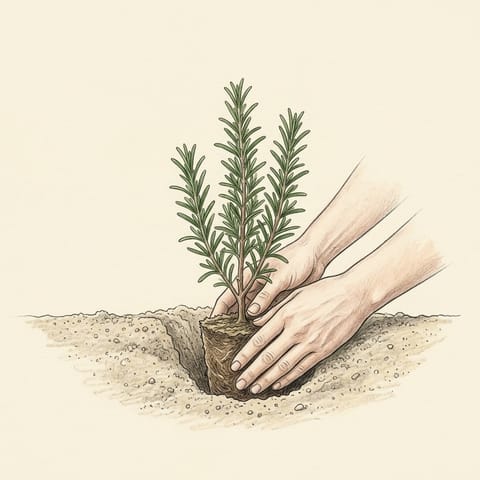 PlantA young plant, root ball level with the soilDay 0
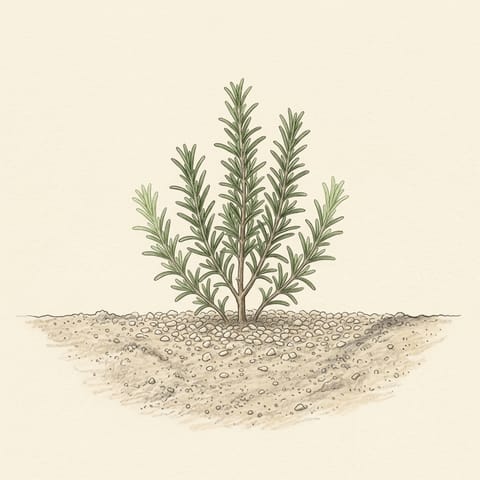 Settle inFresh, soft growth at the tips4–8 weeks
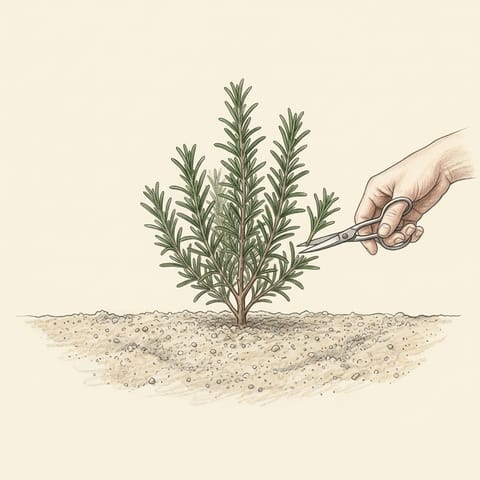 First picksSprigs snipped from the soft tipsFrom about 3 months
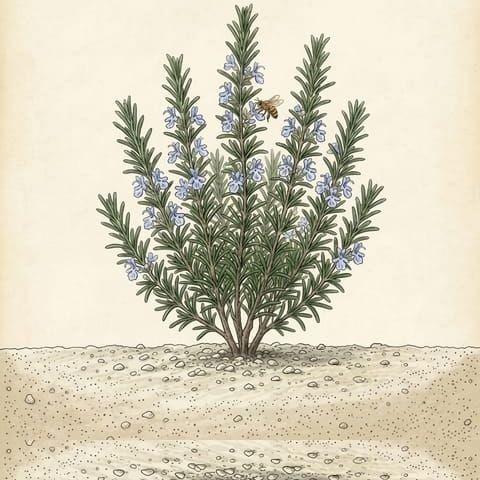 FlowersSmall pale blue flowers along the stemsLate winter to early summer
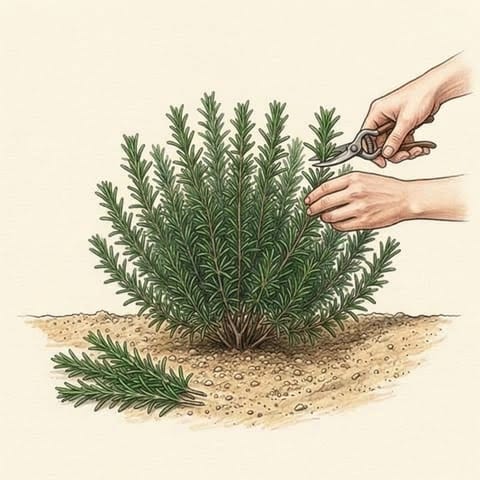 TrimLeafy stems cut back lightly after floweringEach year, after flowering
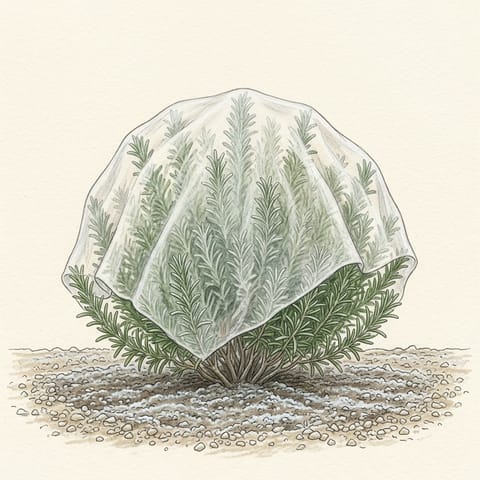 WinterKept on the dry side; covered in a hard frostEach winter
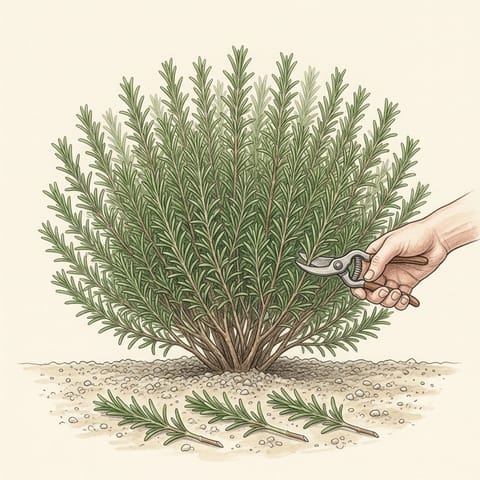 CuttingsTips taken from new growth to rootLate spring to summer
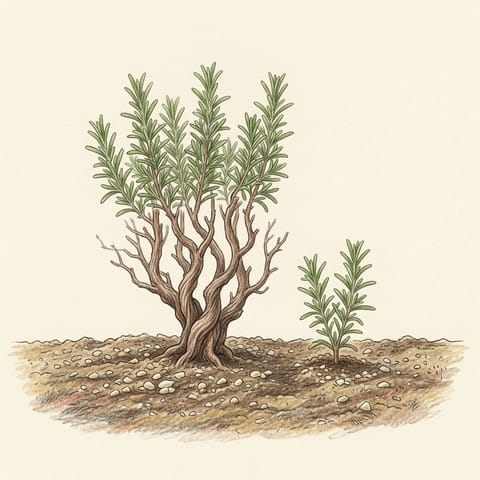 RenewOld plant woody and bare at the baseAfter about 7–8 years
Times run from planting a young bought plant and vary with the kind and the weather. Upright kinds grow into a shrub of 1–1.5 m (3–5 ft); trailing kinds stay low and spread.
Growing it, step by step
Is it right for you?
- Rosemary is an evergreen, woody shrub with needle-like leaves. One plant gives sprigs all year round, for years.
- It loves hot, dry weather. Established plants take frost down to about −8°C (18°F) in soil that drains well; young plants and plants in pots are less hardy. Wet roots in cold weather kill more plants than cold alone, and humid summers are hard going.
- Upright kinds grow to 1–1.5 m (3–5 ft) tall and make a low hedge; some reach 2 m (6 ft). Trailing kinds stay low, about 25–60 cm (10 in–2 ft) tall, and spill over walls and rockeries.
- A plant usually stays good for about 7–8 years, even when trimmed every year, though some last longer. Then it turns woody and bare at the base, and is best replaced with a young plant grown from a cutting.
- In a pot: at least 30 cm (12 in) wide and deep, with plenty of drainage holes, in gritty mix and full sun. It struggles indoors for long. In cold places a pot can come in for winter to the sunniest, coolest window, watered sparingly, then go back out once frosts are over.
When to plant
Plant a young plant in spring, once the soil is warming and the hard frosts are over. Where winters are mild, autumn planting works too. A potted plant can go in at most times of year if you water it through dry spells, but avoid the coldest and wettest weeks.
Cold winters: plant in spring in the sunniest, best-drained spot, and cover it in hard frosts. Where winters fall well below −8°C (18°F), grow it in a pot and bring it in to a cool, bright window before the first frost. Mild climates: plant in spring or autumn. It stays outside all year and often flowers through winter and spring. Hot or subtropical places: plant in autumn or spring. Dry heat suits it, but humid, rainy summers bring root rot and mildew: give it very free-draining soil, room for air, or a pot that can move out of the rain. Tropics: hard going in the wet season. Grow it in a pot of gritty mix, sheltered from heavy rain, and expect a shorter life.Prepare the bed
- Full sun, in a warm, sheltered spot, with light, free-draining soil. Sandy soil suits it well.
- It doesn't need rich soil. A little compost dug in is plenty.
- On heavy clay soil, or anywhere water lies after rain, plant it in a raised bed or a pot, with grit mixed through the soil.
- Near-neutral soil suits it, about pH 6.0–7.0, and it copes with slightly alkaline soil. On very acid soil, a little lime helps. See soil pH.
Plant
- Start with a young plant, or a cutting from a friend's bush. Seed is slow and unreliable, named kinds don't come true from it, and a seedling takes years to grow big enough to pick.
- Dig a hole as deep as the root ball and a little wider. Set the plant no deeper than it grew in its pot, with the top of the roots only lightly covered, and firm the soil around it.
- Space plants 60 cm (2 ft) apart, or 45 cm (18 in) apart for a low hedge. Big upright kinds can need up to 1 m (3 ft).
- In a pot, use potting mix with about a quarter grit mixed in, in a pot at least 30 cm (12 in) wide and deep with plenty of drainage holes.
Get it started
- Water in well, then water when the top few centimetres of soil are dry through the first summer. Don't keep it wet.
- Spread a thin layer of fine gravel around the plant instead of bark or compost mulch. Gravel keeps the base dry; organic mulch holds moisture against it.
- Pick only a few sprigs for the first few months while it settles in.
Keep it growing
- Pick: snip sprigs as you need them, all year round. The soft new growth in late spring and summer has the best flavour. Picking often keeps the plant bushy.
- Trim: once a year, after flowering, trim the leafy stems back lightly all over to keep the plant bushy and compact. Never cut back into the old, bare brown wood: it rarely sprouts again. An untrimmed plant soon goes leggy and bare at the base.
- Water: water new plants in dry spells through their first year. Established plants in the ground need no extra water except in long droughts. Pots dry out faster: water when the top of the mix is dry, and never leave them standing in water. Overwatering kills more rosemary than anything else.
- Feed: plants in the ground need none. A pot kept in the same mix for more than a year can have a light feed in late spring, or be moved into fresh gritty mix.
- Winter: keep it on the dry side. In very cold spells, cover plants with fleece or hessian overnight. Group pots together in a sheltered spot, and keep them out of winter rain: cold, wet mix rots the roots.
- Air: in humid places, give plants room and thin out crowded stems so air moves through. Damp, still air brings mildew and grey mould.
Watch for problems
The common ones, with a Garden help page each where there is one:
Harvest
- Start picking lightly about three months after planting, once the plant is growing strongly. After that, pick all year round.
- Snip sprigs from the tips of the stems with scissors or secateurs, taking a little from all over the plant rather than stripping one stem bare.
- For drying, pick before the plant flowers, when the flavour is strongest.
- Woody stems from older plants make skewers for the barbecue: strip off the leaves, leaving a tuft at the top.
After harvest
- To dry rosemary, hang small bunches upside down in a warm, dark, airy place. Once fully dry, strip off the leaves and keep them in an airtight jar.
- To freeze it, chop the leaves finely and freeze them in an ice cube tray topped with water.
- Take cuttings to keep young plants coming: in late spring or summer, cut 10–15 cm (4–6 in) tips of soft, non-flowering new growth, strip the leaves from the lower half and push them into a small pot of gritty mix. Keep them just damp; they root in a few weeks to two months.
- Or peg a low stem down into the soil in spring or autumn. Once it has rooted, cut it free from the parent and plant it on.
- After about 7–8 years, or sooner if a plant turns woody and bare at the base, replace it with a young plant grown from a cutting.
- Next in that bed: rosemary stays put for years. When an old plant is finally lifted, plant its young replacement in a fresh sunny spot, or mix grit and a little compost back into the soil first. Thyme, sage and oregano share its liking for dry, sunny, gritty soil.
Sources (6, from RHS, Penn State Extension, NC State Extension and others)
- RHS: How to grow rosemary
- Penn State Extension: Herb garden plants, rosemary
- NC State Extension: Rosmarinus officinalis
- University of Illinois Extension: Rosemary
- Texas A&M AgriLife Extension: Easy Gardening, rosemary
- Gardening Australia: Rosemary
Facts checked Friday 30 October 2026. General guidance only: local advice comes first.