Home › Plant diseases › Cold and frost damage
Plant diseases
Cold and frost damage
Also called chilling injury (damage above freezing), freeze damage (USA).
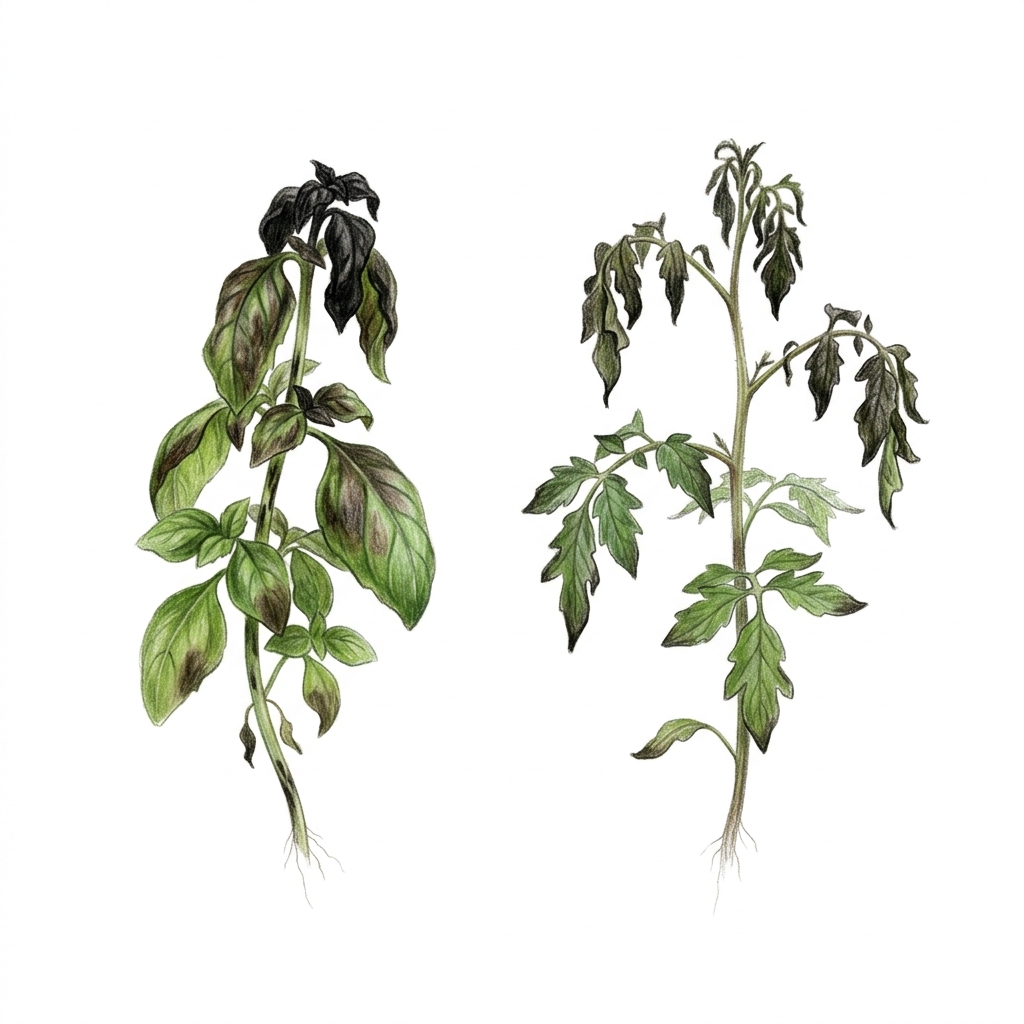
Illustration
Dark, blackened or limp leaves on tender plants after a cold night: chilling hurts basil and cucumbers below about 10°C (50°F), well above freezing, while frost kills leaves when ice forms inside them. Planting out only once nights stay warm, and covering plants when cold is forecast, prevents both.
How to spot it
- Chilling, above freezing: basil leaves darken and turn black after nights of about 10°C (50°F) or colder.
- Cucumbers in cold, wet weather: leaf edges turn olive-green to brown; badly hit leaves, shoots or whole plants discolour and wilt.
- Frost, below freezing: leaves and shoots go limp, dark and sometimes slimy, then black or brown.
- Frost damage is worst on the top and outer edges of the plant.
- Tomatoes and potatoes may be scorched brown, or killed outright.
- Both follow a cold night; frosts come on calm, clear nights.
Easily confused with
Downy mildew
On basil, leaves yellow first, then brown spots form, with purplish-grey fuzz underneath. No cold night is needed.
Fusarium wilt
Basil grows normally, then is stunted, browns at the tips and suddenly wilts, in warm weather too.
Late blight
On tomatoes and potatoes, greasy brown patches with white fuzz underneath, spreading in mild, wet weather.
Wind scorch
Brown, dried leaf edges, worst on the side facing the wind.
Where it's a problem
- Worldwide: Frost wherever nights fall below freezing. Chilling wherever nights drop below about 10°C (50°F), even in places that never frost. Not regulated.
What to do
- Plant tender crops out only after the last frost, once nights stay above about 10°C (50°F), and harden them off first.
- Avoid frost pockets: low spots, or ground against a fence or hedge at the foot of a slope, where cold air collects.
- When a cold night is forecast, water dry soil and cover plants with a double layer of fleece or an old sheet that reaches the ground and is held off the leaves.
- Move pots to a sheltered spot, a greenhouse or indoors.
- Take covers off, or open plastic ones, during the day.
- Leave damaged growth on until the cold has passed: it shelters the rest of the plant. Then cut back to a healthy shoot or bud.
- Don't give up on a damaged plant too soon: many regrow from buds at or below soil level.
Spraying won't help: cold damage isn't an infection. Official guides protect plants with timing, covers and shelter.
Vegetables it affects
Free account, no card needed. You sign up or sign in first, then the scanner opens.
Sources
- RHS: Frost damage
- RHS: Wind scorch
- UF/IFAS Extension: Cold protection of landscape plants
- University of Illinois Extension: Basil
- Clemson University HGIC: Basil
- University of Minnesota Extension: Cucumber leaves wilting
Facts checked Wednesday 21 October 2026. General guidance only: follow your local council, agency and product label.