Home › Plant diseases › Grey mould
Plant diseases
Grey mould
Botrytis cinerea · Fungus
Also called gray mold (USA), Botrytis blight (USA).
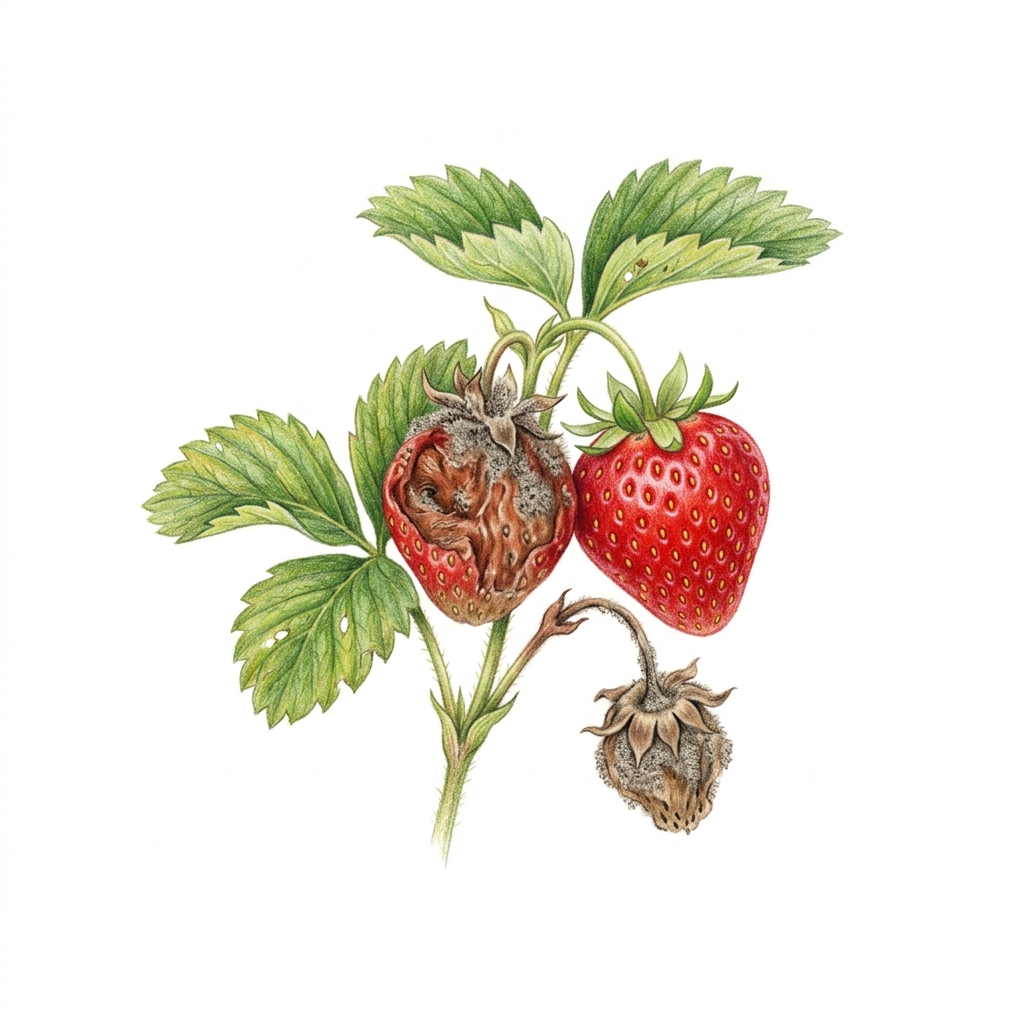
Illustration
Fuzzy grey mould on soft, rotting fruit, flowers and leaves, especially strawberries in cool, damp weather. Good airflow and prompt clearing of dead material are the best defences.
How to spot it
- Fuzzy grey-brown mould on decaying fruit, flowers, buds or leaves.
- Small water-soaked spots that turn brown and soft.
- On strawberries, rot starting at the stalk end or where the fruit touches the soil.
- Flowers with brown spots, and buds that fail to open.
- Tiny black, seed-like bodies on dead tissue later on.
Easily confused with
Powdery mildew
A thin white dust on living leaves, with no rot.
Sclerotinia
White fluffy growth, larger black bodies (0.5–1 cm), and a wet rot at the base of the stem.
Tomato leaf mould
Yellow blotches on top of the leaf with mould underneath; grey mould is fluffier.
Where it's a problem
- Worldwide: A common problem in cool, damp weather and under glass.
- United Kingdom: No fungicides are approved for gardeners to use against it.
What to do
- Remove dead and dying flowers, leaves and fruit promptly, and bag them: the spores spread very easily.
- Space plants, and ventilate greenhouses.
- Water at the base, in the morning, so leaves and fruit stay dry.
- Mulch or raise strawberries so the fruit stays off the soil.
- Clear fallen leaves, and don't leave long stubs when taking cuttings.
If you use a fungicide, choose one labelled for grey mould and follow the label and local rules. Fungicides are only preventive and generally not very effective, and many populations are resistant to them.
Follow your local council's guidance for disposing of diseased plant material.
Free account, no card needed. You sign up or sign in first, then the scanner opens.
Sources
- RHS: Grey mould
- University of California IPM: Botrytis
- University of California IPM: Grey mould on strawberries
- Business Queensland: Botrytis grey mould
- University of Wisconsin–Madison Extension: Gray mold
- Clemson University HGIC: Gray mold
Facts checked Sunday 27 September 2026. General guidance only: follow your local council, agency and product label.