Soil
Sandy soil
Also called light soil (gardeners), water-repellent or hydrophobic sand (Australia, when dry sand sheds water).
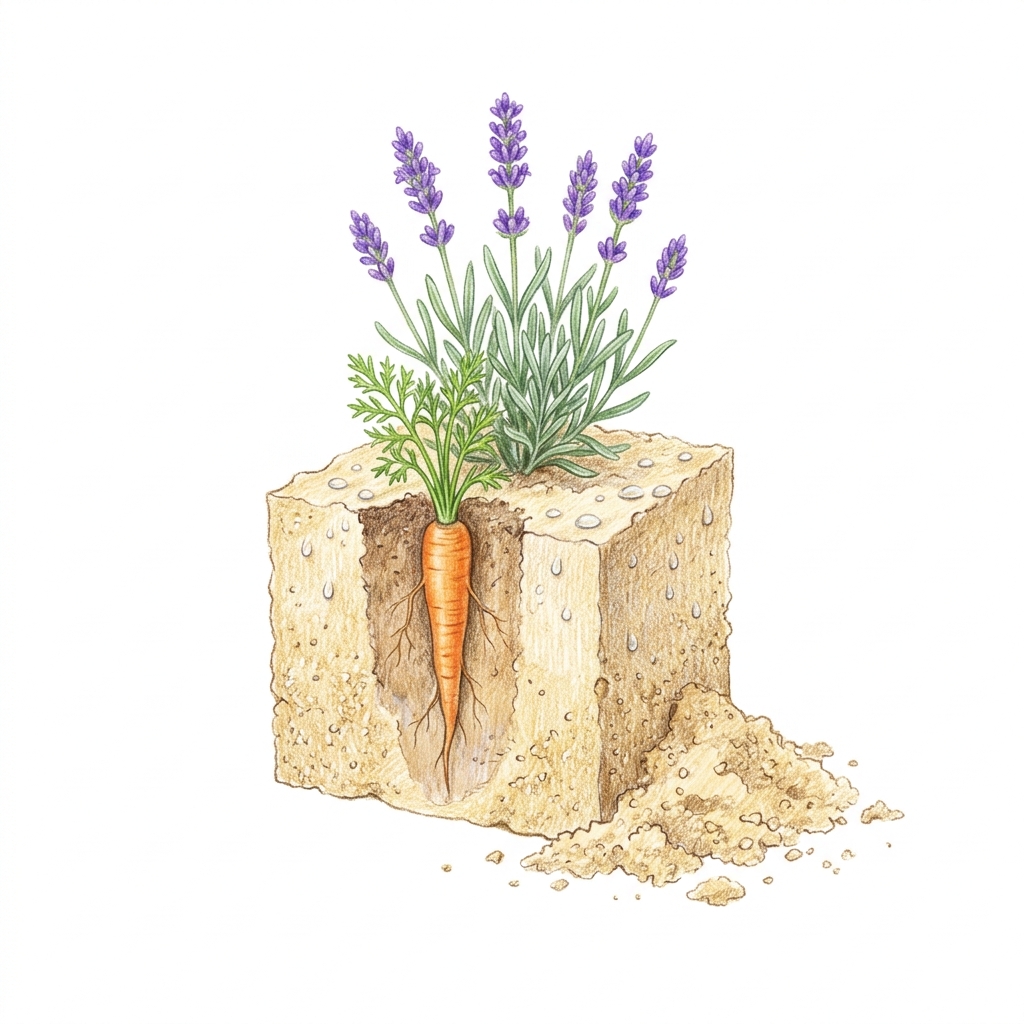
Illustration
Drains fast, dries fastWarms early in spring, dries out in summer
Sandy soil feels gritty and drains fast. It's light, easy to dig and warms up early in spring, but dries out quickly, loses nutrients and can even repel water when dry. Build it up with organic matter and mulch.
How to tell
- Rub a moist pinch: it feels gritty, you can feel the grains, and it falls apart instead of rolling into a sausage.
- Rain and watering drain away fast, and the surface dries out quickly.
- When dry, water pools on top or runs down a few channels, leaving most of the soil dry underneath. That's water repellence.
- A pH test kit often shows it's acidic.
Easily confused with
Loam
Also easy to dig, but it holds together and doesn't dry out as fast.
Silty soil
Feels smooth and slightly soapy rather than gritty, and holds more water.
Where it's common
- Australia: More than 5 million hectares of sandy farmland in southern and western Australia is water repellent.
- Western Australia: Sandy soil is common in gardens and holds little water or nutrients. On farms, wind erosion of sandy-surfaced soils is a major problem.
- North America: Florida's sandy soils hold little water, and almost all their ability to hold water and nutrients comes from a small amount of organic matter.
How to improve it
- Dig plenty of well-rotted organic matter, such as garden compost, manure, leafmould or composted bark, into new beds to bind the sand into crumbs.
- Mulch with organic matter every year to hold in moisture. It breaks down, so keep topping it up.
- If water beads and runs off, use a soil wetting agent, following the label and watering it in well.
- Mixing clay into sandy beds helps them hold water and nutrients.
- Expect to feed more often than on heavier soils, because rain washes nutrients through.
- Choose plants that like good drainage and cope with dry, poor soil.
Plants that do well
- Lavender
- Mexican orange blossom (Choisya)
- Hardy geraniums
- Long-rooted carrots, in deep sand
Free account, no card needed. You sign up or sign in first, then the scanner opens.
Sources
- RHS: Soil types explained
- RHS: Sandy soils: plants for
- RHS: How to grow carrots
- CSIRO: Water repellent soils
- WA DPIRD: Managing soils
- Water Corporation (WA): Improving sandy soil: wetting agents and mulch
- UF/IFAS Extension: Raising soil organic matter content to improve water holding capacity
Facts checked Sunday 27 September 2026. General guidance only: follow your local council, agency and product label.