Home › Plant diseases › Damping off
Plant diseases
Damping off
Pythium, Rhizoctonia and other soil organisms · Fungi and water moulds
Also called seedling blight (Canada), wirestem (the later stage).
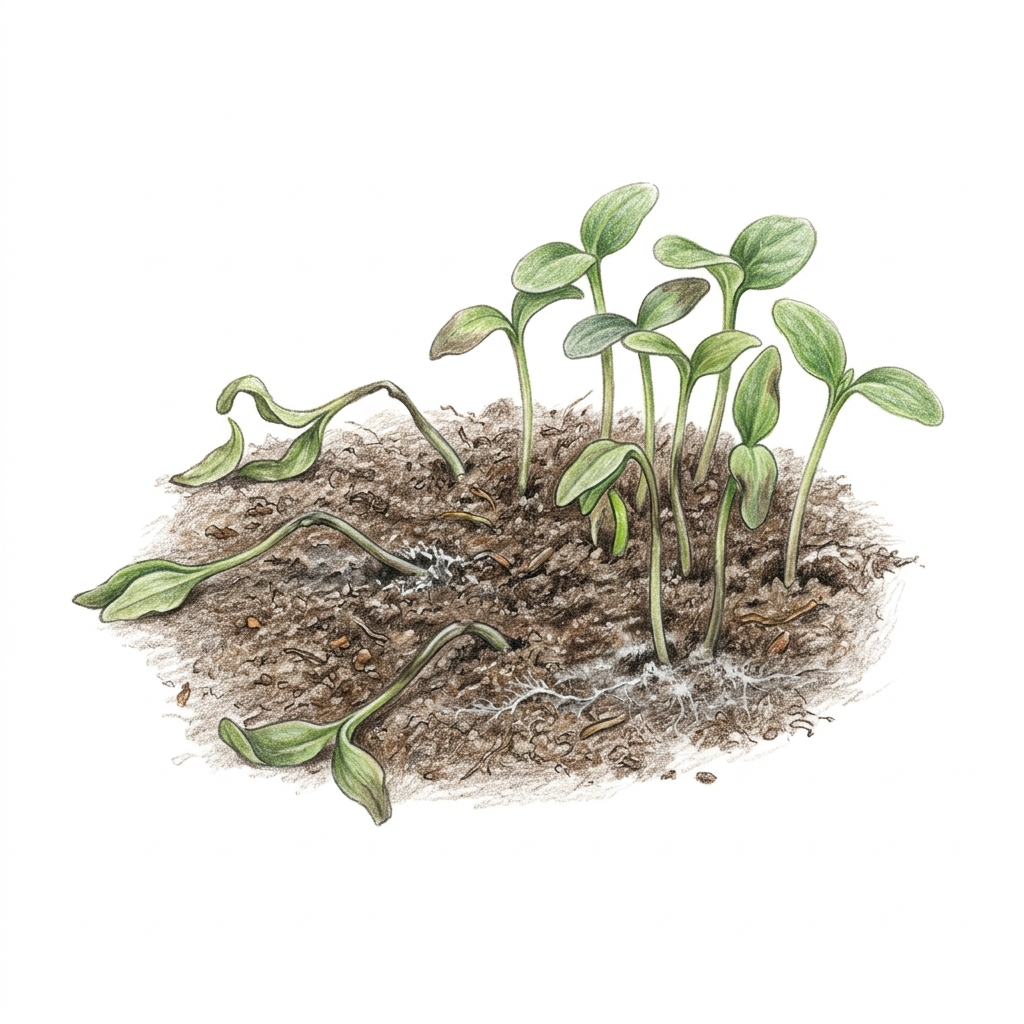
Illustration
Seedlings that suddenly flop over at soil level, in spreading patches. It's hard to stop once it starts, so prevention is everything: clean trays, fresh seed mix, careful watering and good airflow.
How to spot it
- Seeds that never come up, leaving bare patches.
- Healthy-looking seedlings that suddenly fall over at soil level.
- A pinched, dark, water-soaked stem at the soil line.
- Collapse spreading outwards in a patch, sometimes with fine white mould.
- Survivors stunted, with thin, dark, twisted stems ('wirestem').
Easily confused with
Too much fertiliser
Shrivelled, dried-out roots.
Heat, cold or overwatering
Affects the whole tray evenly, not in a spreading patch.
Old seed
Seeds simply don't germinate, with no rotting shoots.
Where it's a problem
- Worldwide: Found everywhere seeds are sown; not regulated.
What to do
- Use new trays, or scrub and disinfect old ones.
- Sow in fresh seed-raising mix, never garden soil, and use clean seed.
- Sow thinly, and not too deep.
- Don't overwater; use mains water, and give warmth, light and ventilation.
- If it appears, remove the whole affected tray with its mix, and watch the neighbouring trays.
If you use a fungicide, choose one labelled for damping off and follow the label and local rules. The RHS says gardeners have no fungicides for it, and tender seedlings are easily damaged by them.
Follow your local council's guidance for disposing of diseased plant material.
Free account, no card needed. You sign up or sign in first, then the scanner opens.
Sources
- RHS: Damping off
- Business Queensland: Damping off
- NC State Extension: Damping off
- Utah State University Extension: Damping off
- Penn State Extension: Damping off
Facts checked Sunday 27 September 2026. General guidance only: follow your local council, agency and product label.