Home › Vegetables › Beetroot
Vegetables
Growing beetroot
Beta vulgaris. A cool-season root crop grown for its sweet, round roots, and its young leaves are good to eat too. It wants loose, fertile soil and even moisture. Each seed gives a small clump of seedlings that needs thinning, and hot, dry spells make the roots woody. These steps work anywhere: they go by soil and weather, not by month. Also called beets (US and Canada), table beet (US, mostly in farming and seed lists).
How a beetroot grows
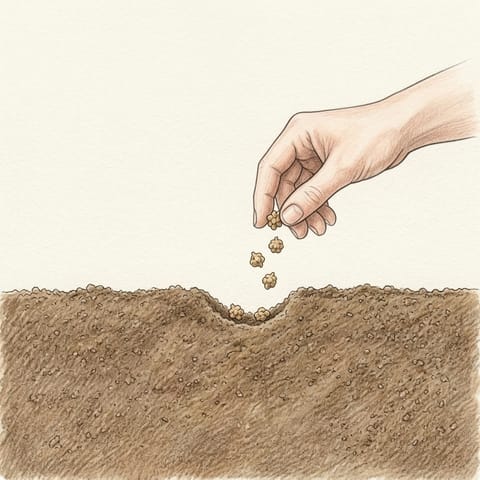 SowSeed clusters in a shallow drillDay 0
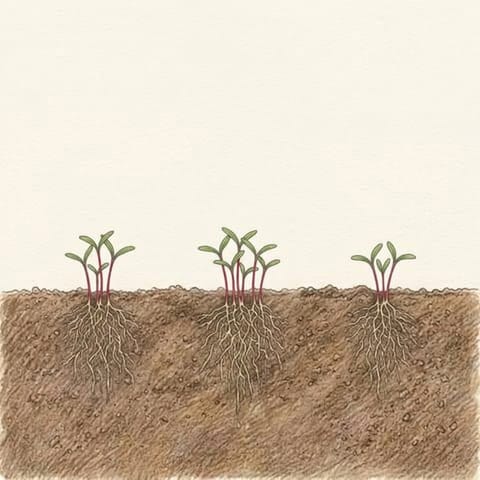 SeedlingsSeveral seedlings from each seedUp in 1–2 weeks
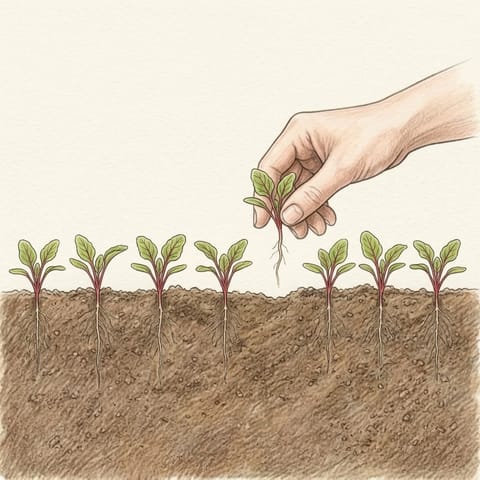 ThinOne kept from each clumpAbout 3 weeks
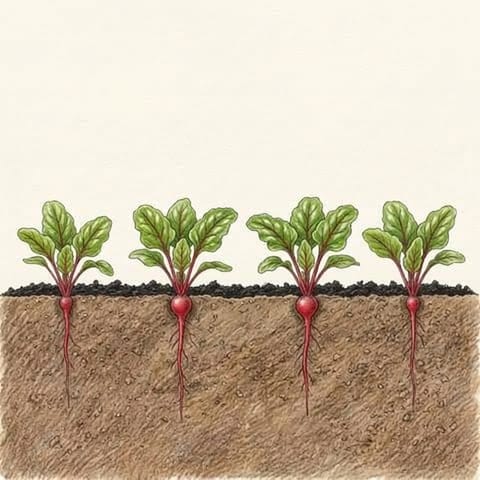 MulchCompost spread between the plantsAbout 4 weeks
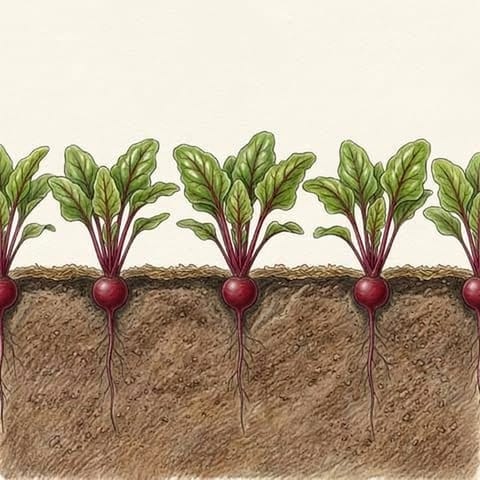 SwellThe root rounds out at the surface5–6 weeks
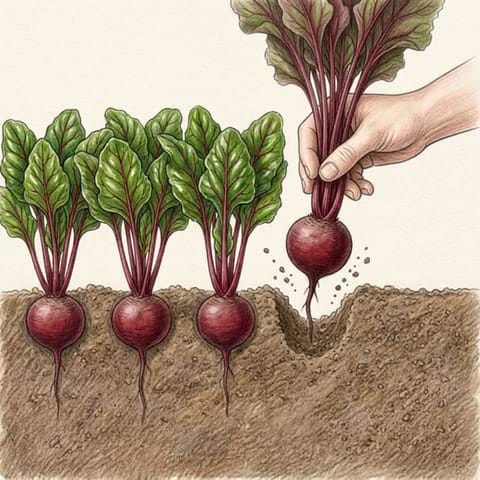 Baby beetEvery second root pulled young6–8 weeks
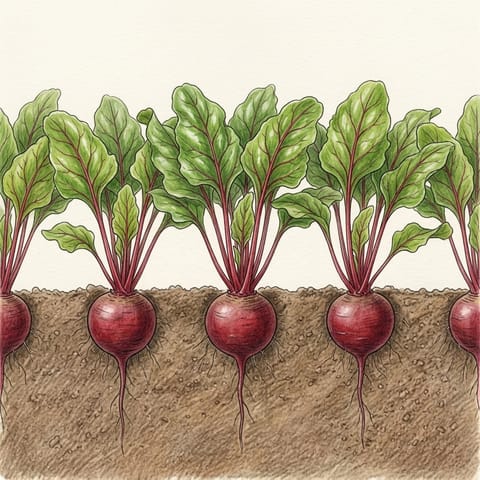 ReadyRound roots, 4–7 cm (1½–3 in) across7–10 weeks
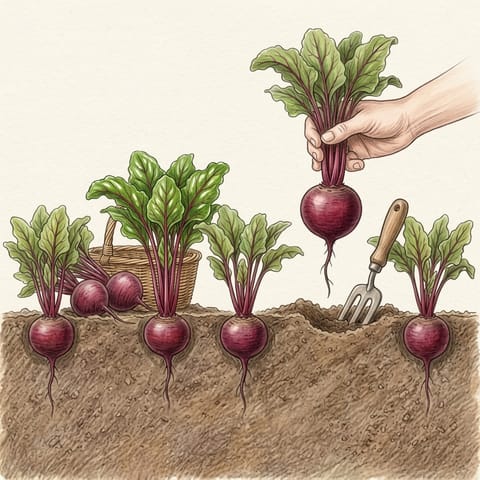 LiftLoosen with a fork, then liftOver 4–6 weeks
Times run from sowing and vary with the variety and the weather. Baby beets come first; planted seedlings are a week or two ahead.
Growing it, step by step
Is it right for you?
- Beetroot likes mild weather, with days around 16–18°C (60–65°F), and cool weather gives the deepest colour. It takes light frost, but not hard freezes. Hot, dry spells make the roots woody.
- A long cold spell soon after sowing, or a dry spell while the plants are young, can make them bolt: they send up a flower stalk instead of swelling a root. Kinds sold as bolt-resistant help with early sowings.
- It takes little room: about 10 cm (4 in) a plant once thinned. Round kinds grow well in pots at least 40 cm (16 in) across.
When to plant
Sow once the soil is at least 7°C (45°F). In warm soil the seedlings are up in about a week; in cold soil, two weeks or more. Beetroot takes light frost, so the first sowings can go in two to three weeks before the last frost. For a steady supply, sow a short row every two to three weeks while the weather is mild.
Cold winters: sow from spring through summer, the last row about two months before the first hard autumn frost. Mild climates: sow from early spring to autumn, a short row every few weeks. Hot or subtropical places: sow in autumn, winter and early spring, so the roots grow in the cooler months. Tropics: the cool, dry season or the highlands.Prepare the bed
- Full sun, and loose, fertile, well-drained soil that doesn't waterlog. Dig in plenty of compost and remove stones and clods.
- Hard soil stops the roots swelling. On heavy clay, dig in extra compost or use a raised bed.
- Slightly acid to neutral soil suits it, about pH 6.0–7.0. See soil pH.
- Beetroot needs a little boron. Where the soil is short of it, often on sandy soil, the roots get black patches inside. A soil test shows whether it is lacking; follow local advice before adding any.
- Choose a bed where beetroot, silverbeet or spinach didn't grow last year. They share pests and diseases.
Sow and plant
- Soak the seed in warm water for an hour, or overnight, before sowing: it comes up faster.
- Each knobbly seed is a cluster that gives two to four seedlings. Sow straight into the bed, 1.5–2.5 cm (½–1 in) deep, one cluster every 10 cm (4 in), in rows 30 cm (12 in) apart.
- Cover with fine soil, firm it gently and water along the row.
- Or sow one cluster to each cell of a seed tray, and either thin each cell to its strongest seedling or leave the clump whole for several smaller roots. Plant out when they are about 5 cm (2 in) tall and well rooted, after a week of hardening off.
- Plant at the same depth, without breaking up the clump or disturbing the roots: single seedlings 10 cm (4 in) apart, clumps 15 cm (6 in) apart.
Get it started
- Keep the surface moist every day for the first two to three weeks after sowing, until the seedlings are up and growing. A dry crust on the surface holds them back.
- Water new transplants every day for their first week or so, and shade them for a few days in hot weather.
- Weed carefully by hand while they are small. Beetroot can't compete with weeds, and hoeing close to the plants damages the roots.
Keep it growing
- Thin: when the seedlings are about 2.5 cm (1 in) tall, around three weeks after sowing, keep the strongest one in each clump, about 10 cm (4 in) apart. Pull the spares gently, or snip them off at soil level, so the one you keep isn't disturbed. The thinnings are good in salads.
- Water: keep the soil evenly moist but not soggy. In dry weather, a deep soak once or twice a week, twice in hot weather or on sandy soil; in cool or showery weather they need much less. Dry soil makes the roots woody, a dry spell followed by a soaking splits them, and drought while the plants are young can make them bolt.
- Mulch: after thinning, about four weeks after sowing, spread a thin layer of compost or grass clippings, about 3 cm (1 in), between the plants. It keeps moisture even, so the roots swell without splitting.
- Feed: good soil needs none. Too much nitrogen grows leaves at the expense of the roots. Only if the leaves look pale and growth is slow, give a weak liquid feed every two weeks until the roots are golf-ball size. In pots, a weak liquid feed every two weeks from about four weeks after sowing, until the roots reach golf-ball size.
Watch for problems
The common ones, with a Garden help page each where there is one:
Leaf minersAphidsFlea beetlesCercospora leaf spotDowny mildewDamping-offRoot rotRoot-knot nematodesBoron deficiencyBoltingSplit rootsWoody rootsHarvest
- Once the roots are about golf-ball size, pull every second plant as baby beet and leave the rest to grow on.
- Most kinds are ready 7–10 weeks after sowing. They are best at about 4–7 cm (1½–3 in) across. Don't leave them to grow much bigger: large roots turn woody.
- Loosen the soil beside the row with a hand fork, then lift them by the leaves.
- The young leaves are good in salads, and older ones cook like spinach. Take only a few from each plant, leaving at least four to six, or the root suffers.
After harvest
- Twist or cut off the leaves about 2.5 cm (1 in) above the root, and brush off the soil.
- Keep them cold, close to 0°C (32°F), and don't let them dry out: in a vented bag in the fridge, or packed in boxes of dry sand or coir in a cool shed or garage. Larger roots store best, for a couple of months or more.
- Where the soil doesn't freeze, late sowings can stay in the ground and be lifted as you need them.
- Next in that bed: beans, peas or cabbage family crops. Keep beetroot, silverbeet and spinach out for at least a year.
Sources
- RHS: How to grow beetroot
- University of Maryland Extension: Growing beets in a home garden
- Utah State University Extension: How to grow beets in your garden
- Clemson Cooperative Extension: Carrot, beet, radish and parsnip
- Gardening Australia: Roots and shoots
Facts checked Wednesday 21 October 2026. General guidance only: local advice comes first.