Home › Vegetables › Thyme
Vegetables
Growing thyme
Thymus vulgaris. A small, evergreen, woody herb from the Mediterranean, picked a sprig at a time all year for years. It wants full sun, poor to ordinary soil that drains fast, and to be left fairly dry, and wet soil in winter kills it more often than cold does. These steps work anywhere: they go by soil and weather, not by month. Also called garden thyme (UK, US), English thyme and French thyme (US, for its two common kinds).
New to growing vegetables? Start with the beginner's guide.
How a thyme plant grows
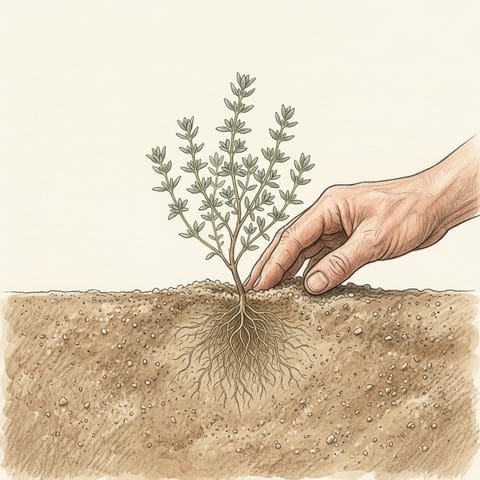 PlantA small plant, at the same depthDay 0
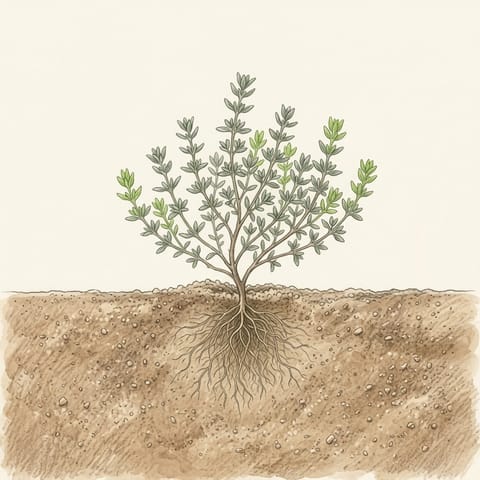 Settle inNew shoots; water only while it settles2–6 weeks
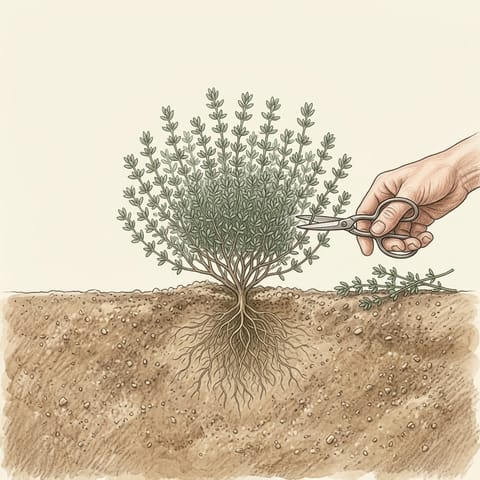 First picksA few sprigs snipped from the tips1–2 months after planting
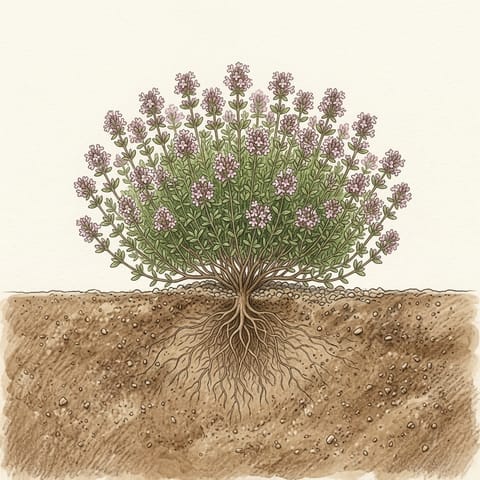 FlowersTiny pink-mauve flowers; bees visitLate spring to summer
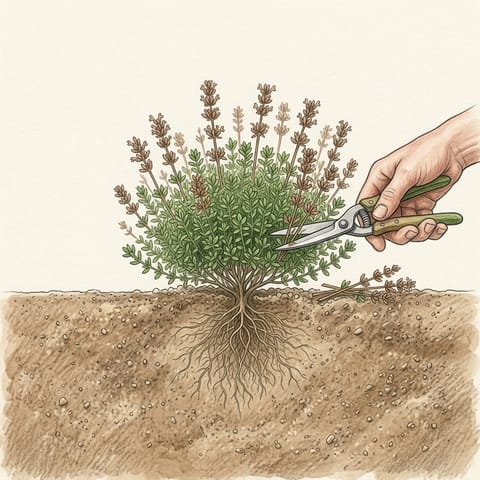 TrimFaded flower stems cut off, onto green leavesStraight after flowering
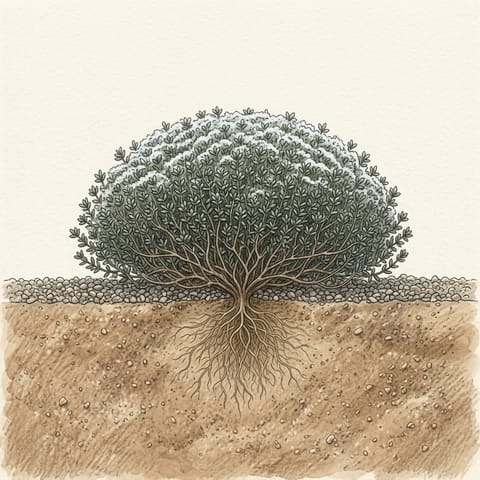 WinterEvergreen; kept dry at the baseFirst winter
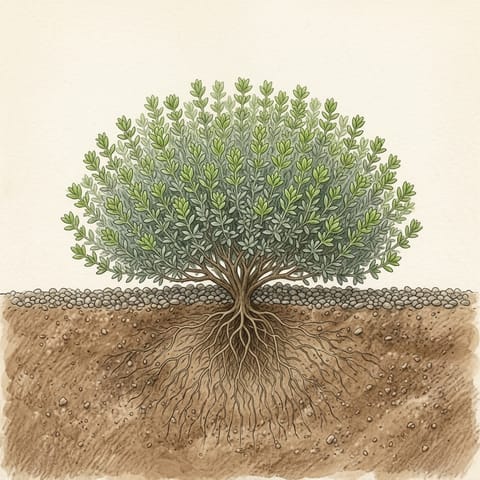 Next springA light trim, then fresh growthSpring, year two
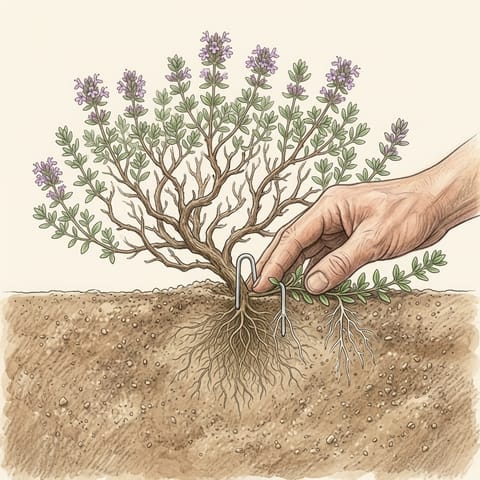 RenewA low stem pegged down to rootAfter a few years
Times run from planting a bought plant and vary with the weather. A plant raised from seed takes about a year to reach the third stage.
Growing it, step by step
Is it right for you?
- Thyme is a small, evergreen, woody herb grown for its tiny, strongly scented leaves. One plant gives sprigs all year for several years.
- It loves sun, heat and dry, stony soil, and copes with drought once settled. Cold is rarely the problem: soil that stays wet in winter rots its roots.
- Plants grow 15–30 cm (6–12 in) tall and about as wide. After a few years most turn woody and bare in the middle, and are best replaced with young plants grown from them.
- Lemon thyme (Thymus × citriodorus) has a lemon scent and flavour and is grown the same way. Raise it from cuttings or buy a plant: seed won't give true lemon thyme.
- In a pot, give each plant one at least 15 cm (6 in) wide and 10 cm (4 in) deep with plenty of drainage holes, filled with gritty mix, in full sun. It also grows indoors on a bright, sunny sill or in an indoor growing kit.
When to plant
Plant bought plants in spring once hard frosts are over, or in autumn where winters are mild and fairly dry. To grow from seed, sow indoors in spring, kept at 15–20°C (59–68°F), and plant the young plants out from mid spring to early summer, once they are a good size and the frosts are over.
Cold winters: plant in spring so it settles before winter. Most common thyme survives a dry cold winter; in very cold or wet places, grow it in a pot and move it under shelter, or pot one up for a sunny sill. Mild climates: plant in spring or autumn. It stays green all year; keep it out of soil that lies wet in winter. Hot or subtropical places: plant in autumn or early spring. Humid summers are the danger: very free-draining soil, a raised bed or a pot, and a thinning-out trim when growth starts to brown. Tropics: the drier months, in a pot of gritty mix kept out of heavy rain. Plants are often short-lived, so keep young ones coming from cuttings.Prepare the bed
- The sunniest, warmest spot you have, in light soil that drains fast. Thyme is happy in poor or stony soil; rich, heavy soil makes it soft and short-lived.
- On heavy clay soil or anywhere that stays wet, grow it in a raised bed, a rockery or a pot, or dig in plenty of coarse grit first.
- Neutral to slightly alkaline soil suits it best. See soil pH.
- Don't dig in rich compost or manure: a little is plenty.
Sow and plant
- Plant bought plants at the same depth they sat in their pots, 20–30 cm (8–12 in) apart, depending on how big the kind grows.
- To sow, scatter the tiny seeds thinly on the surface of damp seed-raising mix in a tray or cells, and don't cover them. Keep them at 15–20°C (59–68°F), bright, and only just damp: wet mix rots the seedlings.
- Move the seedlings into small pots of gritty mix once they have a few leaves. Harden them off for a week or so before planting out: outside by day, in at night.
- New plants also come from cuttings of soft shoot tips in late spring or early summer, rooted in gritty mix or sand, or from a well-rooted piece split off an established plant in spring.
Get it started
- Water in well, then water only when the top of the soil is dry, until the plant is growing strongly.
- Weed by hand around young plants: they are small and easily smothered.
- Pick lightly at first. Let a new plant settle and bush out for a few weeks before you take more than the odd sprig.
Keep it growing
- Water: very little. Once settled, plants in the ground only need a good soak in long, dry spells. Overwatering kills more thyme than drought. Pots dry out faster: water when the mix is dry, and let them drain.
- Trim: straight after flowering, trim lightly: take off the faded flower stems and shape the plant. Give it another light trim in spring. Always cut above green leaves: old, bare wood rarely grows back.
- Feed: none in the ground: feeding makes soft, floppy growth with less flavour. In pots, a light liquid feed once or twice in spring and summer is plenty.
- Mulch: a layer of fine gravel or grit around the plant keeps its leaves off damp soil and the base dry. Don't use a thick, damp mulch.
- Winter: rain, not frost, is the danger. In wet winters, move pots to a sheltered spot out of the rain, and don't water plants in the ground. Don't cut it back hard in autumn.
- Renew: after a few years, when the middle goes bare and woody, replace the plant with young ones. Peg a low stem onto the soil to root, or take cuttings in late spring, and plant them out once they have rooted.
Watch for problems
The common ones, with a Garden help page each where there is one:
Harvest
- Pick sprigs whenever you need them, all year: it's evergreen. Snip the soft tips with scissors rather than pulling, and regular picking keeps the plant bushy.
- The flavour is strongest just before the plant flowers. For a big picking to dry, cut then, on a dry morning once the dew has gone.
- Pick lightly from a young plant, and never strip one bare: leave green leaves on every stem you cut.
- The flowers are edible too.
After harvest
- Fresh sprigs keep for a week or so in the fridge, loosely wrapped in a damp paper towel.
- To dry, hang small bunches upside down in a warm, dark, airy place for a few weeks. Strip off the crisp leaves and keep them in an airtight jar. Thyme keeps its flavour well dried, and stands up to long, slow cooking.
- Plant the young plants you raised from layers or cuttings in a fresh, sunny, well-drained spot, then dig out the old woody plant.
- Next in that bed: once an old plant is lifted for good, almost anything can follow it; thyme shares few problems with vegetables. Loosen the soil and add a little compost first.
Sources (5, from RHS, University of Illinois Extension, Iowa State University Extension and others)
- RHS: How to grow thyme
- University of Illinois Extension: Thyme
- Iowa State University Extension: All about thyme
- Penn State Extension: Herb garden plants, thyme
- Sustainable Gardening Australia: Thyme
Facts checked Friday 30 October 2026. General guidance only: local advice comes first.