Home › Vegetables › Sage
Vegetables
Growing sage
Salvia officinalis. A small evergreen shrub from the Mediterranean, grown for its soft, grey-green, strongly flavoured leaves and picked for years. It wants full sun and soil that drains freely, and wet soil in winter kills it faster than cold does. After a few years it turns woody and is replaced with a young plant. These steps work anywhere: they go by soil and weather, not by month. Also called common sage (widely), garden sage (UK, US).
New to growing vegetables? Start with the beginner's guide.
How sage grows
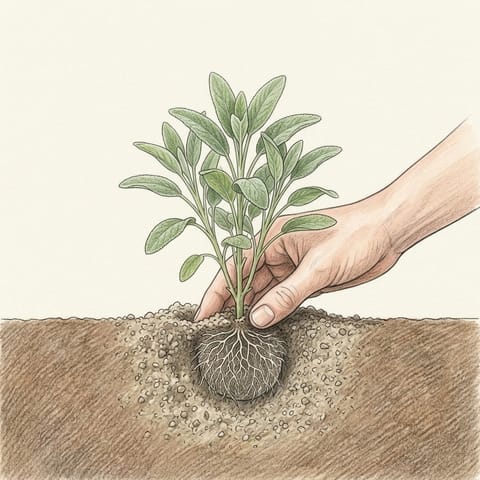 PlantA young plant, set shallowDay 0
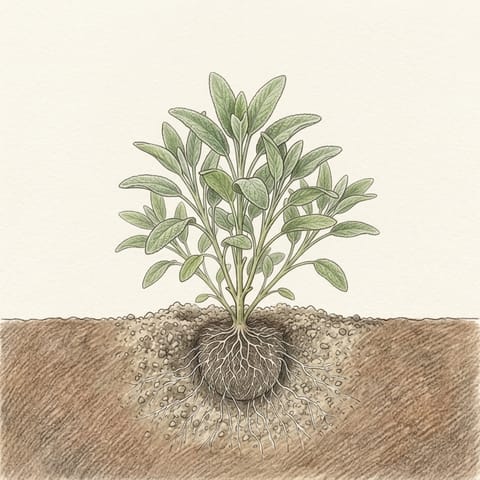 Settle inNew shoots; water in dry spellsFirst 4–6 weeks
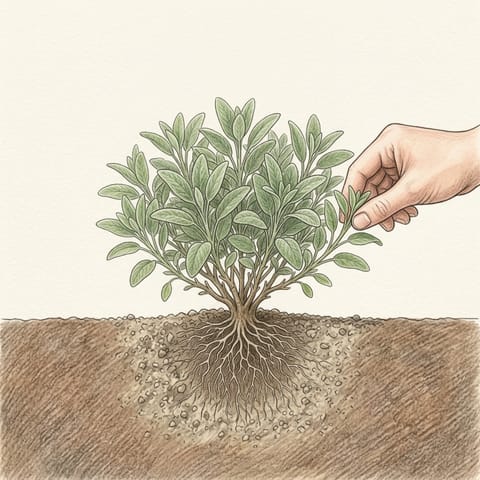 First picksA few leaves at a time1–2 months after planting
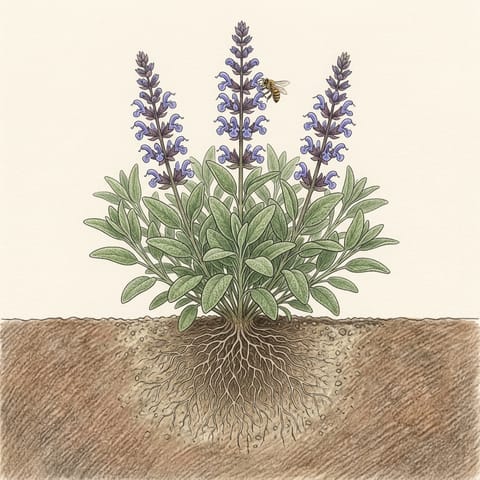 FlowersBlue-purple spikes; bees visitSummer
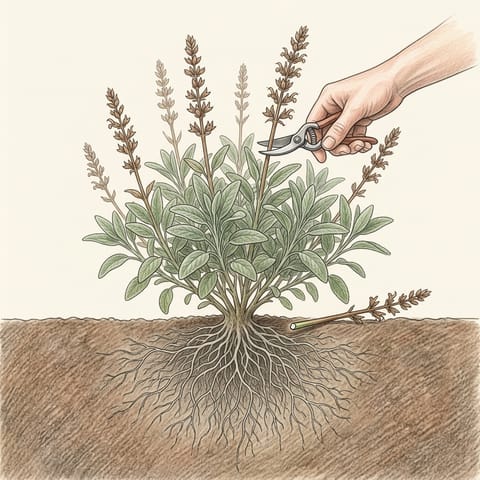 TrimFaded flower stems cut offAfter flowering
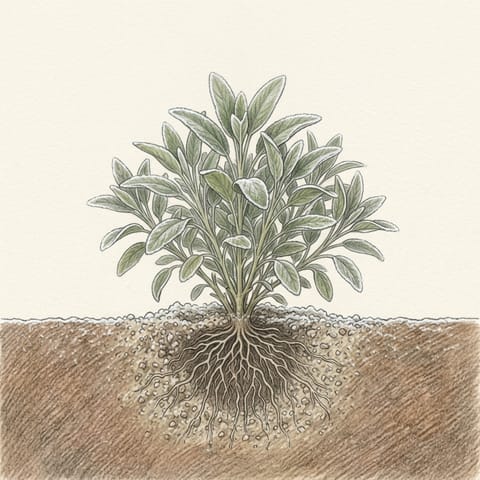 WinterEvergreen; kept on the dry sideIts first winter
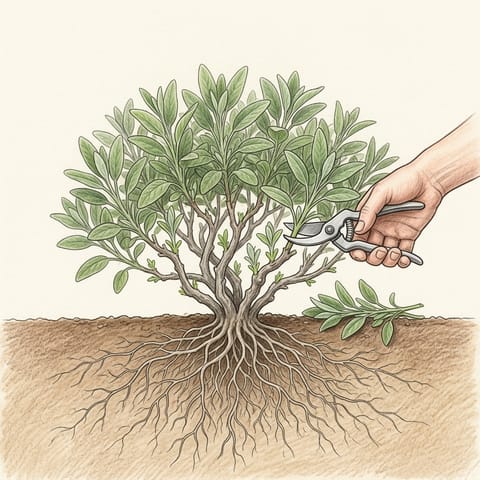 Spring pruneCut back to just above new shootsEach spring, as new growth starts
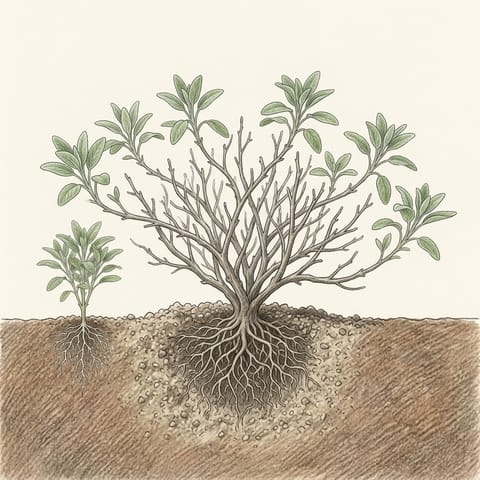 RenewOld plant woody; a cutting replaces itAfter about 3–4 years
Times run from planting a small bought plant and vary with the weather. A plant raised from seed takes about a year to reach picking size; one grown from a cutting is quicker.
Growing it, step by step
Is it right for you?
- Sage is a small evergreen shrub from the Mediterranean, grown for its soft, grey-green leaves with a strong, savoury flavour. One plant gives leaves all year for several years.
- It is hardy to about −15°C (5°F), and often colder in soil that drains well, but cold, wet soil rots its roots. It grows poorly in hot, humid summers.
- A plant grows 50–75 cm (20–30 in) tall and spreads 60 cm (2 ft) or more, sprawling as it ages. Most plants turn woody and sparse after three or four years and are best replaced; pruned well each spring, some stay good for six or seven.
- In a pot: at least 30 cm (12 in) wide and deep, with plenty of drainage holes, gritty potting mix and full sun.
- A small plant in a pot can spend a cold winter indoors on a bright, sunny windowsill, but sage grows best outdoors in full sun.
- Purple, golden and tricolour sage are grown the same way. They are less hardy than plain green sage.
When to plant
Plant in spring once the soil has warmed to about 15°C (60°F) and frosts are over. In mild places autumn works too, while the soil is still warm. A plant grown in a pot can go in at any time the ground is not frozen, waterlogged or baking. To grow from seed, sow indoors in spring in warmth, 16–21°C (60–70°F).
Cold winters: plant in spring, in the sunniest, best-drained spot. Cover with fleece in hard frosts, and move pots to shelter, out of the rain. Mild climates: plant in spring or autumn. It stays green all year and can be picked through winter. An old, straggly plant can be cut back hard, to a few centimetres (an inch or so), at the end of winter and often regrows strongly; take a cutting first in case it doesn't. Hot or subtropical places: plant from autumn to early spring, with afternoon shade in summer and very sharp drainage. Humid summers can shorten its life, so keep a cutting going. Tropics: hard going: a pot of gritty mix in the cooler, drier months, moved out of heavy rain. Treat it as short-lived and replace it often.Prepare the bed
- Full sun, sheltered from strong winds, in light soil that drains freely. Sage does well even in poor soil: dig in a little compost, not a lot.
- It rots in soil that stays wet. On heavy clay soil, plant in a raised bed, on a low mound or in a pot.
- Close to neutral soil suits it best, pH 6.5–7.0, though it copes with a little either side. See soil pH.
- For a pot, use a soil-based potting mix with some coarse grit mixed in, so water runs straight through.
Plant
- Most people start with a small plant. Plant it shallow, with the top of the root ball only lightly covered, 45–60 cm (18–24 in) apart.
- A plant raised indoors should be at least 10 cm (4 in) tall. Harden it off first for a week or so: outside by day, in at night.
- Seed is slow: sow indoors in spring, cover it lightly and keep it warm. It comes up in about two weeks, but the plant takes about a year to reach picking size.
- For free plants, take 10 cm (4 in) cuttings from soft new shoot tips in late spring or early summer, strip the lower leaves and root them in gritty mix. Or peg a low stem into the soil in spring or autumn; once it has rooted, cut it free and pot it up.
Get it started
- Water in well. Then water only in dry spells through its first year, letting the top of the soil dry out in between.
- Keep weeds away while it settles.
- Pick lightly in the first year, so the plant can build up.
Keep it growing
- Pick: from a month or two after planting, pick leaves or young shoot tips as you need them. Picking keeps it bushy. Never take more than half the plant at once.
- Water: new plants in dry spells in their first year. Once settled, sage in the ground needs little or no watering: let the soil dry out, then water deeply. Pots dry out faster: check them often in summer and keep the mix just moist, never soggy. In winter, move pots out of heavy rain.
- Feed: in the ground, none: a thin layer of compost in spring is plenty. A plant kept in a pot for more than a year gets a light general feed in late spring or early summer.
- Flowers: spikes of blue-purple flowers come in summer. Bees love them, and they are edible. Once they fade, cut the flower stems off to keep the plant compact.
- Prune: each spring, as new shoots show, cut the stems back to just above the new growth and take out any dead, woody stems. Never cut back into bare old wood with no leaves or shoots: it may not regrow. Leave pruning until spring, not autumn.
- Renew: after three or four years (longer if pruned well), when the plant is woody and bare in the middle, take cuttings or peg down a stem the summer before, and replace the old plant with the young one.
Watch for problems
The common ones, with a Garden help page each where there is one:
Harvest
- Pick leaves or whole young shoot tips at any time of year. The flavour is best in spring and summer.
- Pick in the morning, once the dew has dried.
- For drying, cut 15–20 cm (6–8 in) of leafy shoot tips just before the flowers open, when the flavour is strongest.
- In the first year and through winter, pick only a little at a time.
After harvest
- Fresh leaves keep four or five days in the fridge, wrapped in a paper towel inside a bag.
- To dry them, hang small bunches in a warm, dark, airy place. Once crisp, strip the leaves and keep them in an airtight jar.
- To freeze them, chop the leaves into an ice cube tray and top up with water.
- A woody old plant may not come back from a hard cut. Start a cutting while it is still healthy, and replace it.
- Next in that bed: sage stays put for years. When the old plant is lifted, dig in a little compost and plant its young replacement in a sunny, well-drained spot. If it died of root rot or wilt, put the new one somewhere else.
Sources (6, from RHS, University of Maryland Extension, UC Marin Master Gardeners and others)
- RHS: How to grow sage
- University of Maryland Extension: Sage
- UC Marin Master Gardeners: Sage
- University of Illinois Extension: Sage
- UF/IFAS Gardening Solutions: Sage
- Gardening Australia: Chop Chop (pruning sage)
Facts checked Friday 30 October 2026. General guidance only: local advice comes first.