Home › Plant diseases › Verticillium wilt
Plant diseases
Verticillium wilt
Verticillium dahliae and Verticillium albo-atrum · Fungus
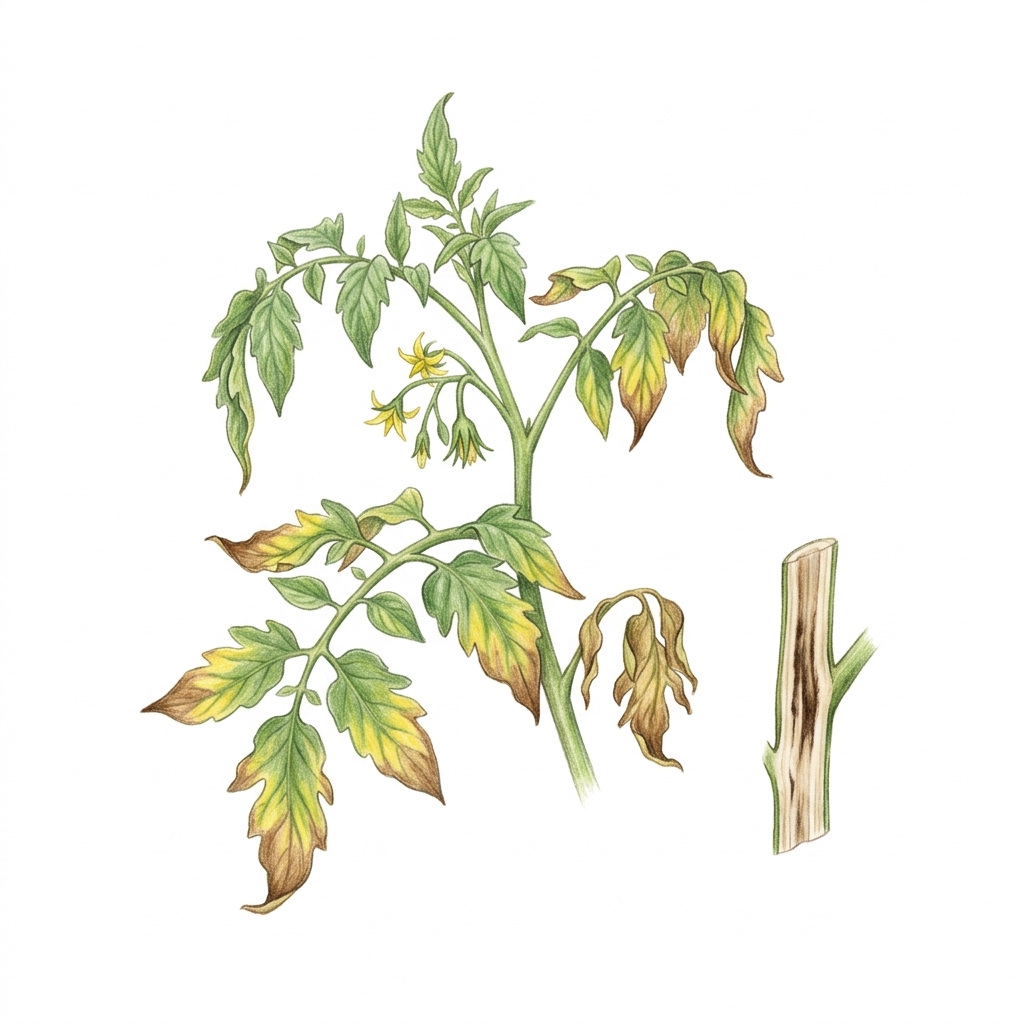
Illustration
A soil-borne fungus that blocks a plant's water pipes, so lower leaves yellow and wilt, often on one side. It lasts in soil for years with no cure, so remove affected plants and grow resistant ones.
How to spot it
- Lower, older leaves yellowing first, often on one side of the plant.
- Tomatoes: V-shaped yellow wedges at the leaf edges.
- Sudden wilting in hot weather.
- Brown, black or green streaks in the wood when a stem is cut.
Easily confused with
Fusarium wilt
Very similar; only a lab test can tell them apart for sure.
Bacterial wilt
A cut stem in water streams milky ooze.
Drought or ageing leaves
No streaks in the wood.
Where it's a problem
- Worldwide: Found in soils around the world; conifers, birch, beech and willow resist it.
What to do
- Remove the affected plant with as much root as possible.
- Don't move soil around, and clean tools with alcohol or diluted bleach.
- Control weeds, which can host it.
- Rotate crops, and choose tomatoes marked 'V' for resistance.
- Replant with resistant plants; for trees, water well and prune out dead wood, and never use wood chips from an infected tree as mulch.
There are no chemical treatments for gardeners.
Follow your local council's guidance for disposing of diseased plant material. Official guides usually advise against putting it in a home compost heap.
Free account, no card needed. You sign up or sign in first, then the scanner opens.
Sources
- RHS: Verticillium wilt
- University of California IPM: Verticillium wilt
- University of Wisconsin–Madison Extension: Verticillium wilt of vegetables
- University of Wisconsin–Madison Extension: Verticillium wilt of trees and shrubs
- Penn State Extension: Verticillium wilt of woody ornamentals
- Utah State University Extension: Fusarium and Verticillium wilts
Facts checked Sunday 27 September 2026. General guidance only: follow your local council, agency and product label.