Home › Vegetables › Zucchini
Vegetables
Growing zucchini
Cucurbita pepo. A bushy summer squash grown for its young fruit, sown where it grows or raised in small pots. It wants sun, warmth, room and steady water, crops for weeks if picked often, and frost kills it. These steps work anywhere: they go by soil and weather, not by month. Also called courgette (UK, Ireland, Europe and New Zealand), baby marrow (South Africa), summer squash (US, for zucchini and its close relatives).
How a zucchini grows
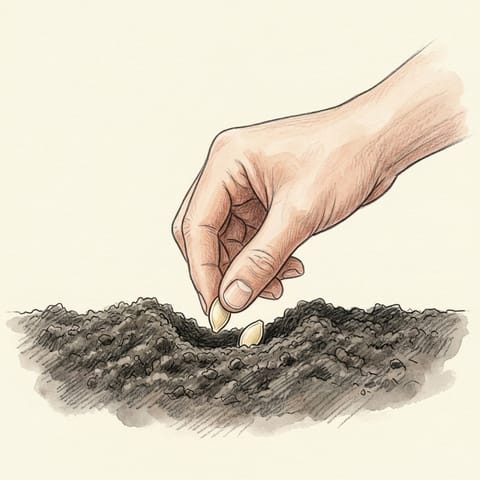 SowTwo flat seeds, on their sideUp in 1–2 weeks
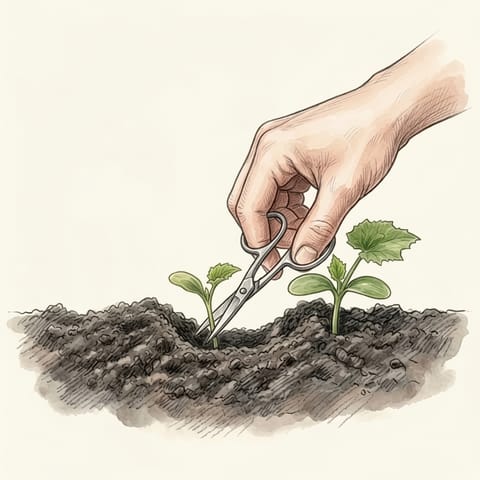 ThinKeep the strongest seedlingAbout 2 weeks
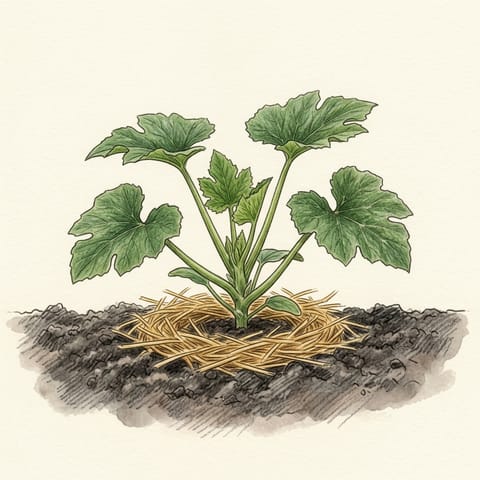 GrowBig leaves, mulch goes down3–5 weeks
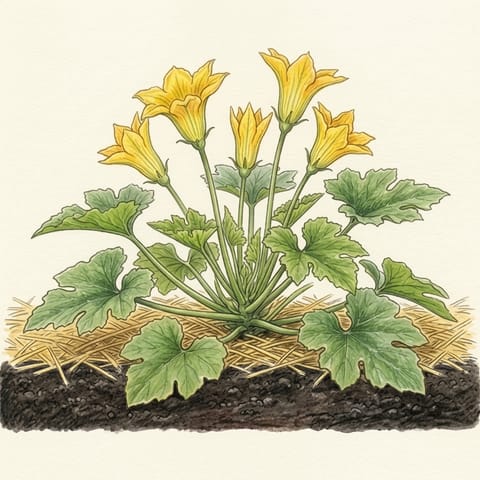 FlowerMale flowers open first5–6 weeks
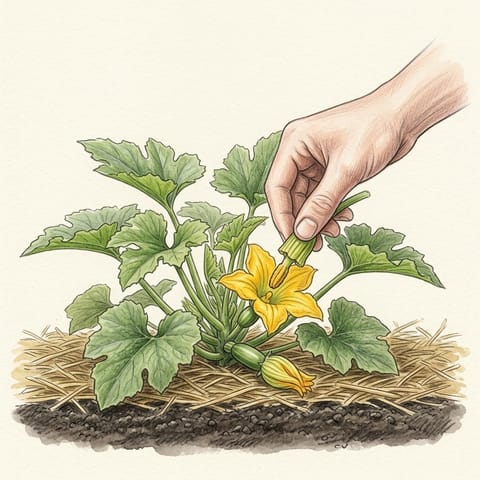 PollinateFemales have a baby fruit behindA week or two later
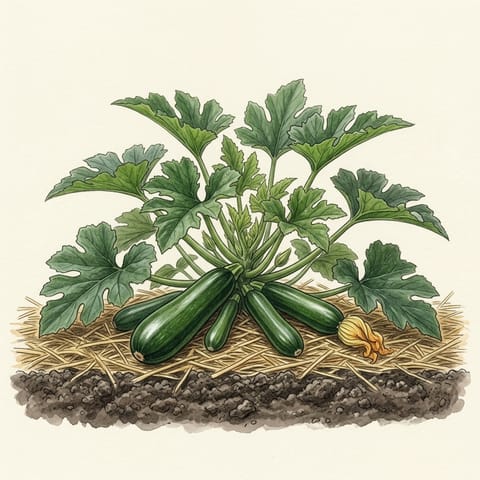 SwellYoung fruit lengthen fastA few days after flowering
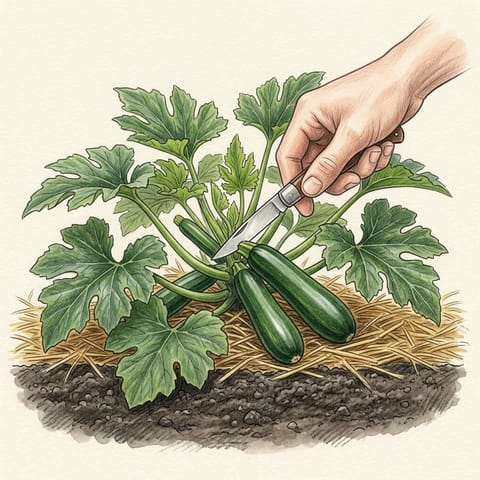 PickCut at 10–15 cm (4–6 in)From about 8 weeks
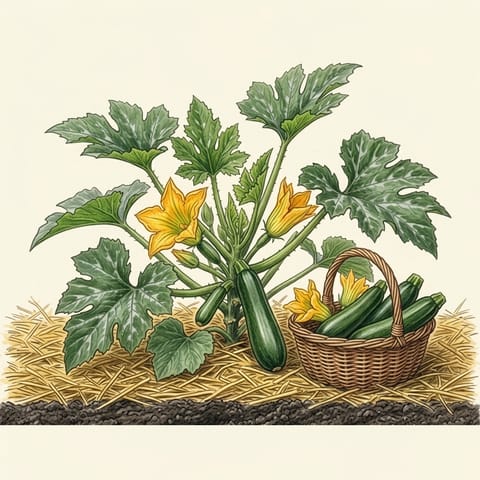 Keep pickingEvery day or two, for weeksUntil the weather cools
Times run from sowing in the bed and vary with the variety and the weather. Seedlings raised in pots go out at 3–4 weeks old and start cropping about 6 weeks after planting.
Growing it, step by step
Is it right for you?
- Zucchini need at least two months of warm, frost-free weather to start cropping, averaging around 18–24°C (65–75°F), and they keep going while it stays warm.
- Frost kills them. Cool weather stops the fruit setting, so baby fruits rot or stop growing. Very hot spells bring more male flowers and fewer fruit.
- Each plant needs about a square metre (10 sq ft). A few plants are plenty for most households: in good weather each gives three or four fruits a week. Compact bush kinds grow in a pot at least 45 cm (18 in) wide.
When to plant
Sow where they are to grow once the soil is at least 15°C (60°F) and the last frost has passed. For an earlier start, sow in small pots indoors three to four weeks before you plan to plant out, kept warm at 18–21°C (65–70°F), and plant out after the last frost.
Short, cool summers: start seeds in pots indoors, plant out after the last frost and cover young plants with fleece. Mild climates: sow from late spring; a second sowing in early summer keeps the harvest going. Hot or subtropical places: sow in spring and again in late summer or autumn: fruit sets better in milder weather than in the hottest weeks. Tropics: the cooler, drier months, on mounds so the roots drain.Prepare the bed
- A warm, sunny, sheltered spot. Dig plenty of compost or well-rotted manure into each planting spot a few weeks before sowing.
- Where drainage is poor, plant on a low mound: young plants rot in wet soil.
- Slightly acid soil suits them best, pH 6.0–6.5, but most garden soils grow them well. See soil pH.
- Avoid beds that grew zucchini, pumpkins, cucumbers or melons in the last two to three years. They share the same pests and diseases.
Sow and plant
- Sow two seeds 2–3 cm (about 1 in) deep in each spot where a plant is to grow. Lay the flat seeds on their side.
- Or sow one seed on its side 1–1.5 cm (½ in) deep in a small pot, about 7.5 cm (3 in) across, and keep it warm.
- A week or so before planting out, harden seedlings off: put them outside by day and bring them in at night. Plant them at 3–4 weeks old, at the same depth as in the pot, without disturbing the roots.
- Space plants 90 cm (3 ft) apart, in rows 1 m (40 in) apart.
Get it started
- Water well after sowing, then keep the soil just moist until the seedlings are up. Seeds rot in cold, soggy soil.
- Water seedlings you plant out every day for the first week, until they settle.
- About two weeks after sowing, keep the strongest seedling in each spot and snip the others off at soil level.
- Protect young plants from slugs and snails, and cover them with fleece if a cold night is forecast.
Keep it growing
- Water: a deep soak at the base about twice a week, more often in hot weather, best in the morning. Watering the soil, not the leaves, helps against powdery mildew. Keep the soil evenly moist once fruit forms. Pots may need water every day in hot weather.
- Mulch: about two weeks after planting, spread straw or compost at least 5 cm (2 in) deep to hold moisture and keep weeds down. Keep it off the stem.
- Feed: good soil needs little or nothing. On poor soil, a high-potash liquid feed every two weeks once the first fruits start to swell; in pots, every 10–14 days. Too much nitrogen grows leaves instead of fruit.
- Fruit set: the first flowers are mostly male and fall off, which is normal. Female flowers have a tiny fruit behind them. If those baby fruits shrivel or rot (poor fruit set), hand-pollinate in the morning: pull the petals off a male flower and dab its pollen into an open female flower.
- Old leaves: cut off old leaves that are yellow or white with mildew, to let in air and sun.
Spit out bitter fruit. A zucchini that tastes bitter can make you ill, and cooking doesn't make it safe. Throw it away. Don't sow seed saved from your own plants: crossed with ornamental gourds, it can grow bitter fruit.Watch for problems
The common ones, with a Garden help page each where there is one:
Harvest
- Pick when the fruit is 10–15 cm (4–6 in) long, small and tender. Cut the stalk with a knife or secateurs rather than snapping it off.
- Check every day or two once they start: they grow fast. Missed fruits turn into marrows and slow the plant.
- The flowers are good to eat too. Pick the male ones, with no fruit behind them, so you don't lose any of the crop.
After harvest
- Keep them in a bag in the fridge and use them within about a week.
- Pull the plants out when they stop cropping or the weather turns cold. Bin plants with mosaic virus rather than composting them.
- Next in that bed: a cool-season crop such as peas, broad beans, garlic or leafy greens. Keep zucchini, pumpkins, cucumbers and melons out for two to three years.
Sources
- RHS: How to grow courgettes
- Clemson Cooperative Extension: Summer squash
- Gardening Australia: Cucurbits
- Tox Info Suisse: Bitter pumpkins and courgettes
Facts checked Wednesday 21 October 2026. General guidance only: local advice comes first.