Home › Plant diseases › Blossom end rot
Plant diseases
Blossom end rot
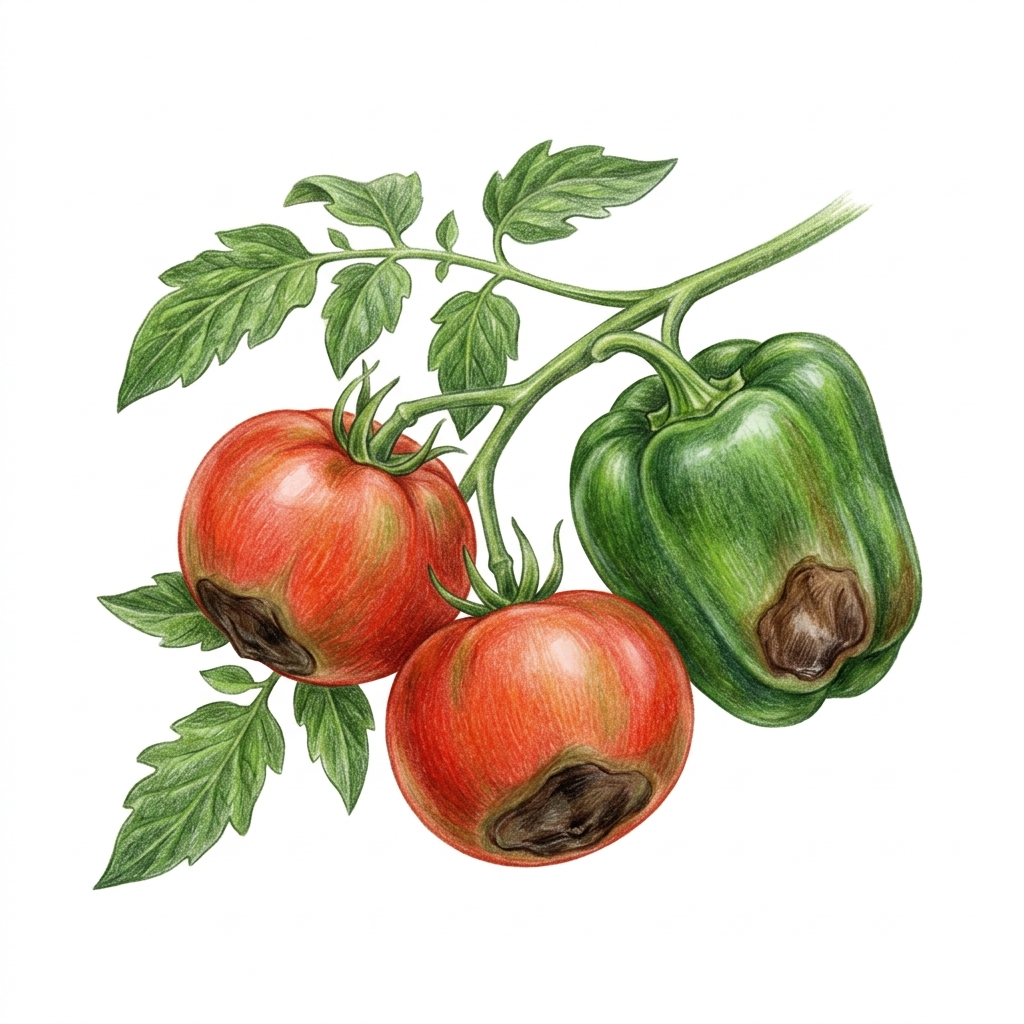
Illustration
A dark, sunken patch on the bottom of tomatoes and capsicums. It isn't a disease and doesn't spread: it's a calcium shortage in the fruit, usually caused by uneven watering, so the cure is steady moisture.
How to spot it
- A water-soaked, bruise-like spot at the flower end (opposite the stalk) of fruit a third to half grown.
- The patch turns brown-black, sunken, flat and leathery.
- Mould may grow on the dead patch, but it isn't the cause.
- Often on the first fruits of the season, while the plant itself looks healthy.
Easily confused with
Sunscald
A pale patch on the sun-facing side of the fruit.
Poor pollination (zucchini)
Tiny fruit that yellow and shrivel soon after flowering.
Late blight
Greasy brown patches high on the fruit, with sick leaves.
Where it's a problem
- Worldwide: Common everywhere and not regulated. Many soils contain plenty of calcium: the problem is getting it to the fruit.
What to do
- Keep the soil evenly moist; in hot weather, water pots twice a day rather than giving one big soak.
- Mulch to keep the soil moisture even.
- Use bigger pots or automatic watering for container plants.
- Don't feed onto dry soil, and avoid too much nitrogen.
- Test the soil, and lime only if it's actually acidic. Pick off affected fruit.
Official sources disagree on calcium sprays (the RHS and Clemson say fruit can't take calcium up that way). All agree the real fix is even watering.
Free account, no card needed. You sign up or sign in first, then the scanner opens.
Sources
- RHS: Blossom end rot
- Clemson University HGIC: Calcium sprays myth
- Penn State Extension: Blossom end rot
- University of Maryland Extension: Blossom end rot
- University of Wisconsin–Madison Extension: Blossom end rot
- Pacific Pests, Pathogens and Weeds: Tomato blossom end rot
Facts checked Sunday 27 September 2026. General guidance only: follow your local council, agency and product label.