Home › Garden pests › Cucumber beetles
Garden pests
Cucumber beetles
Acalymma (striped) and Diabrotica (spotted) species · Insect
Also called southern corn rootworm (spotted cucumber beetle) (USA).
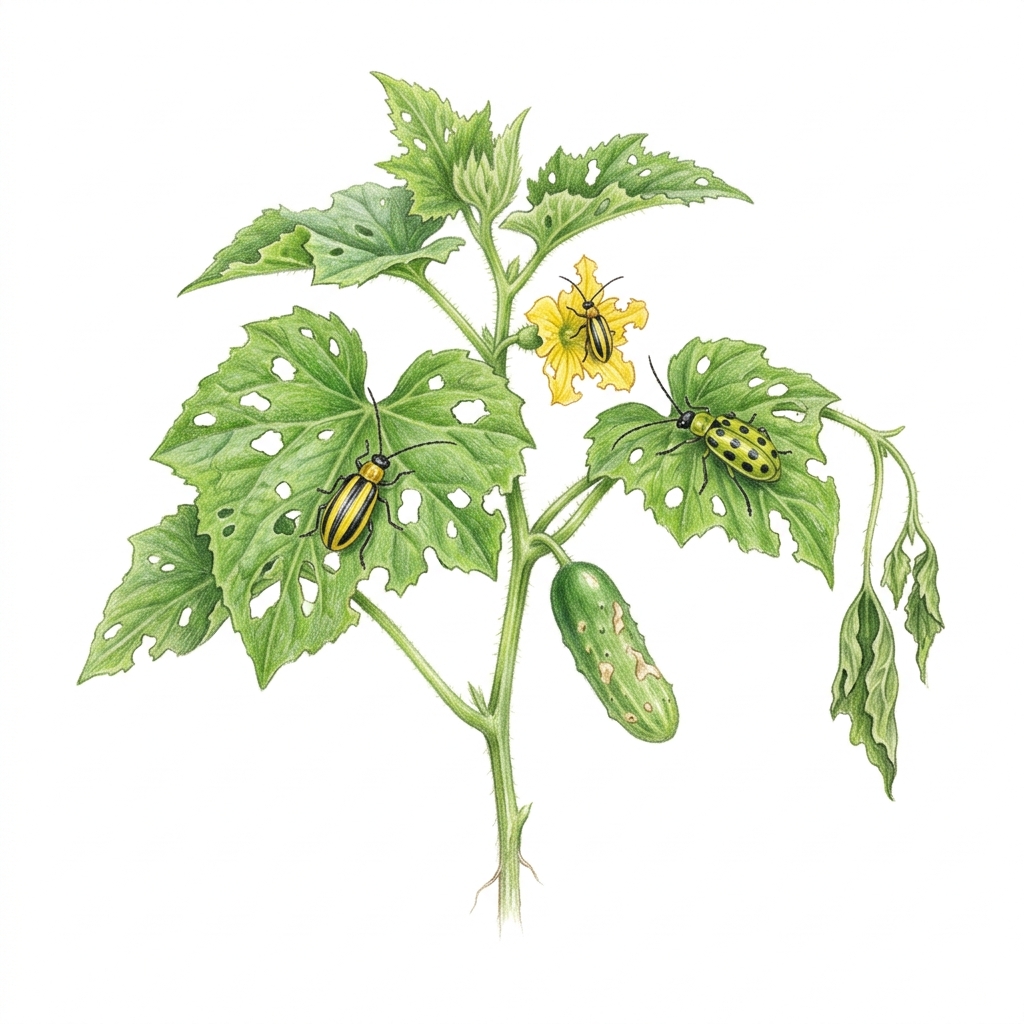
Illustration
Small yellow beetles with black stripes or spots that chew the leaves and flowers of cucumbers, melons and squash, and spread bacterial wilt. Cover young plants with row cover until they flower, and pull out any plant that wilts.
How to spot it
- Shiny beetles about 6 mm (¼ in) long, with black heads and long antennae: yellow with three black stripes (striped cucumber beetle), or yellow-green with 12 black spots (spotted cucumber beetle).
- Seedlings with chewed seed leaves and gnawed stems, stunted or killed outright.
- Holes in the leaves, flowers eaten, and scars on the skin of the fruit.
- Plants that wilt suddenly, starting with one leaf and spreading to the whole vine: bacterial wilt, which the beetles spread.
- Slender, off-white larvae with a dark head feeding on the roots; they usually do little harm.
Easily confused with
Lady beetles (ladybirds)
Rounder, with short, stubby antennae; cucumber beetles have long, thread-like antennae.
Corn rootworm beetles
Close relatives that turn up on squash later in summer. The western one's stripes are less sharp and stop short of the wing tips, and the northern one is plain pale green. They usually do little harm.
Squash bugs
Flat, grey-brown bugs about 16 mm (⅝ in) long that suck sap, so leaves speckle yellow and wilt, with no holes chewed in them.
Pumpkin beetles
Orange-yellow leaf beetles about 6–7 mm (¼ in) long, either plain or with four large black spots and no stripes, that chew large holes in the leaves of pumpkins, cucumbers and melons in Australia. In the Pacific Islands, red ones about 8 mm (⅓ in) long do the same.
Where it's a problem
- North America: Common in gardens. The striped beetle feeds almost only on the cucumber family; the spotted beetle eats more than 200 kinds of plant, including beans, corn and potatoes. In California the western spotted cucumber beetle is the most common.
- Europe and United Kingdom: Not established in Europe. The western spotted cucumber beetle is a quarantine pest in the European Union and the United Kingdom: report a suspected find to your national plant health authority.
- Elsewhere: Our sources record cucumber beetles only in the Americas. In Australia and the Pacific Islands, pumpkin beetles chew cucurbits in a similar way; your local agriculture department can identify a beetle you're unsure of.
What to do
- Cover seedlings and new transplants with floating row cover, tucked in at the edges, from the day they go in: young plants are the most at risk, from feeding and from wilt.
- Take the cover off when the plants start to flower, so bees can pollinate them; otherwise there will be no fruit.
- Pull out and destroy any plant that wilts from bacterial wilt straight away: it can't be saved, and beetles feeding on it carry the disease to healthy plants.
- Where the beetles are bad, favour the crops wilt hits least: it is worst on cucumbers and rockmelons, milder on squash and pumpkins, and rare on established watermelons.
- Don't worry about some holes in the leaves of established plants: they can stand a lot of leaf damage. Heavy feeding on the flowers can cost fruit.
In Europe and the UK, report a suspected find rather than treating it. Elsewhere, if you use an insecticide, choose one labelled for cucumber beetles and follow the label and local rules. Sprays may not kill the beetles fast enough to stop them spreading bacterial wilt.
Vegetables it affects
Free account, no card needed. You sign up or sign in first, then the scanner opens.
Sources
- University of California IPM: Cucumber beetles
- University of Wisconsin–Madison Extension: Cucumber beetles
- University of Kentucky Entomology: Cucumber beetles (ENTFACT-311)
- Northern Territory Government: Common insect pests of cucurbits (Agnote I59)
- Pacific Pests, Pathogens and Weeds: Pumpkin beetle
- EPPO Global Database: Western spotted cucumber beetle, categorisation
Facts checked Wednesday 21 October 2026. General guidance only: follow your local council, agency and product label.