Home › Plant diseases › Bacterial wilt
Plant diseases
Bacterial wilt
Erwinia tracheiphila (cucurbits); Ralstonia solanacearum species complex (tomatoes, potatoes and others) · Bacterium
Also called bacterial wilt of cucurbits (USA), brown rot (potatoes), sore eye or jammy eye (potatoes, Australia).
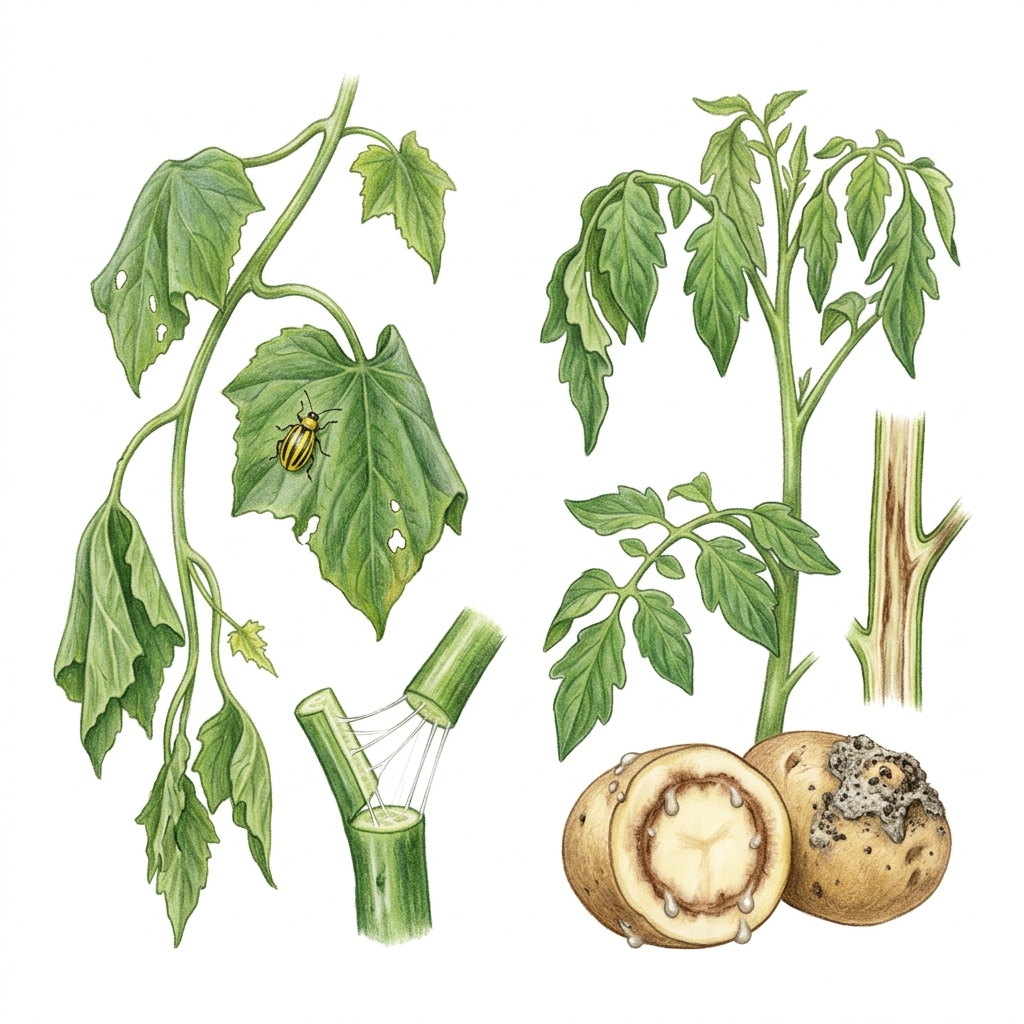
Illustration
Two different bacteria share this name, and both block a plant's water pipes so it wilts and dies: one, carried by cucumber beetles in North America, attacks cucumbers, melons and squash such as zucchini; the other lives in warm, wet soils, including in parts of Australia, and attacks tomatoes, potatoes, capsicum and eggplant. Neither can be cured, so pull out wilted plants, keep beetles off young cucurbits with covers, and keep tomatoes and potatoes out of affected soil for years.
How to spot it
- Cucurbits: leaves on one runner wilt first, then the wilt spreads along the runners until the whole plant wilts and dies.
- Cucurbits: cucumber beetles on the plant and chewed leaves. The beetles leave the bacteria in fresh feeding wounds.
- Cucurbits: cut a wilted stem near the base, press the cut ends together and pull them slowly apart. Fine, sticky threads stretching between them point to bacterial wilt. The test works best on cucumbers and melons, less well on zucchini and pumpkins.
- Tomatoes: the youngest leaves wilt in the hottest part of the day at first; in hot, wet weather the whole plant can wilt suddenly and die. Potatoes wilt one or more stems at a time, and capsicums wilt more slowly and drop their leaves.
- Tomatoes and potatoes: brown streaks inside the lower stem. Stand a freshly cut piece of stem in a glass of water: milky threads streaming from the cut end within a few minutes point to bacterial wilt.
- Potato tubers: a brown ring inside when cut, and grey-white ooze at the eyes, often with soil stuck to it.
Easily confused with
Fusarium wilt
Lower leaves yellow first, often on one side of the plant, and a cut stem in water gives no milky stream.
Verticillium wilt
V-shaped yellow patches at the leaf edges and a slow decline, mostly in cooler weather.
Squash vine borer
A hole near the base of the vine with sawdust-like droppings, and a fat white caterpillar inside when the stem is split.
Cucumber beetles
Small yellow beetles with black stripes or spots that chew holes in leaves and flowers. Their chewing alone doesn't make a grown plant's runners wilt; wilting means it has caught the wilt they carry.
Where it's a problem
- Worldwide: The soil form is a serious problem in warm and tropical regions, and attacks more than 200 kinds of plants.
- North America: The cucurbit form is widespread, carried by striped and spotted cucumber beetles. Cucumbers and melons suffer most; squash, zucchini and pumpkins less, and watermelons seldom get it.
- Australia: Australian agencies use the name for the soil form on tomatoes, potatoes, capsicum and eggplant. It is recorded in Queensland, New South Wales, Victoria and the Northern Territory, and is worst in hot, wet weather.
- Western Australia: Not known to occur: it's a declared pest, and suspected cases must be reported to DPIRD's Pest and Disease Information Service, (08) 9368 3080.
- United Kingdom and Europe: On potatoes the soil form is called brown rot, a notifiable disease: report suspected cases to your national plant health authority. In Britain, isolated outbreaks have been linked to river water, and it turns up now and then in continental Europe.
What to do
- Pull out wilted plants, roots and all, as soon as you see them.
- Cucurbits: cover young plants with insect netting or a floating row cover from planting until they flower, then open the covers so bees can pollinate.
- Cucurbits: check for cucumber beetles two or three times a week early in the season, when young plants are most at risk.
- Tomatoes, potatoes, capsicum and eggplant: keep all of them out of affected soil for at least five years, and meanwhile grow them in pots of fresh potting mix.
- Plant in raised beds where drainage is poor, clean soil off tools and boots, and pull out nightshade weeds, which can carry the soil form.
- Use certified seed potatoes, and choose tolerant tomato varieties or tomatoes grafted onto resistant rootstock.
No spray cures it. Sprays don't help a cucurbit once it is infected, and apart from soil fumigation on farms there's no chemical control for the soil form: prevention is the only defence.
Follow your local council's guidance for disposing of diseased plant material. Official guides usually advise against putting it in a home compost heap.
Vegetables it affects
Free account, no card needed. You sign up or sign in first, then the scanner opens.
Sources
- University of Wisconsin–Madison Extension: Bacterial wilt of cucurbits
- Pacific Pests, Pathogens and Weeds: Tomato bacterial wilt
- Agriculture Victoria: Bacterial wilt of potatoes
- EPPO Global Database: Ralstonia solanacearum in Australia
- AHDB: Brown rot
- WA DPIRD: Bacterial wilt of potato
Facts checked Wednesday 21 October 2026. General guidance only: follow your local council, agency and product label.