Home › Plant diseases › Mosaic virus
Plant diseases
Mosaic virus
Cucumber, tobacco and tomato mosaic viruses · Virus
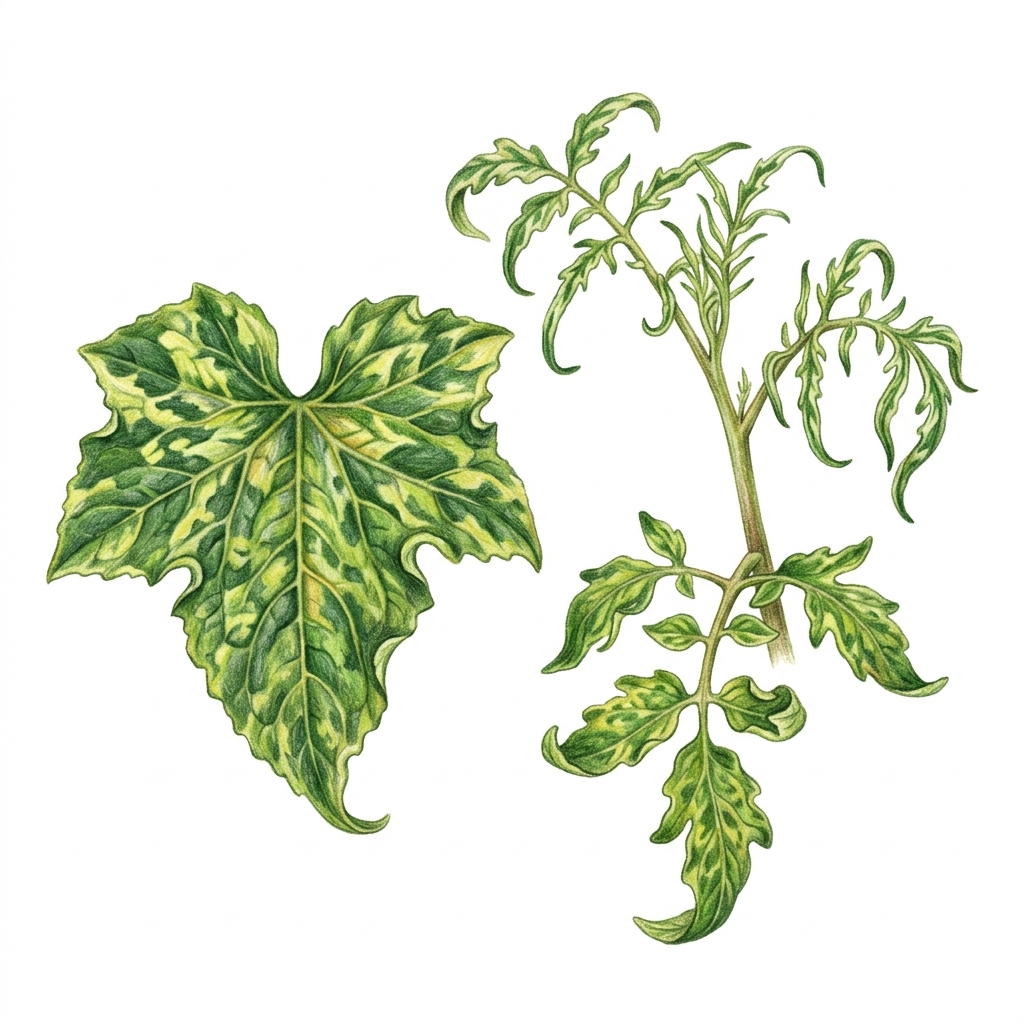
Illustration
Mottled light-and-dark green leaves, distorted growth and stunted plants. There is no cure, so remove affected plants, clean your hands and tools, and grow resistant varieties next time.
How to spot it
- An irregular mottle of light and dark green (or yellow) on the leaves.
- Leaves wrinkled, curled downwards and smaller; tomato leaflets can become narrow 'fern leaf' or 'shoestring' shapes.
- Stunted plants with short gaps between the leaves.
- Bronzed, patchy or unevenly ripening tomatoes, and deformed peppers and cucurbits.
- White streaks in the flowers.
Easily confused with
Herbicide damage
Appears suddenly and evenly across an area, weeds included; a virus shows on scattered plants and gets worse over time.
Nutrient deficiency
Also tends to show evenly across a bed, not on the odd plant.
Tomato brown rugose fruit virus
Shows on tomato varieties bred to resist mosaic, with wrinkled fruit skin and yellow or brown patches. It is regulated in several countries.
Where it's a problem
- Worldwide: Common in gardens; the familiar mosaic viruses aren't notifiable.
- Australia: The related tomato brown rugose fruit virus is notifiable in NSW and must be reported in Queensland.
- New Zealand: Tomato brown rugose fruit virus is not present, and imports are restricted.
What to do
- Pull out plants with symptoms promptly.
- Wash hands and tools in hot soapy water, and keep tobacco away from plants: it can carry the virus.
- Keep the garden weed-free, as weeds such as chickweed can harbour it.
- Keep aphids off young plants with row covers or reflective mulch.
- Next season, grow resistant varieties and use tested seed; don't save seed from affected plants.
There's no cure and no chemical control. Spraying the aphids doesn't stop it, because they pass the virus on within minutes.
Follow your local council's guidance for disposing of diseased plant material. Official guides usually advise against putting it in a home compost heap.
Free account, no card needed. You sign up or sign in first, then the scanner opens.
Sources
- RHS: Cucumber mosaic virus
- RHS: Tomato viruses
- University of California IPM: Tobacco mosaic virus
- University of Wisconsin–Madison Extension: Tobacco mosaic
- Cornell University: Tomato brown rugose fruit virus
- Business Queensland: Tomato brown rugose fruit virus
Facts checked Sunday 27 September 2026. General guidance only: follow your local council, agency and product label.