Home › Vegetables › Tomatoes
Vegetables
Growing tomatoes
Solanum lycopersicum. A warm-season crop grown for its fruit, usually raised from seed in trays and planted out once the weather warms. It wants sun, warmth and steady water, and frost kills it. These steps work anywhere: they go by soil and weather, not by month.
How a tomato grows
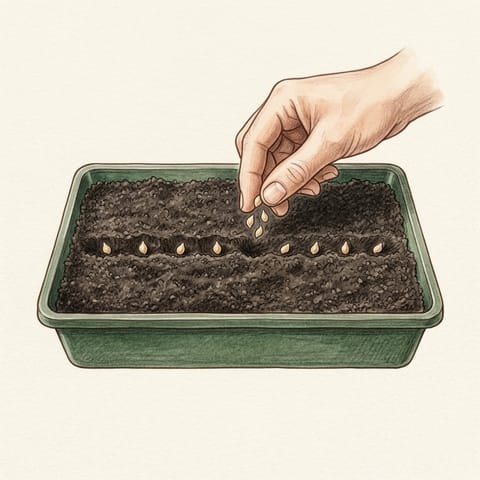 SowSeeds in a tray, kept warmUp in 5–10 days
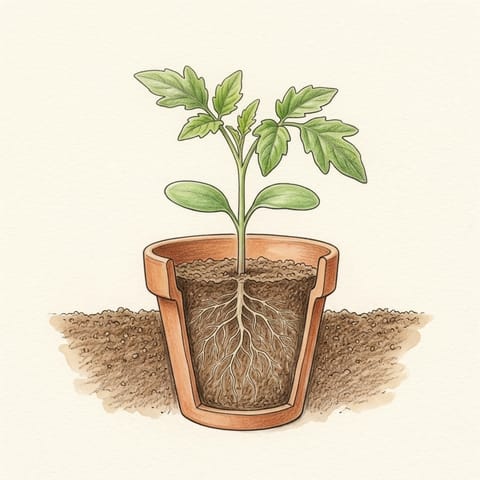 SeedlingTrue leaves form in the pot3–6 weeks
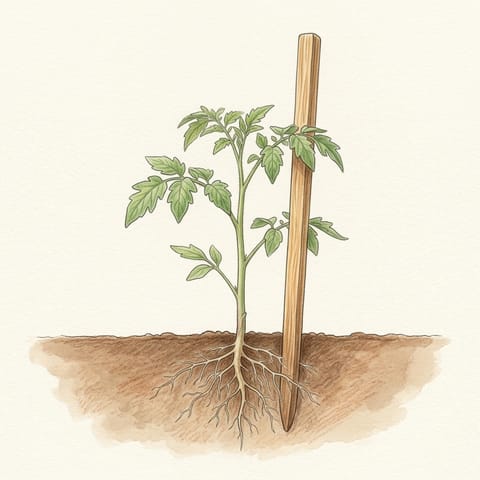 Plant outDeep, with its stake in6–8 weeks from sowing
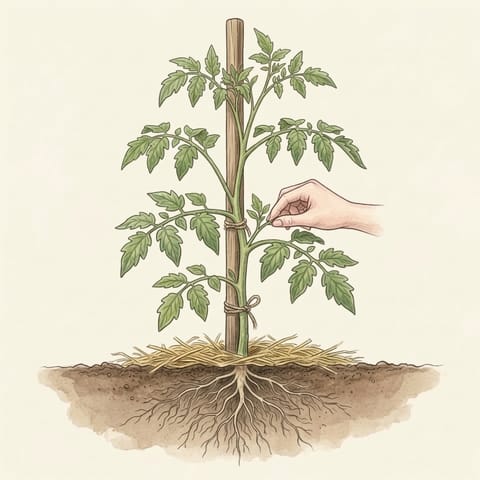 GrowTie in, pinch side shoots2–5 weeks after planting
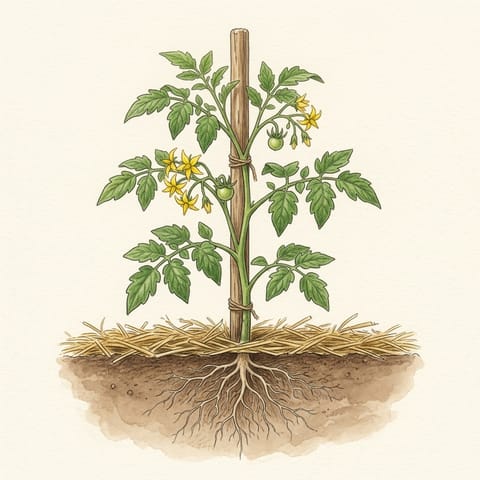 FlowerYellow flowers on trusses4–6 weeks after planting
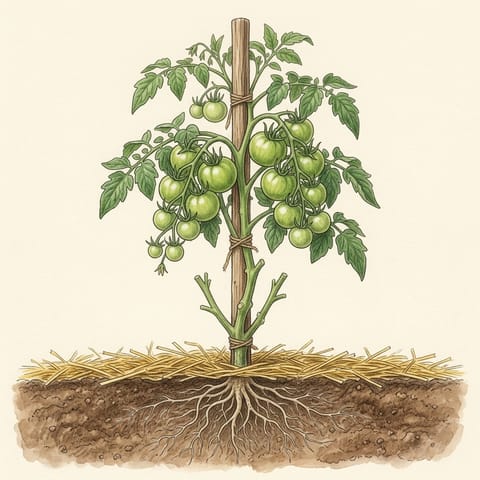 Fruit setsGreen tomatoes swell6–9 weeks after planting
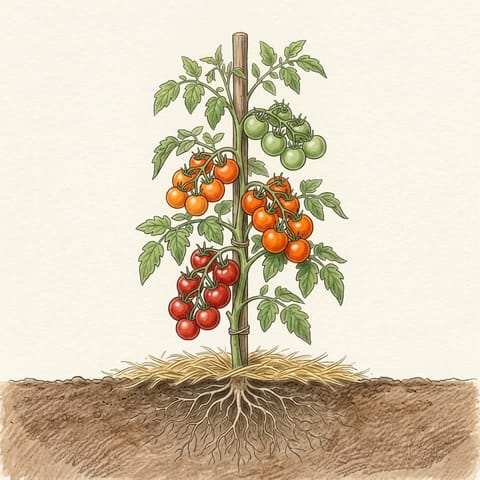 RipenGreen to orange to redAbout 5–8 weeks after flowering
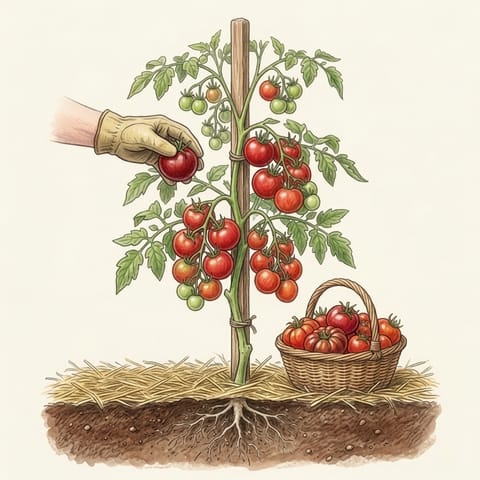 PickFully coloured, still firmFor 2–3 months
Times vary with the variety and the weather. Small cherry tomatoes ripen first; large beefsteak kinds take the longest.
Growing it, step by step
Is it right for you?
- Tomatoes need a warm spell of about three to four months: days around 21–29°C (70–85°F) and nights above about 10°C (50°F).
- Frost kills them. Very hot weather is a problem too: above about 32°C (90°F) by day, or nights that stay above about 21–24°C (70–75°F), the flowers drop without setting fruit.
- Tall kinds (cordon or indeterminate) need a 1.8–2 m (6–7 ft) stake and room to climb. Bush kinds (determinate) stay smaller and suit large pots, 30–45 cm (12–18 in) across.
When to plant
Sow seeds in trays about six to eight weeks before you plan to plant out, kept warm: they come up fastest in soil at 20–30°C (68–86°F). Plant out once the soil is at least 16°C (60°F), the last frost has passed and nights stay above about 10°C (50°F).
Short, cool summers: start seeds early indoors and pick quick, early kinds, or grow under cover. Mild climates: plant out in spring. Hot or subtropical places: plant in late winter or autumn so the fruit sets before or after the hottest weeks. Tropics: the cooler, drier months, with heat-tolerant kinds.Prepare the bed
- A sunny, sheltered spot with deep, well-drained soil. Dig in plenty of compost.
- Slightly acid to neutral soil suits them, pH 6.0–7.0. See soil pH.
- Avoid beds that grew tomatoes, potatoes, capsicum or eggplant in the last three years. They share the same diseases.
Sow and plant
- Sow seeds 3–6 mm (about ¼ in) deep in trays or small pots, and move each seedling to its own pot once it has its first true leaves.
- A week or so before planting out, harden seedlings off: put them outside by day and bring them in at night.
- Plant deeper than they sat in the pot, with the soil just below the lowest leaves. Roots grow from the buried stem. Space them 50 cm (20 in) apart, in rows 90 cm (36 in) apart.
- Put the stake in at planting time, so you don't damage the roots later.
Get it started
- Water in well, then water daily for the first week or so until the plants settle.
- If a cold night is forecast soon after planting, cover them with fleece.
Keep it growing
- Tie in and pinch: on tall kinds, tie the stem to its stake as it grows and snap off the small side shoots in the leaf joints each week. Bush kinds are left alone.
- Water: deeply at the base, and evenly. Dry spells followed by soakings split the fruit and cause blossom end rot.
- Mulch: once the soil is warm, a layer of straw about 5 cm (2 in) deep keeps moisture even and the fruit clean. Keep it off the stem.
- Feed: compost-rich soil is enough until the first fruits set. Then a high-potash tomato feed every two weeks. Too much nitrogen grows leaves instead of fruit.
- Lower leaves: once fruit is setting, remove the old leaves below the first truss to let air through.
- Pinch out the top: on tall kinds where summers are short, pinch out the growing tip two leaves above the fourth truss, so the fruit already set has time to ripen. Elsewhere, pinch it out when it reaches the top of its stake.
Watch for problems
The common ones, with a Garden help page each where there is one:
Harvest
- Pick when the fruit is fully coloured but still firm. Twist it off, or cut the stalk, keeping the green cap on.
- Fruit picked once it starts to colour finishes ripening indoors. Where fruit fly or birds are a problem, this saves the crop.
- At the end of the season, before the first frost, pick the last full-sized green ones and ripen them indoors at room temperature. Small, hard green ones rarely ripen well.
After harvest
- Keep ripe tomatoes at room temperature, out of the sun. The fridge dulls their flavour.
- To save seed, choose an open-pollinated (heirloom) kind. Seed from F1 hybrids won't grow true.
- Pull the plants out when they finish. Bin diseased ones rather than composting them.
- Next in that bed: beans, peas or leafy greens. Keep tomatoes, potatoes, capsicum and eggplant out for three years.
Sources
- RHS: How to grow tomatoes
- University of Minnesota Extension: Growing tomatoes in home gardens
- Gardening Australia: Top tomato tips
- Utah State University Extension: How to grow tomatoes in your garden
Facts checked Wednesday 21 October 2026. General guidance only: local advice comes first.