Home › Plant diseases › Late blight
Plant diseases
Late blight
Phytophthora infestans · Water mould
Also called potato blight or tomato blight (UK).
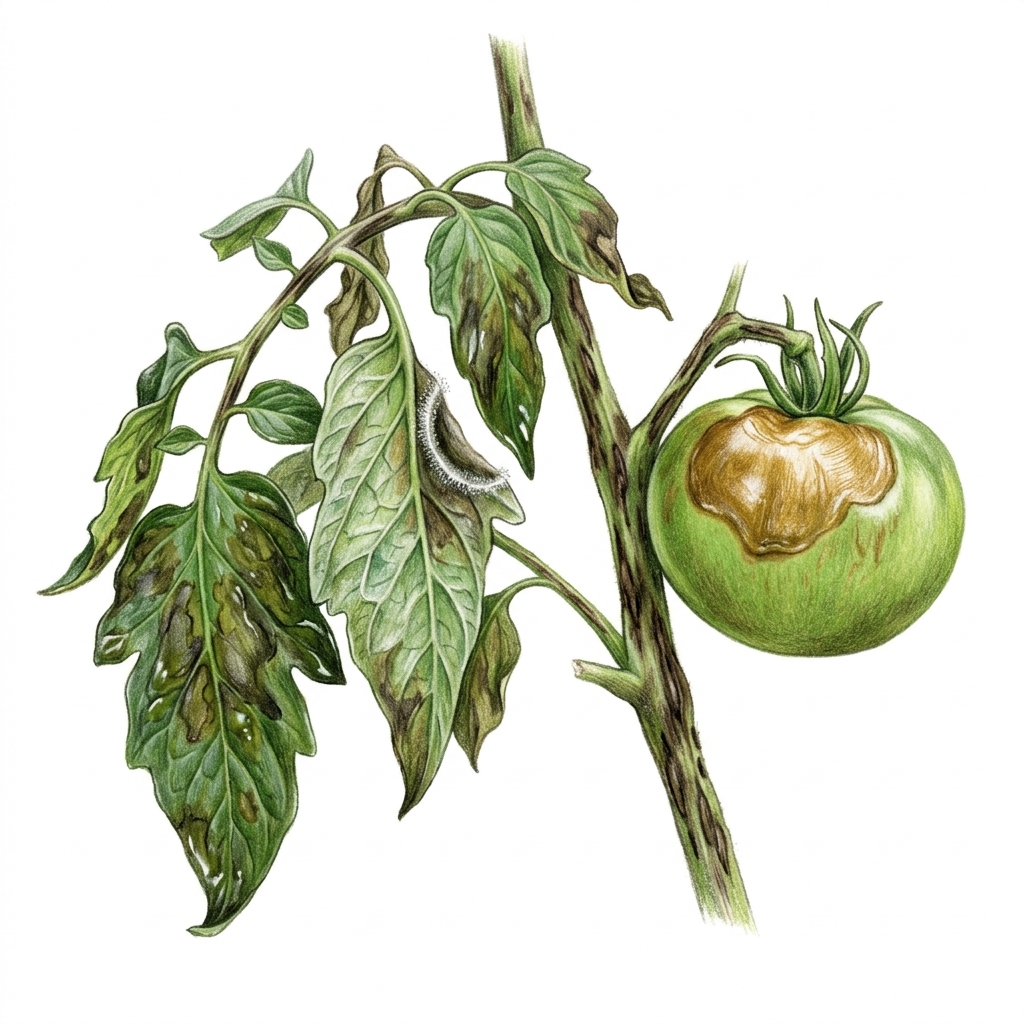
Illustration
The disease behind the Irish potato famine: greasy brown patches that spread fast in mild, wet weather and can kill tomato and potato plants within a week or two. Act fast, and never compost infected plants.
How to spot it
- Olive-green, water-soaked, greasy patches on leaves that turn brown-black; leaves collapse.
- White fuzz at the edges of the patches underneath the leaf in humid weather.
- Dark streaks on the stems.
- Tomatoes: firm, greasy, golden-to-chocolate-brown patches, starting high on the fruit.
- Potatoes: reddish-brown rot just under the skin of the tubers.
Easily confused with
Early blight
Spots with target-like rings, starting on the oldest leaves.
Septoria leaf spot
Many small tan-centred spots with black specks.
Where it's a problem
- United Kingdom: Outbreaks from June, earliest in the South West.
- Western Australia: Not known to occur: it's a declared pest, and suspected cases must be reported to DPIRD.
- Australia: Only one strain is present; more aggressive strains from overseas are a biosecurity target.
What to do
- Plant certified seed potatoes and healthy tomato seedlings, and choose resistant varieties.
- Remove volunteer potatoes and tomatoes, and nightshade weeds.
- Water at the base, not over the leaves.
- Pull out infected tomato plants straight away.
- For potatoes, once about a quarter of the foliage is affected, cut the stems at ground level and lift the crop about two weeks later; don't store damaged tubers. Rotate beds for four years or more.
If you use a fungicide, choose one labelled for late blight and follow the label and local rules. Sprays only protect before infection and can't cure it; in the UK none are available to gardeners.
Follow your local council's guidance for disposing of diseased plant material. Official guides usually advise against putting it in a home compost heap.
Free account, no card needed. You sign up or sign in first, then the scanner opens.
Sources
- RHS: Potato and tomato blight
- University of California IPM: Late blight
- WA DPIRD: Late blight of potato and tomato
- University of Wisconsin–Madison Extension: Late blight
- Cornell University: Late blight
Facts checked Sunday 27 September 2026. General guidance only: follow your local council, agency and product label.