Home › Plant diseases › Common scab
Plant diseases
Common scab
Streptomyces scabiei and other Streptomyces species · Bacterium
Also called potato scab (USA).
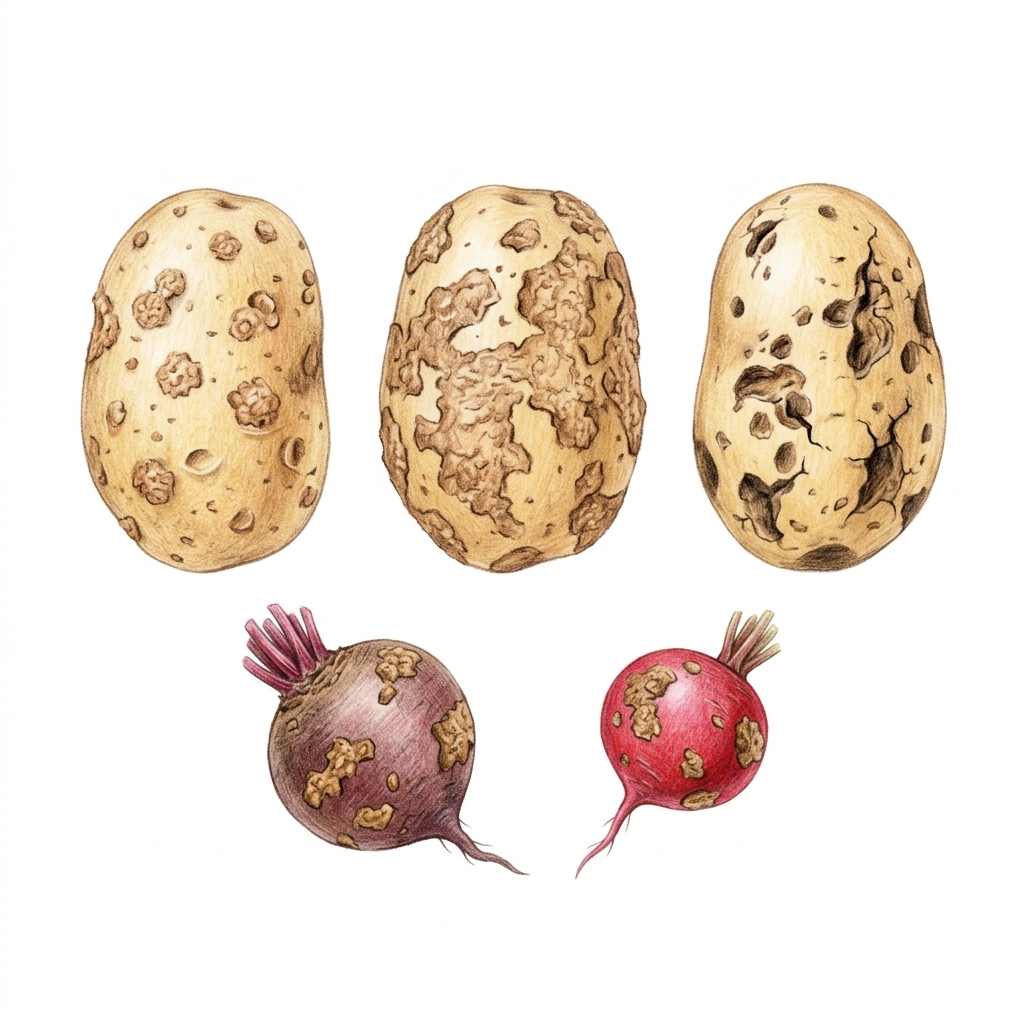
Illustration
Rough, corky, scab-like patches on potato skins, caused by a common soil bacterium that does most damage in dry, alkaline or freshly limed soil. The potatoes are fine to eat once peeled; next time, keep the soil moist while the tubers form, don't lime before potatoes, and grow resistant varieties.
How to spot it
- Rough, corky patches on the skin, raised or slightly sunken, roughly round and about 5–10 mm (¼–½ in) across.
- Patches that join up to cover much of the skin in a bad year.
- In severe cases, deep pits or cracks in the skin.
- Only the tubers are marked: the leaves and stems look healthy, so it usually shows up at harvest.
- Similar scabs on beetroot, radishes, swedes and turnips.
Easily confused with
Powdery scab
Raised pimples that burst, leaving brown, dusty spores inside a ragged, papery rim of skin.
Black scurf
Hard black or brown lumps stuck tightly to the skin, like dirt that won't wash off; the skin underneath isn't rough or pitted.
Where it's a problem
- Worldwide: Common wherever potatoes are grown, especially in soils that dry out quickly and in alkaline soil. The bacteria live naturally in many soils.
- Australia: Found in Australian potato crops, and worst in neutral or alkaline soil and when the soil is warm and dry as the tubers start to form.
What to do
- Plant seed potatoes with no visible scab, ideally certified ones.
- Choose varieties with some resistance; none is completely immune.
- Grow potatoes in the same spot no more than once every three or four years.
- Don't lime before potatoes. If your soil needs lime, add it after the potato year.
- Avoid fresh manure and wood ash before potatoes: both can raise the soil pH.
- Keep the soil moist while the tubers form: in dry spells, water from about two to three weeks after the shoots come up, for around four weeks. Dry soil at that stage is when infection happens.
- Peel scabby potatoes and eat them, and store them cool, dark and dry so the scabs don't let rots in.
Sprays don't help: the RHS says there are no chemical controls for gardeners, and the fix is moist soil while the tubers form.
Follow your local council's guidance for disposing of diseased plant material.
Vegetables it affects
Free account, no card needed. You sign up or sign in first, then the scanner opens.
Sources
- RHS: Potato scabs
- University of Wisconsin–Madison Extension: Potato scab
- Pacific Pests, Pathogens and Weeds: Common scab of potato
- Cornell University: Rhizoctonia canker and black scurf of potato
- Agriculture Victoria: Common scab of potatoes
Facts checked Wednesday 21 October 2026. General guidance only: follow your local council, agency and product label.