Home › Garden pests › Potato tuber moth
Garden pests
Potato tuber moth
Phthorimaea operculella · Insect
Also called potato moth (Australia), potato tuberworm (USA).
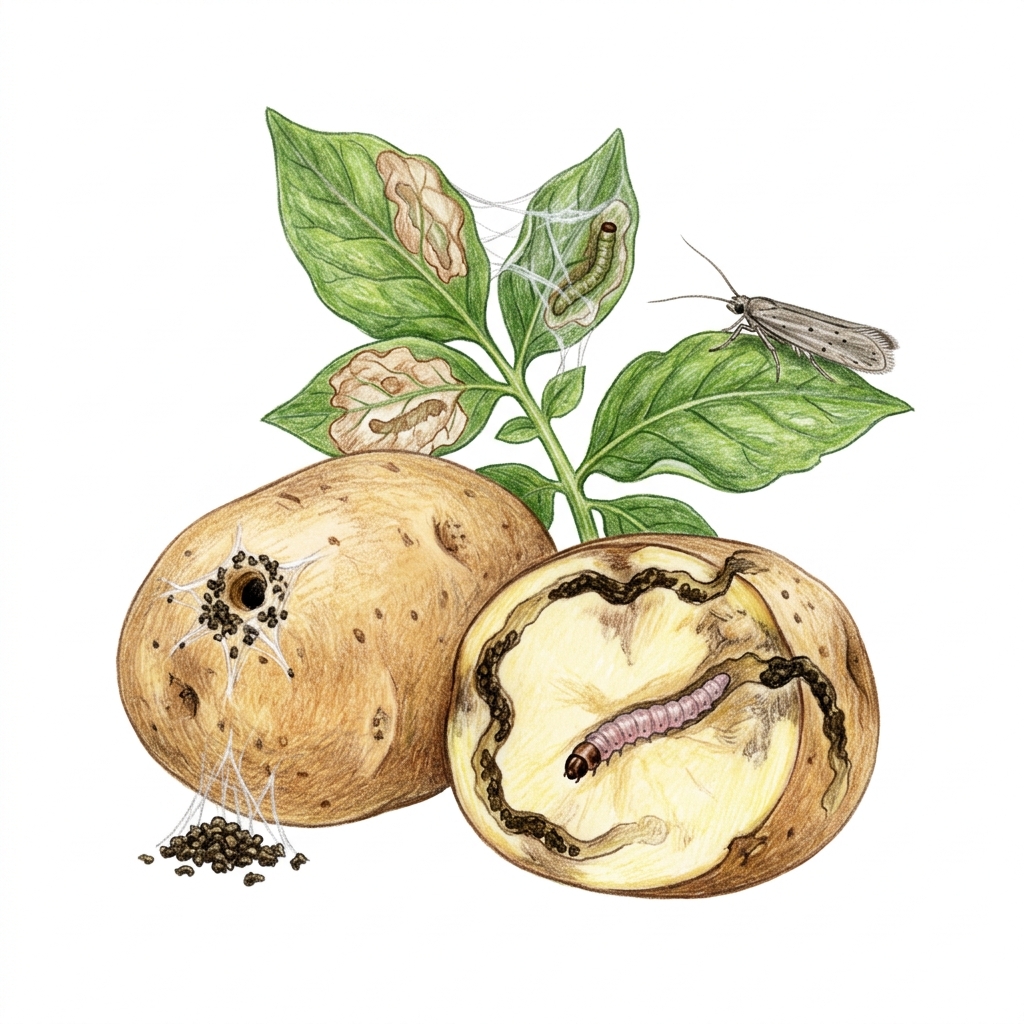
Illustration
A small grey-brown moth whose caterpillars mine potato leaves and tunnel into the tubers, packing the tunnels with droppings; it is worst in warm, dry weather when the soil cracks. Keep the tubers deeply covered with soil, water so the ground doesn't crack, and lift and take away the crop promptly.
How to spot it
- Brown, papery blisters in potato leaves where caterpillars feed inside, sometimes with leaves webbed together and shoots tunnelled.
- Tubers with small entry holes, often at the eyes, with droppings and fine webbing around the hole.
- Inside, dark tunnels just under the skin or deeper, packed with droppings; damaged tubers often rot.
- Caterpillars up to about 12 mm (½ in) long with a dark brown head: greenish when feeding in leaves, pinkish grey in tubers.
- Small, slender grey-brown moths about 12–16 mm (½–⅝ in) across the wings, which hide by day and fly at dusk.
Easily confused with
Wireworms
Clean, narrow tunnels with no droppings, made by thin, shiny larvae with three pairs of legs.
Leaf miners
On potato leaves these are mostly fly maggots with no distinct head, making winding trails; potato moth caterpillars have a dark brown head and make brown blisters.
Slugs and snails
Small holes in the skin that open into large hollows, mostly from late summer into autumn, with no droppings packed inside.
Cutworms
Much bigger caterpillars, up to 4–5 cm (1½–2 in), that curl into a C when disturbed; they gnaw large, shallow holes in tubers rather than narrow tunnels.
Where it's a problem
- Worldwide: A pest of potatoes on every continent, worst in tropical and subtropical regions.
- Australia: Found in every state and territory, though only in parts of Western Australia. NSW DPI calls it the most destructive pest of potatoes in New South Wales; in coastal districts it is worst in dry spring weather.
- New Zealand: Present, with six to eight generations over a summer.
- North America: Recorded in California since 1856, where it can be minor or serious depending on the area and the year, and a pest in the Pacific Northwest since 2002.
What to do
- Plant healthy seed potatoes at least 15 cm (6 in) deep.
- Hill soil up around the plants, with a last generous hilling late in the season, when the tubers are big but before any are exposed.
- Water regularly so the soil doesn't crack and let the moths and caterpillars reach the tubers.
- Dig the crop as soon as it is mature, take the potatoes away promptly and don't leave dug ones out overnight. Never cover dug potatoes with the potato tops: caterpillars move from the wilting tops into the tubers.
- Collect every tuber, including small and damaged ones, and clear volunteer potatoes and nightshade weeds, where the moth breeds.
- Don't grow potatoes, tomatoes or eggplant in the same ground one after another.
- Store potatoes cool, below 9°C (48°F) if you can, and check stored tubers for tunnels.
If you use an insecticide, choose one labelled for potato tuber moth and follow the label and local rules. Sources say cultural control is the mainstay, and parasitic wasps and other natural enemies often keep it in check where sprays are kept to a minimum.
Vegetables it affects
Free account, no card needed. You sign up or sign in first, then the scanner opens.
Sources
- NSW DPI: Potato moth (Agfact H8.AE.5)
- Business Queensland: Potato moth
- Farm Biosecurity: Potato pest threats
- University of California IPM: Potato tuberworm
- University of Idaho Extension: Potato tuberworm, a threat for Idaho potatoes
- Teagasc: Potato pests
Facts checked Wednesday 21 October 2026. General guidance only: follow your local council, agency and product label.