Home › Vegetables › Carrots
Vegetables
Growing carrots
Daucus carota subsp. sativus. A cool-season root crop, sown where it is to grow because the roots don't like being moved. It wants deep, loose, stone-free soil and even moisture, and hot weather spoils the roots. These steps work anywhere: they go by soil and weather, not by month.
How a carrot grows
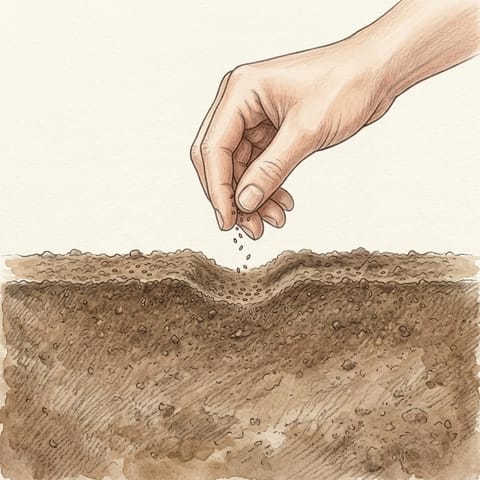 SowTiny seeds in a shallow rowDay 0
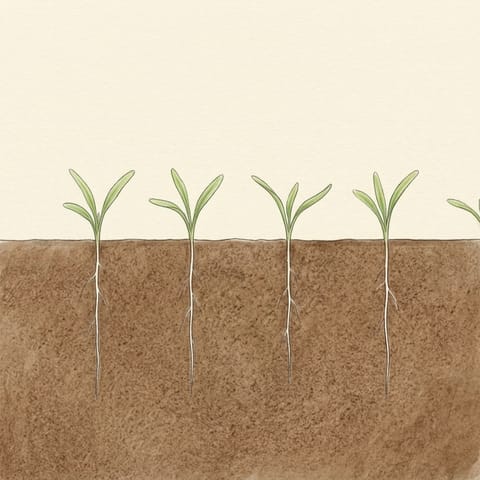 SeedlingsGrass-like seed leaves appearUp in 1–3 weeks
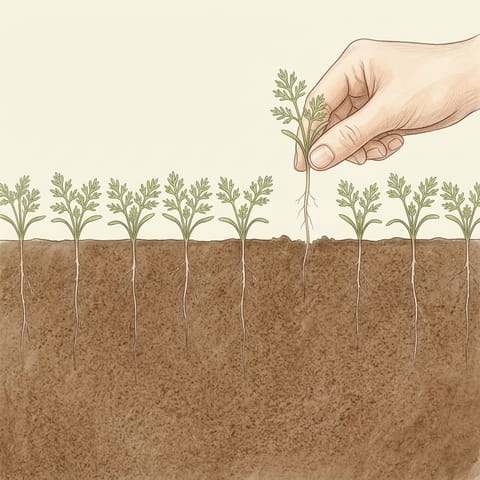 ThinThinned to 3 cm (1 in) apartAbout 4 weeks
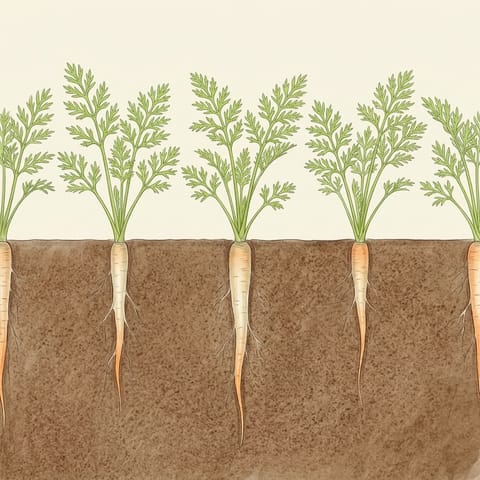 GrowFeathery leaves, the root reaches down4–7 weeks
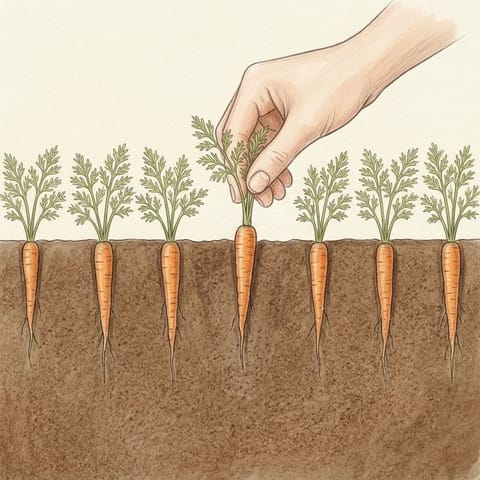 Thin againFinal spacing, baby carrots to eatAbout 7 weeks
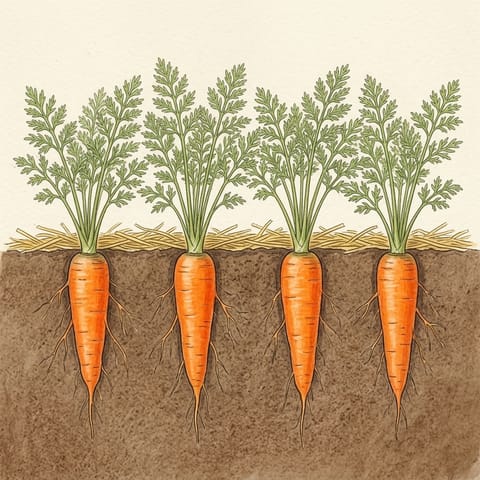 SwellRoots thicken and colour up7–10 weeks
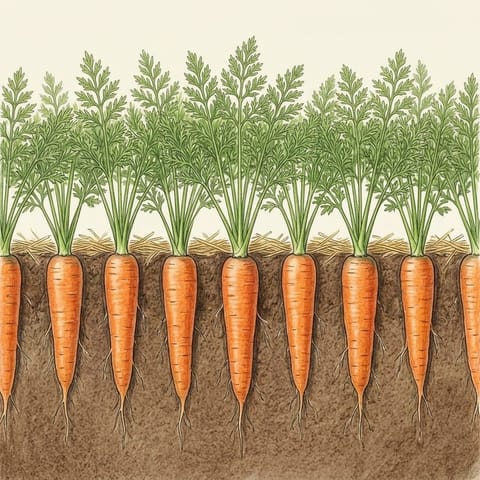 ReadyFull-sized roots, tops kept covered10–16 weeks
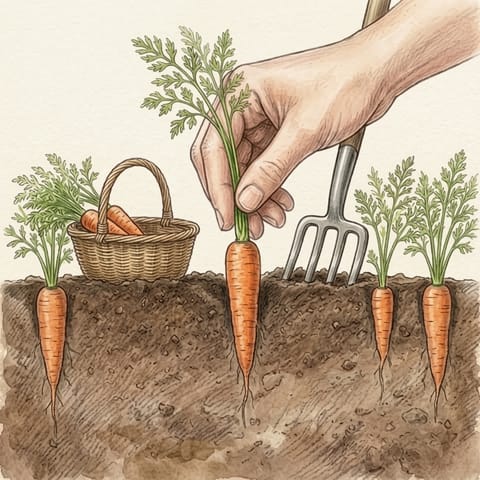 PullLoosen with a fork, then ease outOver 3–4 weeks
Times run from sowing and vary with the variety and the weather. Short and round kinds are quickest; long kinds take the longest.
Growing it, step by step
Is it right for you?
- Carrots like mild weather, with days around 16–21°C (60–70°F). They take light frost, but heat gives pale, poor-tasting roots, and seed comes up poorly in hot soil.
- They need deep, loose soil. Stones, clods and heavy clay fork and twist the roots. On heavy or shallow soil, grow short or round kinds, or use a raised bed.
- They take little room: about 5–7 cm (2–3 in) a plant once thinned. Short kinds grow well in pots at least 30 cm (12 in) deep.
When to plant
Sow once the soil is at least 7°C (45°F). In cold soil the seed can take three weeks or more to come up; in warm soil, about a week. For a steady supply, sow a short row every three to four weeks, and time sowings so the roots grow in mild weather rather than the hottest weeks.
Cold winters: sow from spring until about 10–12 weeks before the first autumn frost. Mild climates: sow from early spring to early autumn, a row every few weeks. Hot or subtropical places: sow in autumn and winter, so they grow in the cooler months. Tropics: the cool, dry season or the highlands.Prepare the bed
- Full sun, and deep, loose, well-drained soil. Dig it over to at least 20 cm (8 in) and remove stones and clods.
- Slightly acid soil suits them, about pH 6.0–6.5. See soil pH.
- A little well-rotted compost is fine. Don't dig in fresh manure, fertiliser or woodchips before sowing: they give leafy tops and forked roots.
- Choose a bed where carrots, parsnips, celery, celeriac or parsley didn't grow in the last few years. They are relatives and share pests and diseases.
Sow
- Sow straight into the bed. Carrots don't like being moved: transplanted seedlings give forked, stunted roots.
- Sow thinly, 5 mm–1 cm (¼–½ in) deep, in rows 25 cm (10 in) apart. The seed is tiny: mix it with dry sand to spread it more evenly.
- Cover with fine soil, firm it gently and water with a fine spray so the seed doesn't wash away.
- A few radish seeds in the row mark it while the carrots come up. Pull the radishes before they crowd the carrots.
Get it started
- Keep the surface moist every day until the seedlings are up, one to three weeks. A plank or hessian sack over the row helps; lift it as soon as the first seedlings show.
- In hot weather, shade the row: tiny seedlings scorch at the soil line.
- Weed carefully by hand while they are small. Carrot seedlings are slow and can't compete with weeds.
Keep it growing
- Thin: when the seedlings are about 5 cm (2 in) tall, around four weeks after sowing, thin them to 3 cm (1 in) apart. About three weeks later, thin again to a final 5–7 cm (2–3 in). Eat the pulled baby carrots.
- Water: once they are up, a deep soak about twice a week in dry weather is better than a little every day; in cool or showery weather they seldom need any. Keep it even: a dry spell followed by a soaking splits the roots, and too much water gives hairy, forked roots.
- Mulch: after the final thinning, a thin layer of straw, about 3 cm (1 in), between the rows keeps moisture even. Keep the tops of the roots covered with mulch or a little soil: in the light they turn green and bitter.
- Feed: good soil needs none. Extra feed grows leafy tops and small, forked roots. Only if the leaves turn pale on poor soil, give a weak liquid feed now and then. In pots, a weak liquid feed every two weeks from about four weeks after sowing.
- Carrot fly: where it is a pest, cover the bed with fine insect mesh from sowing day, edges buried, until you lift the crop. Thin and weed on a still evening and put the mesh straight back: the smell of bruised leaves draws the flies.
Watch for problems
The common ones, with a Garden help page each where there is one:
Harvest
- Pull baby carrots from the second thinning on. Most kinds are ready 10–16 weeks after sowing: brush the soil from the top of one, and at about 2–3 cm (1 in) across it is ready.
- Water the day before if the soil is dry, then loosen the soil beside the row with a fork and ease them out. Pulled by the leaves alone, they often snap.
- Lift them as you need them over three or four weeks, longer in cool weather. Don't leave them too long: oversized carrots turn woody and lose flavour.
After harvest
- Twist or cut off the leaves straight away, leaving a short stub. Left on, they draw water from the roots.
- Keep them cold and moist, close to 0°C (32°F): in a bag in the fridge they last a few weeks. For months, pack them in damp sand in a cool shed or cellar, away from apples and pears, which make them bitter.
- Where winters are cold, they can stay in the ground: cut off the leaves, cover the row with straw and lift them as you need them. Lift the rest if the soil turns waterlogged.
- Next in that bed: cabbage family crops, beans, peas or leafy greens. Keep carrots, parsnips, celery, celeriac and parsley out for a few years.
Sources
- RHS: How to grow carrots
- University of Illinois Extension: Carrots
- Utah State University Extension: How to grow carrots in your garden
- Gardening Australia: Bumper carrot crop
Facts checked Wednesday 21 October 2026. General guidance only: local advice comes first.