Home › Plant diseases › Green shoulders
Plant diseases
Green shoulders
Also called sunburning (USA).
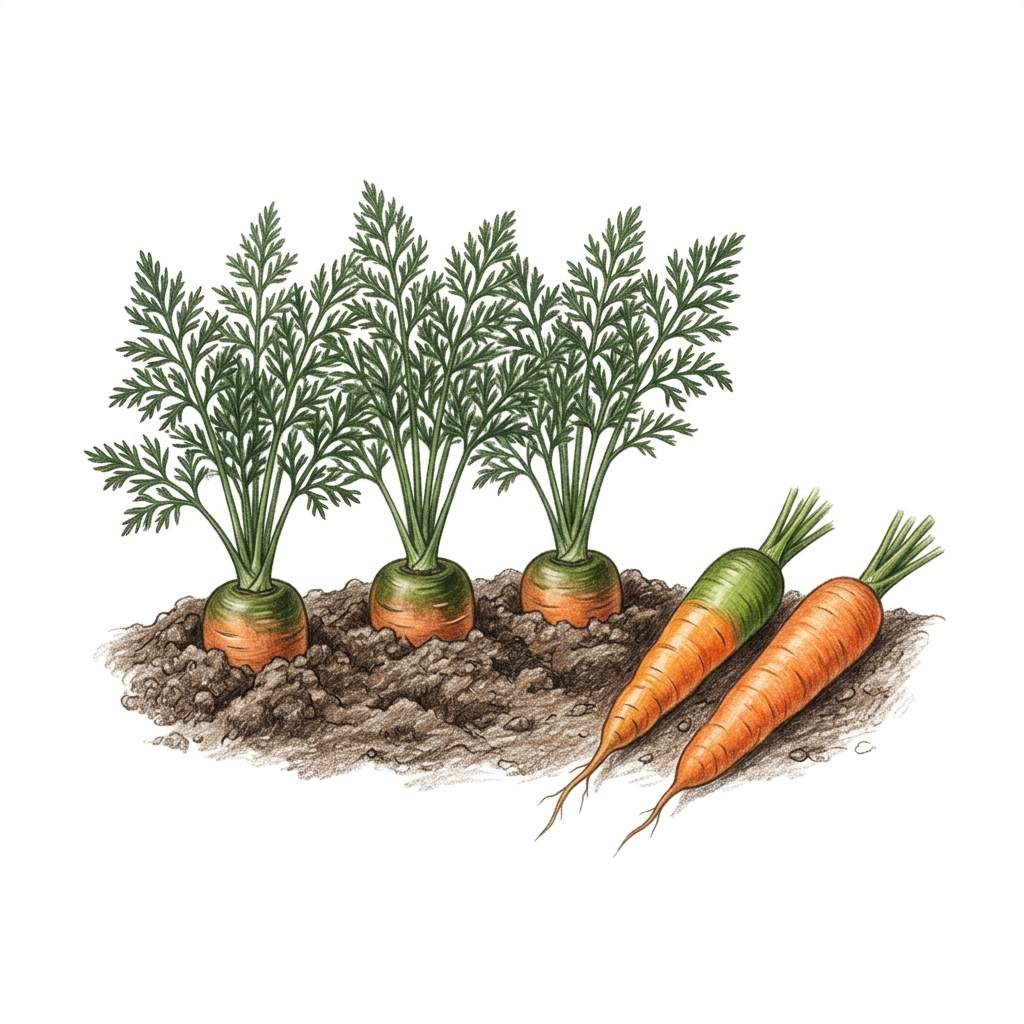
Illustration
The top of a carrot root turns green and bitter where it pokes above the soil and catches the light. Keeping the tops covered with a little soil or mulch prevents it.
How to spot it
- A green top on the root, where it shows above the soil.
- Only the exposed part is green; the root below the soil is its usual colour.
- The green part tastes bitter or off, and shows as dark green bits once cooked.
- Most common in kinds whose roots push up out of the soil as they swell.
Easily confused with
Green potatoes
Potatoes also turn green in the light, but on potatoes the green skin carries natural toxins: cut it out before eating.
Green shoulder on tomatoes
A different problem: the top of a ripe tomato stays green, linked to heat, strong sun and the kind grown. Cut the green part off.
Aster yellows
A bitter taste with masses of fine hairy roots, several tops on one plant and yellowing leaves: a disease, not light.
Where it's a problem
- Worldwide: Common wherever carrots are grown. Not regulated.
What to do
- Check the row as the roots swell: some kinds push their tops up out of the soil.
- Draw a little loose soil up over any tops that show.
- Or spread a light mulch along the row to shade the tops and keep the soil moist.
- Keep checking until harvest, and cover any tops that show again.
- At harvest, cut away the green part and use the rest of the root.
Spraying won't help: green shoulders come from light, not an infection. Official guides prevent it by keeping the tops covered with soil or mulch.
Vegetables it affects
Free account, no card needed. You sign up or sign in first, then the scanner opens.
Sources
- University of Illinois Extension: Carrots
- Iowa State University Extension: Growing carrots and parsnips
- NDSU Extension: Field to fork, carrots
- UC Master Gardeners of Sonoma County: Carrots
- University of Maryland Extension: Green shoulders on tomatoes and potatoes
Facts checked Wednesday 21 October 2026. General guidance only: follow your local council, agency and product label.