Home › Vegetables › Rockmelons
Vegetables
Growing rockmelons
Cucumis melo. A summer vine grown for its sweet, netted fruit, sown where it grows or raised in small pots. It wants heat, sun and steady water until the fruit starts to ripen, then less, and frost kills it. These steps work anywhere: they go by soil and weather, not by month. Also called cantaloupe (US, Canada, the UK and Ireland), muskmelon (US and India), spanspek (South Africa).
How a rockmelon grows
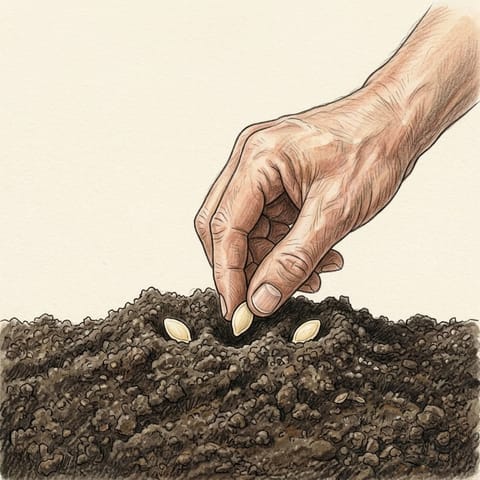 SowA few seeds in a low moundUp in 5–10 days
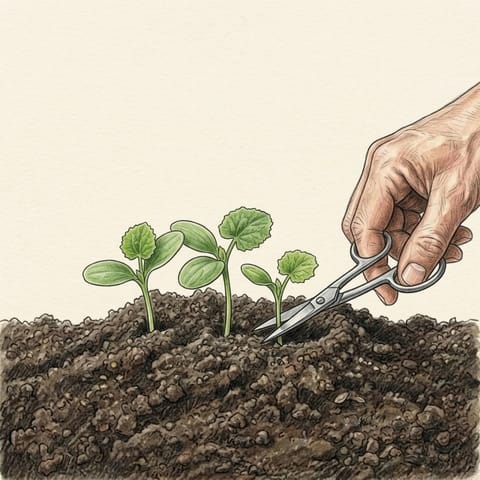 ThinKeep the strongest twoAbout 2 weeks
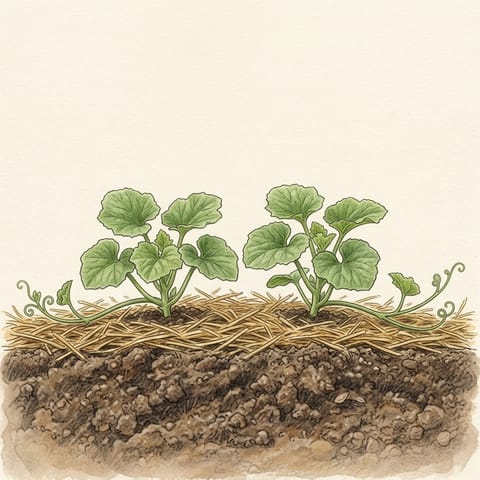 Vines runRunners spread; mulch goes down4–6 weeks
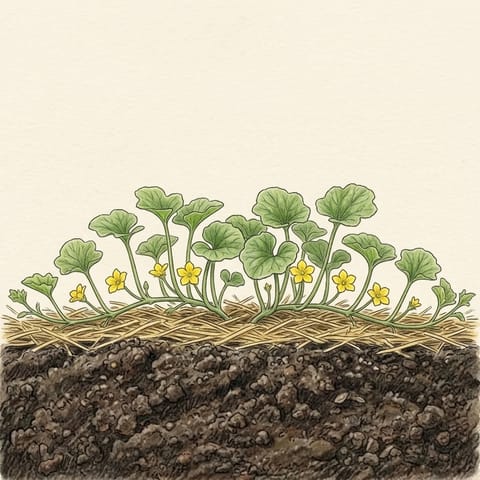 FlowerMale flowers open firstAbout 6–7 weeks
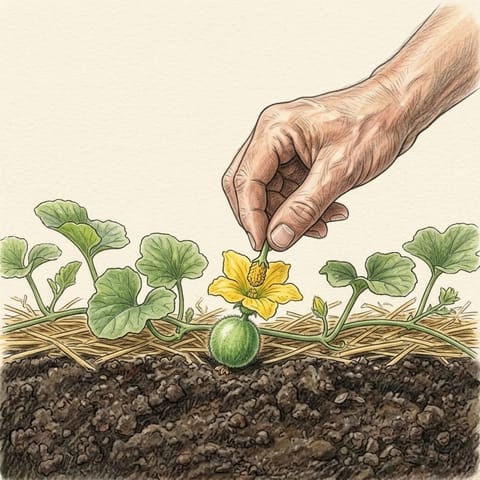 PollinateFemales have a tiny melon behindA week or two later
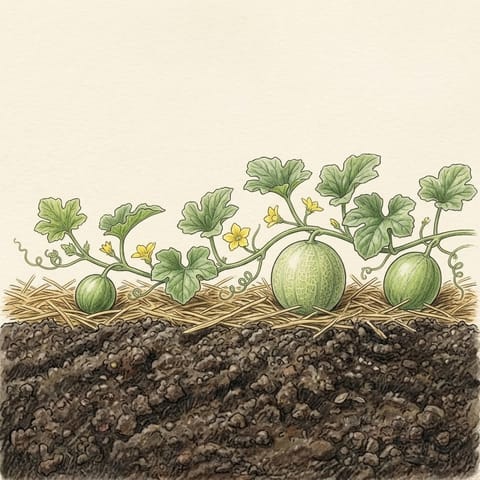 SwellFruits grow; keep about four1–3 weeks after flowering
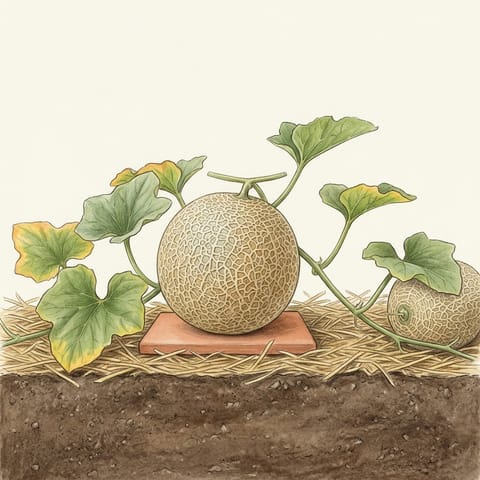 RipenNetted, turning golden, on a tile4–6 weeks after flowering
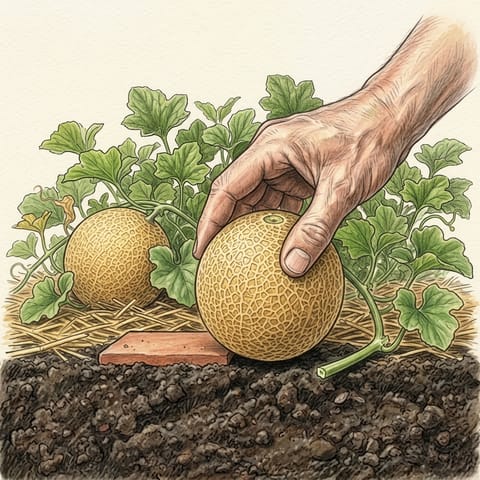 PickSlips off the stalk at a touchFrom about 12 weeks
Times run from sowing in the bed and vary with the variety and the weather. Seedlings raised in pots go out at about 4 weeks old and are ready about 10 weeks after planting.
Growing it, step by step
Is it right for you?
- Rockmelons need about three months of warm, frost-free weather, and they ripen sweetest in hot, dry weather. In a cool, wet or cloudy summer the fruit is often bland.
- Frost kills them, and cold nights stunt young plants. Cool, wet weather keeps bees away, so the fruit doesn't set.
- Left to sprawl, the vines run 2–3 m (6–9 ft). Grown up a strong trellis they take less ground, but each fruit needs a sling to hold it. Compact kinds grow in a pot at least 40 cm (16 in) wide and deep.
When to plant
Sow where they are to grow once the soil is at least 18°C (65°F) and the last frost has passed. Seed is slow to come up, and may rot, in cool, wet soil. For an earlier start, sow in small pots indoors about four weeks before you plan to plant out, kept warm at 18–21°C (65–70°F), and plant out after the last frost, once nights stay above about 12°C (54°F).
Short, cool summers: start seeds in pots indoors, plant out under fleece or cloches, or grow them in a greenhouse, and choose quick, early kinds. Mild climates: sow or plant in late spring, once the soil is warm, for fruit in late summer. Hot or subtropical places: sow from early spring, as soon as the soil is warm, so the fruit ripens in dry weather. Mildew is worst in humid weather. Tropics: the cooler, drier months, on mounds so the roots drain: wet weather at ripening brings rot and bland fruit.Prepare the bed
- The warmest, sunniest, most sheltered spot you have. Dig plenty of compost or well-rotted manure into each planting spot a few weeks before sowing.
- Rockmelons need good drainage. Where the soil stays wet, sow or plant on a low mound or in a raised bed.
- Slightly acid to neutral soil suits them, pH 6.0–7.0. See soil pH.
- In cooler places, black plastic laid over the bed a week or two before planting warms the soil and holds moisture. Cut holes in it to plant through.
- Avoid beds that grew melons, cucumbers, zucchini or pumpkins in the last two to three years. They share the same pests and diseases.
Sow and plant
- Sow three or four seeds 1.5–2.5 cm (½–1 in) deep in each spot where plants are to grow.
- Or sow two seeds 1.5 cm (½ in) deep in a small pot, about 7.5 cm (3 in) across, and keep it warm. If both come up, snip off the weaker one.
- A week or so before planting out, harden seedlings off: put them outside by day and bring them in at night. Plant them at about 4 weeks old, with three or four true leaves, at the same depth as in the pot, without disturbing the roots. Melons dislike being moved, and big seedlings stall.
- Space the spots 60 cm (2 ft) apart, in rows 1.5 m (5 ft) apart. Up a trellis, 45 cm (18 in) apart is enough.
Get it started
- Water well after sowing, then keep the soil just moist, not wet, until the seedlings are up. Seed rots in cold, soggy soil.
- Water seedlings you plant out every day for the first week, until they settle.
- About two weeks after sowing, keep the strongest two seedlings in each spot and snip the others off at soil level.
- Cover young plants with fleece on cold nights. Take covers off once the flowers open, so bees can reach them.
Keep it growing
- Water: a deep soak at the base about twice a week, best in the morning, more in hot, dry weather. They need it most while flowering and setting fruit. Keeping the leaves dry helps against powdery mildew and other leaf diseases. Once the fruits are full-sized and starting to ripen, ease off to about once a week: too much water then makes them less sweet and can split them. Pots may need water every day in hot weather.
- Mulch: about three weeks after planting, once the soil is warm, weed the bed, then spread straw about 5 cm (2 in) deep to hold moisture, keep weeds down and keep the fruit off bare soil. Keep it off the stem. Once fruit has set, leave the vines undisturbed.
- Feed: good soil needs little or nothing. On poor soil, or if growth is slow, give two high-potash liquid feeds two weeks apart once the fruits have set, and none once they start to ripen. In pots, a liquid feed every 10–14 days, high-potash once the fruits are the size of a walnut. Too much nitrogen grows vine instead of fruit.
- Fruit set: the first flowers are male and fall off, which is normal. Female flowers have a tiny round melon behind them. If those baby fruits yellow and shrivel (poor fruit set), hand-pollinate in the morning: pull the petals off a male flower and dab its pollen into an open female flower. One male flower can do up to four females.
- Pinch, where summers are short: pinch out the growing tip once a young plant has five leaves, then keep the four strongest side shoots: they carry the fruit. When the fruits are the size of a walnut, keep about four per plant and pinch each fruiting shoot two or three leaves past its fruit. In long, hot summers, let the vines run.
- Lift the fruit: once the fruits are a good size, sit each one on a tile, board or thick straw so the underside doesn't rot on damp soil. On a trellis, hold each fruit in a sling of soft netting or an old stocking before it gets heavy.
Scrub the skin before you cut. The netted skin can carry germs that cause food poisoning, and the knife carries them into the flesh. Scrub the whole melon under cool running water with a clean brush, dry it, then cut. Keep cut melon in the fridge and eat it within a few days.Watch for problems
The common ones, with a Garden help page each where there is one:
Harvest
- Most rockmelons are ready about four to six weeks after the flower was pollinated. The netting stands out, the skin between it turns from green to yellow or tan, the melon smells sweet, and a crack forms around the stalk.
- Ripe, it slips off the stalk with a gentle push of the thumb. Don't pick early: melons soften after picking but don't get any sweeter.
- Check every day or two once they start: they go from ripe to overripe quickly. Pick in the cool of the morning.
- Smooth-skinned honeydew kinds don't slip. Cut them when the skin turns creamy yellow and the flower end gives a little.
After harvest
- Keep whole melons in the fridge and use them within about one to two weeks.
- To save seed, choose an open-pollinated kind and grow only one kind of melon: different melons cross with each other, though not with cucumbers, pumpkins or watermelons. Seed from F1 hybrids won't grow true.
- Pull the plants out when they finish. Bin plants with mosaic virus or wilt rather than composting them.
- Next in that bed: a cool-season crop such as peas, broad beans, garlic or leafy greens. Keep melons, cucumbers, zucchini and pumpkins out for two to three years.
Sources
- RHS: How to grow melons
- Clemson Cooperative Extension: Cantaloupe and honeydew melons
- University of Illinois Extension: Muskmelon
- Penn State Extension: Cantaloupe in the garden and the kitchen
- Northern Territory Government: Growing rockmelons around Alice Springs
- Iowa State University Extension: Growing cantaloupe, muskmelon and other melons in the home garden
- Ohio State University Extension: Growing muskmelons in the garden (HYG-1615)
Facts checked Friday 23 October 2026. General guidance only: local advice comes first.