Home › Vegetables › Garlic
Vegetables
Growing garlic
Allium sativum. A cool-season crop grown for its bulbs, planted as single cloves as the weather cools and lifted once it warms. It wants sun, free-draining soil and a weed-free bed, and it needs a spell of cold to form a good bulb, so warm places need the right kind and a little help. These steps work anywhere: they go by soil and weather, not by month.
How garlic grows
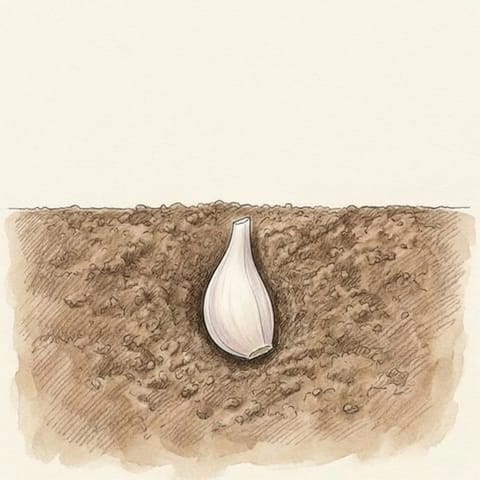 PlantClove in, pointed end upDay 0
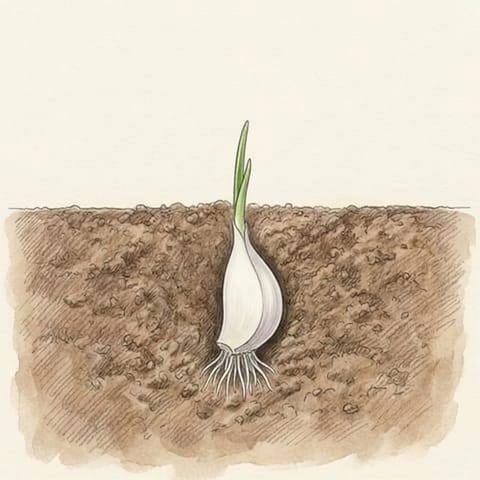 RootsRoots first, then a shootShoot in 2–6 weeks
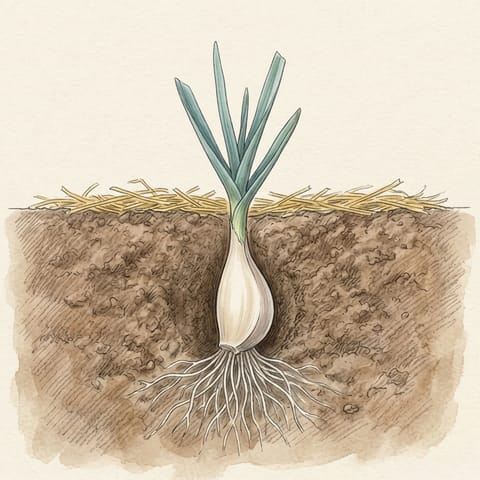 MulchStraw goes down once shoots showAbout 3–6 weeks
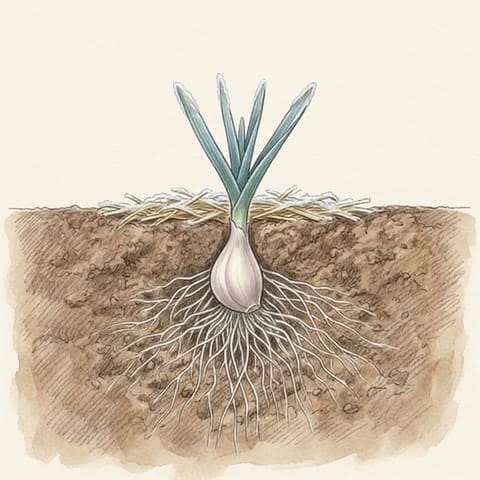 ColdSlow growth through the coldThrough the winter
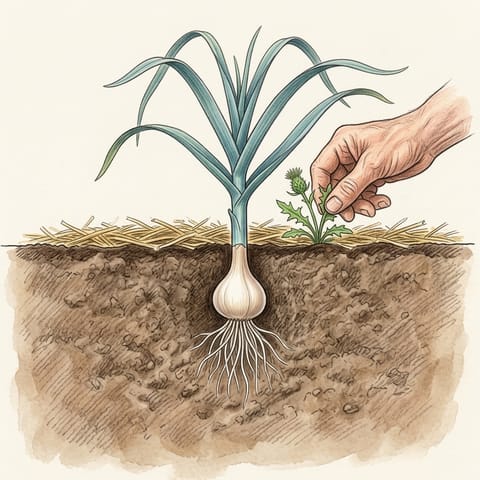 LeavesLeaves grow fast; keep weeds outAs the weather warms
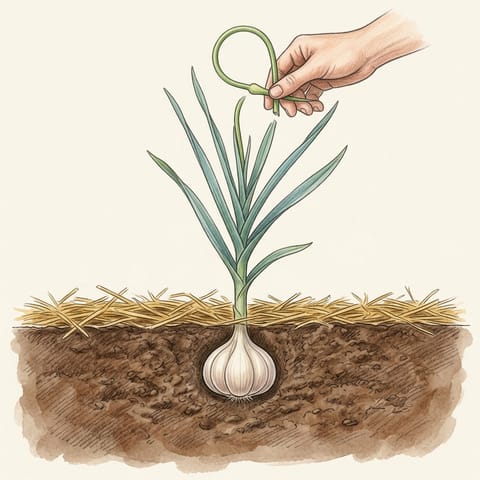 Flower stalkHardnecks: snap the curly stalk offAbout a month before lifting
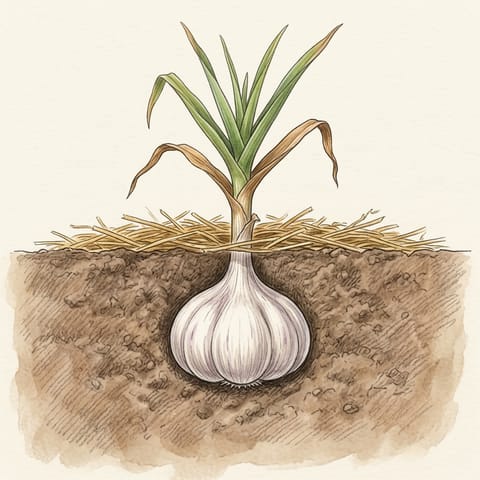 RipenLower leaves brown, bulb fills out6–9 months after planting
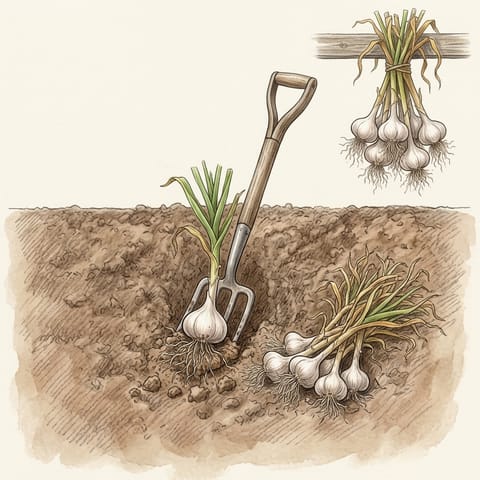 LiftLift, then dry for 2–4 weeksWhen 5 or 6 green leaves remain
Times run from planting and vary with the kind and the weather. Where the ground freezes, the shoot may not show until the cold eases; in warm places the whole crop is quicker.
Growing it, step by step
Is it right for you?
- Garlic is a long, slow crop: six to nine months in the ground, planted as the weather cools and lifted once it warms.
- It needs a cold spell to make a good bulb: a month or two at about 0–10°C (32–50°F). Then the lengthening, warmer days start the bulb. Without enough cold, the bulb often stays small or forms one solid round instead of splitting into cloves.
- There are two kinds. Hardneck garlic sends up a stiff, curly flower stalk, has fewer, bigger cloves, suits cold winters and keeps about four to six months. Softneck garlic rarely makes a stalk, has more, smaller cloves, copes with milder winters and keeps up to a year; its soft stems can be plaited.
- Each plant needs only about 10 cm (4 in) of row. Garlic also grows well in large, deep pots.
When to plant
Plant cloves in autumn as the weather cools, so they grow roots before the cold. A rough sign is soil down to about 10°C (50°F), 10 cm (4 in) deep. Where the ground freezes, plant in the weeks after the first frosts, a few weeks before it freezes. Planted late, at the end of winter, garlic still grows, but the bulbs are usually smaller. Where winters are too mild to chill it, keep the cloves in the fridge (not the freezer) for four to eight weeks first, then plant in the coolest months.
Cold winters: hardneck kinds, planted as the soil cools in autumn, with straw over them for the winter. Mild climates: either kind, planted in autumn. Softneck kinds keep longest. Hot or subtropical places: softneck kinds sold for mild winters, with cloves chilled in the fridge first, planted in the coolest months and lifted before the wet or the heat. Tropics: hard to grow in the lowlands. Try the highlands or the coolest, driest months, always with fridge-chilled cloves: without the chill, garlic makes leaves and little bulb.Prepare the bed
- A sunny, open spot with loose, well-drained soil. Dig in compost, but no fresh manure. Cloves rot in soil that stays wet, so on heavy soil use a raised bed.
- Slightly acid to neutral soil suits it, around pH 6.0–7.0. If a soil test shows it is more acid than that, add lime a few weeks before planting. See soil pH.
- Weed the bed thoroughly before you plant. Garlic can't compete with weeds.
- Avoid beds that grew garlic, onions, leeks or shallots in the last three or four years, and never plant where white rot has been.
Plant
- Plant garlic sold for planting, or cloves from your own healthy bulbs. Shop garlic can carry disease, may be a kind that doesn't suit your climate, or may be treated to stop it sprouting.
- Split the bulb into cloves just before planting and keep the biggest, firmest ones. Leave the papery skin on. Big cloves make big bulbs.
- Plant each clove flat end down, pointed end up, 3–5 cm (1¼–2 in) deep, so the tip is 2–3 cm (about 1 in) under the soil. Go a little deeper in light soil and shallower in heavy soil.
- Space them 10 cm (4 in) apart, in rows 30 cm (12 in) apart. At 15 cm (6 in) apart, the bulbs grow bigger.
Get it started
- Water in well, then keep the soil just moist, never wet: rot is the main risk while the cloves root.
- Birds pull up newly planted cloves. Cover them with netting or fleece until they have rooted.
Keep it growing
- Weed: about once a month, pull weeds by hand. Garlic's narrow leaves shade out nothing, so weeds soon shrink the bulbs, and a hoe can damage them.
- Mulch: once shoots show, spread straw about 5 cm (2 in) deep to keep weeds down and the soil evenly moist. Where the ground freezes, a thicker layer stops frost lifting the cloves.
- Water: the roots are shallow, so in dry spells give a good soak at the soil, not the leaves, about once a week, most as the weather warms and the bulbs swell. Keep it moist, never wet. Stop about three weeks before lifting, as the lower leaves start to turn, so the bulbs firm up and keep.
- Feed: compost dug in before planting is usually enough. If the leaves are pale as growth picks up after the cold, give one nitrogen-rich feed; none once the bulbs start to swell. In pots, a weak liquid feed every four weeks while the leaves grow, stopping as the bulbs swell.
- Flower stalks: hardneck garlic sends up a curly flower stalk about a month before it is ready. Snap it off as soon as it shows, so the bulb grows bigger. The stalks are good to eat. Softnecks rarely make one.
Watch for problems
The common ones, with a Garden help page each where there is one:
White rotRustDowny mildewNeck rotPurple blotchMosaic virusBulbs not dividingThripsOnion flyAllium leaf minerLeek mothAphidsBirdsHarvest
- Garlic is ready when the lower leaves have turned brown and about half are still green: five or six green leaves left. Each green leaf is a layer of skin round the bulb, so don't wait until they have all died.
- Lift one to check first: the cloves should be plump and fill the skin. Bulbs left in too long split open and keep badly.
- Loosen them with a fork and lift on a dry day; don't pull them up by the stem. Bruised bulbs rot in store, so handle them gently.
After harvest
- Dry whole plants, leaves and roots on, for two to four weeks somewhere dry, airy and out of hot sun: hung in bunches or laid on a rack. They are ready when the skins are papery and the stems dry.
- Once dry, trim the roots and cut the stems about 2.5 cm (1 in) above the bulb, or plait softnecks by their stems. Store garlic cool, dry and airy, in mesh bags or plaits. Softnecks keep up to a year, hardnecks four to six months.
- Keep some of the biggest, healthiest bulbs to plant next time, but only from a crop that showed no disease.
- If white rot showed up (white fluffy mould on the base of the bulb), bin those plants and keep the onion family out of that bed: it can last in the soil for 20 years or more.
- Next in that bed: the cabbage family, beans or peas. Keep garlic, onions, leeks and shallots out for three or four years.
Sources
- RHS: How to grow garlic
- University of Georgia Extension: Garlic production for the gardener
- South Dakota State University Extension: Planting garlic
- University of Hawaiʻi CTAHR: Garlic production guidelines for Hawaiʻi
- Gardening Australia: Guide to garlic
Facts checked Friday 23 October 2026. General guidance only: local advice comes first.