Home › Vegetables › Bush beans
Vegetables
Growing bush beans
Phaseolus vulgaris. A quick warm-season crop grown for its young pods and sown where it grows. The plants stay low, need no support and start cropping in about two months, but frost kills them and cold, wet soil rots the seed. These steps work anywhere: they go by soil and weather, not by month. Also called dwarf beans (Australia and the UK), dwarf French beans (UK), French beans (UK and Australia, for bush and climbing kinds alike), snap beans (US), green beans (US and elsewhere, for the young pods).
How a bush bean grows
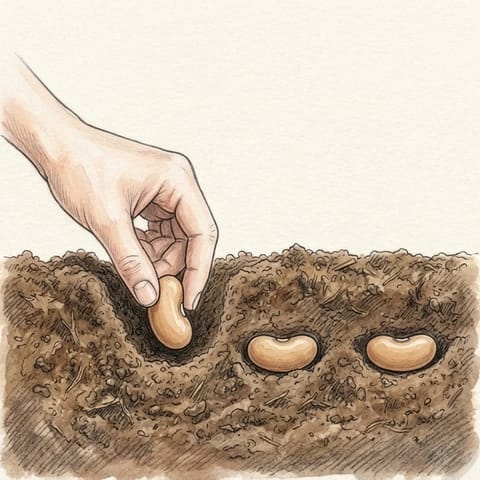 SowBig seeds pushed into warm soilDay 0
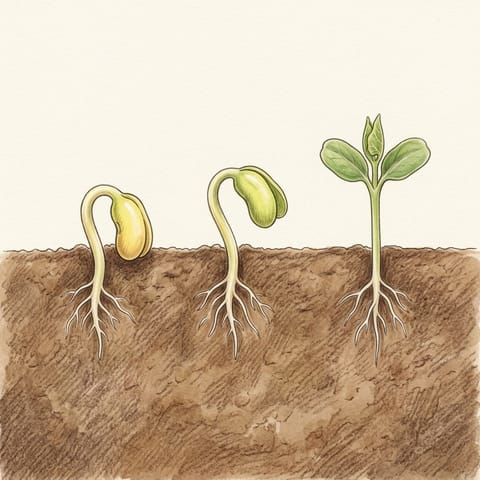 Come upA hooked stem lifts the seed leavesUp in 1–2 weeks
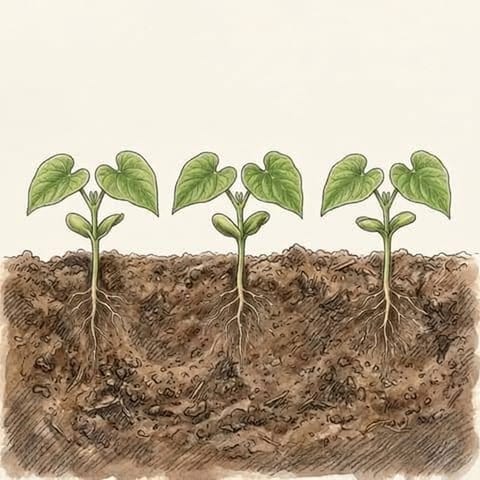 SeedlingFirst true leaves; thin if crowdedAbout 2 weeks
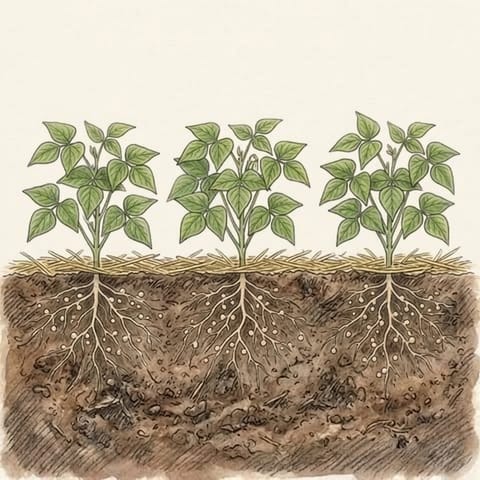 GrowLeaves in threes, straw goes down2–5 weeks
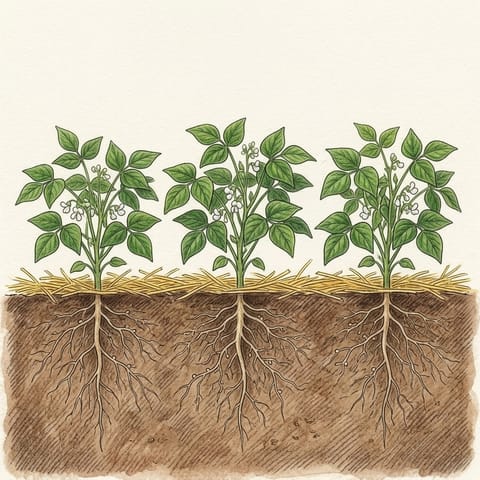 FlowerSmall flowers among the leaves5–7 weeks
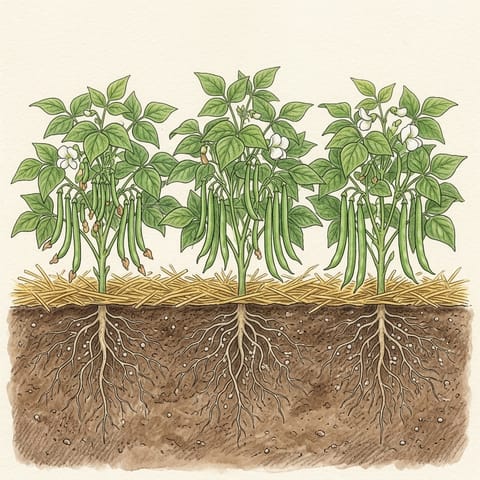 PodsSlim pods lengthen fastAbout a week after flowering
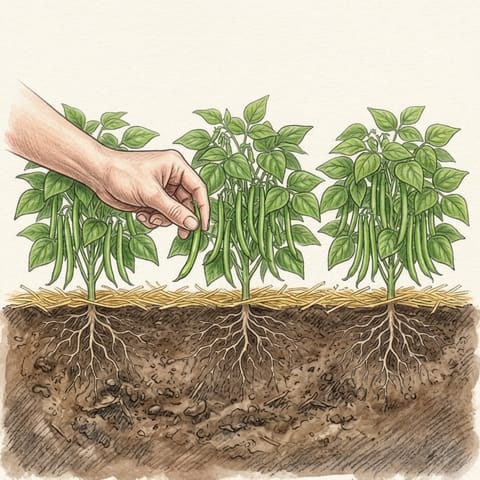 PickYoung pods that snap cleanlyFrom about 7–10 weeks
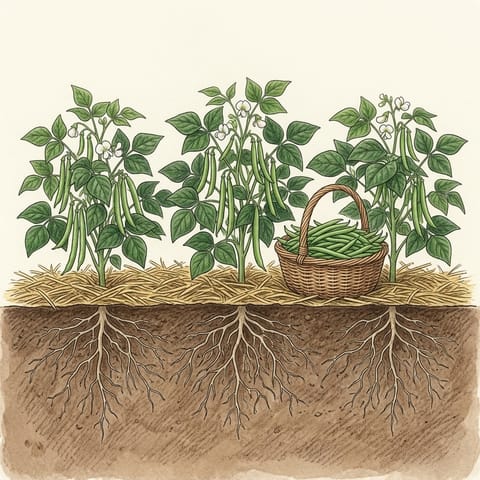 Keep pickingEvery 2–3 daysFor a few weeks
Times run from sowing and vary with the variety and the weather. Each sowing crops for a few weeks, then slows, so sow again every two to three weeks for a longer harvest.
Growing it, step by step
Is it right for you?
- Bush beans need about two months of warm, frost-free weather to start cropping: days around 18–29°C (65–85°F).
- Frost kills them, and the seed rots in cold, wet soil. Above about 32°C (90°F), or when the roots dry out, the flowers drop without setting pods.
- Bush or climbing? Bush beans stay low, about 30–60 cm (1–2 ft), need no support and crop sooner, but all within a few weeks. Climbing beans need a frame about 2 m (6–7 ft) tall and start later, then keep cropping for weeks from less ground.
- Each plant needs only 10–15 cm (4–6 in) of row. They suit small beds, and a pot or trough at least 30 cm (12 in) wide.
When to plant
Sow where they are to grow once the soil is at least 16°C (60°F) and the last frost has passed: in colder soil the seed comes up slowly or rots. For beans over a longer season, sow a short row every two to three weeks, until about two to three months before your first frost.
Short, cool summers: warm the soil under fleece or a cloche for a couple of weeks before sowing, or start seeds in small pots indoors and plant out after the last frost. Mild climates: sow every few weeks from late spring to midsummer. Hot or subtropical places: sow in spring and again from late summer into autumn, so the plants flower outside the hottest weeks. Tropics: the cooler, drier months.Prepare the bed
- A warm, sunny spot, sheltered from strong wind, with well-drained soil. Dig in compost a few weeks before sowing. Where the soil stays wet, sow on a low ridge.
- Slightly acid soil suits them best, pH 6.0–6.5, though up to 7.0 is fine. See soil pH.
- Skip fresh manure and high-nitrogen fertiliser. Beans make their own nitrogen, and too much gives lots of leaves and fewer, later pods.
- Avoid beds that grew beans or peas in the last three years. Their diseases build up in the soil.
Sow
- Sow seeds 2.5–4 cm (1–1½ in) deep, 10–15 cm (4–6 in) apart, in rows 45 cm (18 in) apart. Or sow a block or a double row, about 15 cm (6 in) apart each way.
- Sow a few extra at the end of the row to fill any gaps.
- For an earlier start where summers are short, sow one bean to a small pot indoors. Harden the seedlings off and plant them out after the last frost, once they are about 8 cm (3 in) tall.
Get it started
- Water well once at sowing, then only if the soil dries out until the seedlings are up, in one to two weeks. The seed rots in cold, soggy soil.
- Protect seedlings from slugs and snails while they are small. Netting or fleece stops birds pulling them up.
- About two weeks after sowing, if they came up crowded, thin them to 10–15 cm (4–6 in) apart.
- Water seedlings raised in pots every day for the first week after planting out, until they settle.
Keep it growing
- Water: until the first flowers, water only when the soil dries. From the first flowers, keep the soil evenly moist: about 2.5 cm (1 in) of water a week, rain included, as a deep soak about twice a week in dry weather. Dry roots make the flowers and young pods drop (poor pod set). Water at the base in the morning, so the leaves dry before night.
- Mulch: about two weeks after sowing, once the seedlings are up and the soil is warm, spread straw about 5 cm (2 in) deep. It keeps the soil moist and cool and the weeds down.
- Feed: none needed in soil dug with compost: beans make their own nitrogen. Too much nitrogen grows leaves instead of pods. In pots, a high-potash liquid feed every two weeks from the first flowers until picking ends.
- Weed: hoe shallowly or pull weeds by hand. Bean roots run close to the surface.
- Prop up: bush beans need no stakes. On windy sites, a few short twiggy sticks among them keep heavy plants upright and the pods off the soil.
- Sow again: every two to three weeks while it is still sowing time, so a new row takes over as the last one slows.
Watch for problems
The common ones, with a Garden help page each where there is one:
Slugs and snailsAphidsSpider mitesBean flyBean seed flyMexican bean beetleStink bugsRustAnthracnoseHalo blightWhite mouldMosaic virusPowdery mildewPoor pod setHarvest
- Start picking about two weeks after the first flowers, while the pods are young and firm, snap cleanly when bent, and the beans inside don't yet show as bumps.
- Pick every two or three days. Pods left on to ripen stop the plant flowering.
- Snap or snip each pod off just above its cap, holding the stem so you don't pull the plant up. Morning, while it's cool, is best.
After harvest
- Keep them in a bag in the fridge and use them within about a week. They freeze well if blanched first.
- To save seed, leave a few pods on a healthy plant until they are dry and the beans rattle inside, then store the beans cool and dry. Most beans grow true from saved seed.
- When a row stops cropping, cut the plants off at ground level and leave the roots in the soil to rot down. Bin diseased plants rather than composting them.
- Next in that bed: cabbage family crops or leafy greens. Keep beans and peas out for three years.
Sources
- RHS: How to grow French beans
- University of Minnesota Extension: Growing beans in home gardens
- Clemson Cooperative Extension: Bush and pole type snap beans
- UConn Home and Garden Education Center: Snap beans
- Northern Territory Government: Growing French beans in the Alice Springs region
Facts checked Wednesday 21 October 2026. General guidance only: local advice comes first.