Home › Vegetables › Runner beans
Vegetables
Growing runner beans
Phaseolus coccineus. A vigorous climbing bean grown for its long pods, sown where it grows at the foot of tall canes. Its flowers, usually bright red, need bees to set pods. It likes a milder, moister summer than French beans do, crops for weeks if picked often, and frost kills it. These steps work anywhere: they go by soil and weather, not by month. Also called scarlet runner beans (US and Canada).
How a runner bean grows
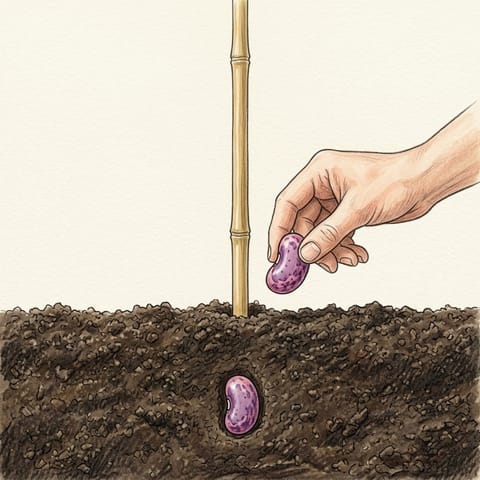 SowBig seeds at the foot of the caneDay 0
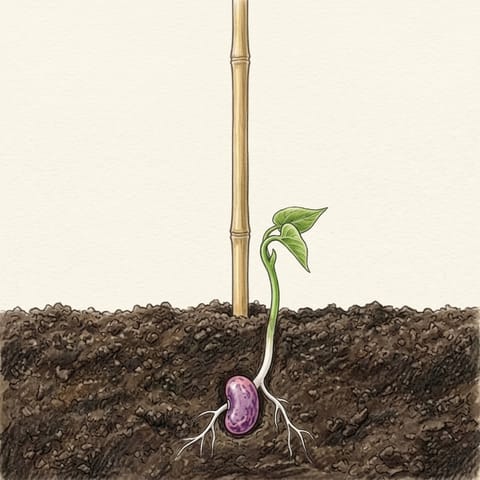 UpA shoot comes up; the seed stays below1–2 weeks
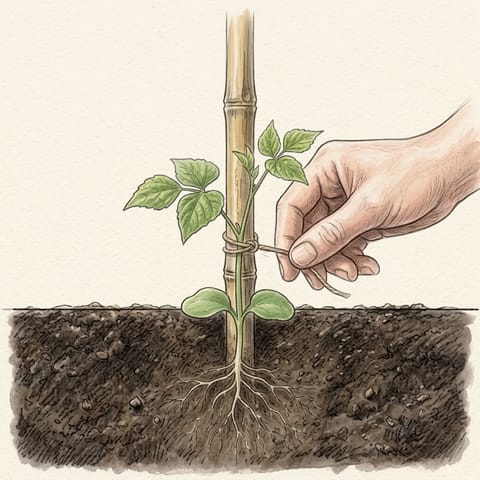 Tie inTie the young stem loosely to its caneAbout 3 weeks
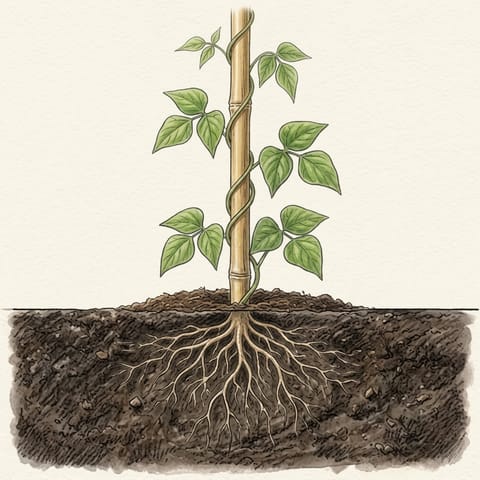 ClimbMulch down, the vine twines up3–6 weeks
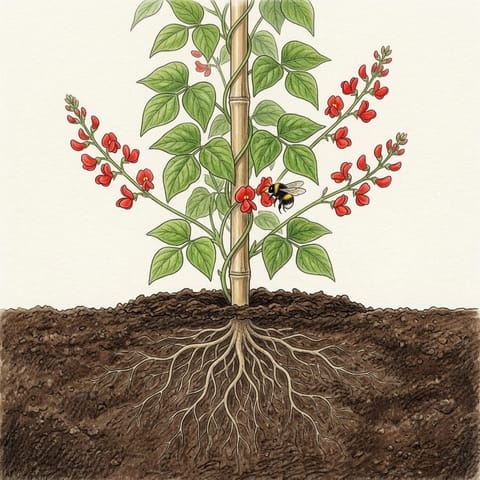 FlowerRed flowers; bees set the pods6–9 weeks
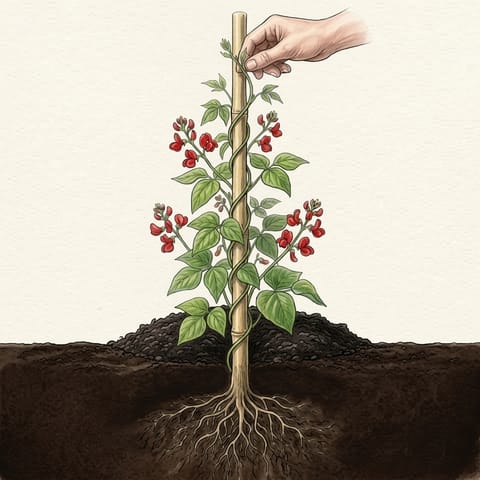 Pinch outTip off at the top of the cane8–10 weeks
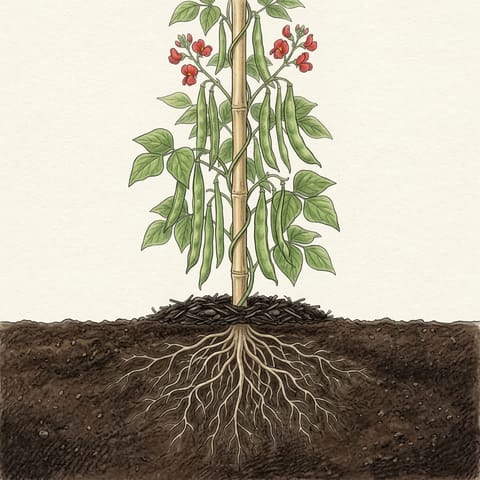 PodsLong, flat pods lengthen1–2 weeks after flowering
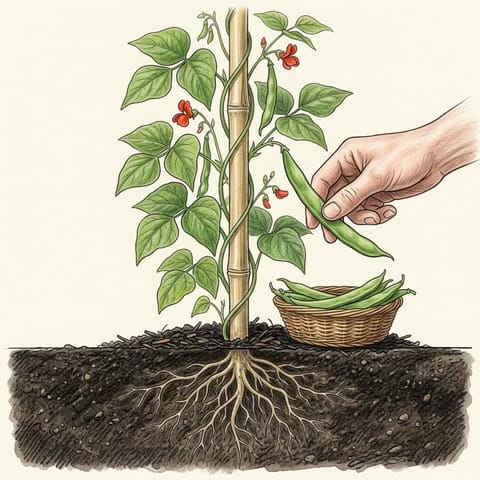 PickEvery 2–3 days, for weeksFrom about 10–12 weeks
Times run from sowing and vary with the variety and the weather. Picked often, the plants keep cropping until the first frost, or until hot weather stops the flowers setting.
Growing it, step by step
Is it right for you?
- Runner beans like a cooler summer than French beans (climbing and bush beans). They crop best where summers are mild and moist, with about three months free of frost.
- Frost kills them, and the seed rots in cold, wet soil. In hot weather, above about 32°C (90°F), and especially when nights stay warm, or when the roots dry out, the flowers drop without making pods.
- They climb 2.5 m (8 ft) or more, so they need tall, sturdy canes. Dwarf kinds stay low and need only short twiggy sticks. In a pot, choose one at least 75 cm (30 in) wide and 45 cm (18 in) deep, with a wigwam of canes.
When to plant
Sow where they are to grow once the soil is at least 12°C (54°F) and the last frost has passed. They take cooler soil than French beans, but the leaves are killed by frost, so don't sow too early. In warm soil the shoots are up in one to two weeks.
Short, cool summers: they suit cool summers well; for an early crop, sow in deep pots indoors three to four weeks before the last frost and plant out once it has passed. Mild climates: sow from late spring to early summer, once frosts are over. This is where they do best. Hot or subtropical places: they struggle in long, hot summers. Sow early so they flower before the hottest weeks, or grow climbing beans instead. Tropics: only in cool highlands; elsewhere grow climbing beans instead.Prepare the bed
- A sunny spot, sheltered from strong wind so bees can work the flowers. Dig in plenty of compost or well-rotted manure, ideally a few weeks before sowing: it holds the moisture they need.
- Neutral soil suits them, about pH 6.5–7.0. In more acid soil they set fewer pods. See soil pH.
- Put the canes up before you sow, so you don't damage the roots later. Use canes about 2.5 m (8 ft) tall: a double row sloped in and tied to a cane across the top, or a wigwam of five or more tied at the top.
- Avoid beds that grew beans or peas in the last three years. They share the same diseases.
Sow
- Sow 5 cm (2 in) deep, two seeds at the foot of each cane, where they are to grow.
- Space the canes 15 cm (6 in) apart, one plant to each cane, in rows 60 cm (24 in) apart.
- Sow into moist soil, not wet. The big seeds rot in cold, soggy soil.
- For an early start, sow one seed 5 cm (2 in) deep in a deep pot indoors. Harden the plants off and plant them out after the last frost, when they are about 8 cm (3 in) tall, one to each cane. Handle the roots gently.
Get it started
- Water once after sowing, then only if the soil dries out until the shoots are up.
- If both seeds come up at one cane, keep the stronger one and snip the other off at soil level.
- Mice, rats and birds dig up the big seeds. Where they are a problem, cover the sowing with netting until the shoots are up.
- Protect the young shoots from slugs and snails, and cover them with fleece if a cold night is forecast.
- About three weeks after sowing, tie each young stem loosely to its cane. They twine on their own after that; re-tie any loose stems each week while they climb.
Keep it growing
- Water: a deep soak at the base about twice a week in dry weather, and generously from the first flowers right through picking. Dry roots are the main reason the flowers drop without making beans. Pots dry out fast: check them every day in hot weather.
- Mulch: about two weeks after sowing, once the shoots are up, spread compost about 5 cm (2 in) deep over the root area. Cool, moist roots help the flowers set. Keep it off the stems.
- Feed: none needed in soil dug with compost: beans make their own nitrogen, and extra nitrogen grows leaves instead of flowers and pods. In pots, a high-potash liquid feed every two weeks from the first flowers.
- Flowers and bees: unlike French beans, runner beans need bees to set their pods. Never pick off the flowers, as they become the beans, and don't spray the plants while they are in flower. Spraying the flowers with water does not help them set.
- Tie in: after windy weather, tie in any stems that have blown loose from their canes.
- Pinch out the top: when the plants reach the top of their canes, pinch out the growing tip. Side shoots then form lower down, which keeps the crop within reach and the row from getting top-heavy.
Watch for problems
The common ones, with a Garden help page each where there is one:
Slugs and snailsAphidsSpider mitesStink bugsBean seed flyBean flyBirdsRustHalo blightAnthracnoseMosaic virusRoot rotPoor pod setHarvest
- Pick when the pods are about 20–25 cm (8–10 in) long, while young and tender, before the beans inside start to bulge.
- Pick every two or three days. Pods left to ripen stop new flowers forming; picked often, the plants crop for 8 weeks or more.
- Hold the vine with one hand and pick with the other. Older pods turn tough and stringy: string them and slice runner beans before cooking.
After harvest
- Keep fresh pods in a bag in the fridge and use them within about a week. They freeze well if blanched first.
- To save seed, leave a few pods on the plant until they are dry and the beans rattle inside, then keep the beans in a paper bag somewhere cool and dry. Bees carry pollen between runner bean varieties, so seed comes true only if no other kind grows nearby.
- When the plants finish, cut them off at ground level and leave the roots in the soil to rot down. Bin diseased plants rather than composting them.
- Runner beans are perennial. Where winters are mild, the thick roots can survive in the ground and reshoot in spring. Where the ground freezes, you can dig them up and keep them in cool, barely damp sand until spring.
- Next in that bed: cabbage family crops or leafy greens. Keep beans and peas out for three years.
Sources
- RHS: How to grow runner beans
- RHS: Runner beans, failure to set pods
- University of Wisconsin–Madison Extension: Scarlet runner bean
- Oregon State University Extension: Plant scarlet runner beans first when soils are chilly
- Gardening Australia: Phaseolus
Facts checked Friday 23 October 2026. General guidance only: local advice comes first.