Home › Vegetables › Strawberries
Vegetables
Growing strawberries
Fragaria × ananassa. A low perennial grown for its fruit, planted as young plants or runners rather than sown, and cropping for about three years. It wants sun, mild weather and free-draining soil, and wet soil rots its crown. These steps work anywhere: they go by soil and weather, not by month.
How a strawberry grows
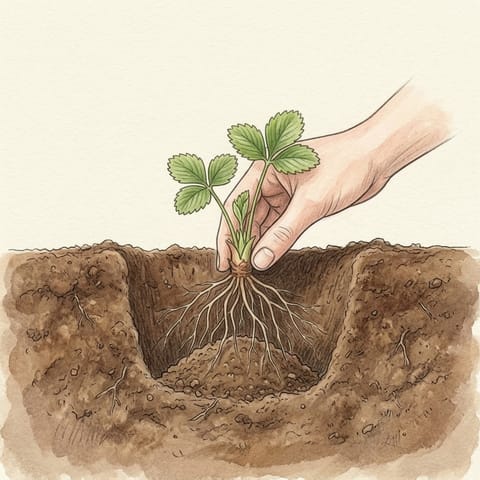 PlantCrown level with the soilDay 0
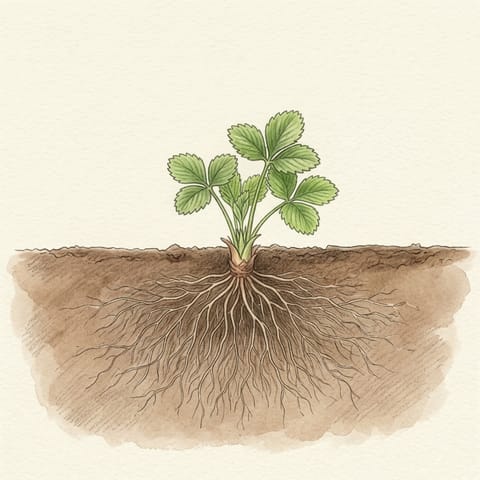 Settle inNew leaves, roots spread2–6 weeks
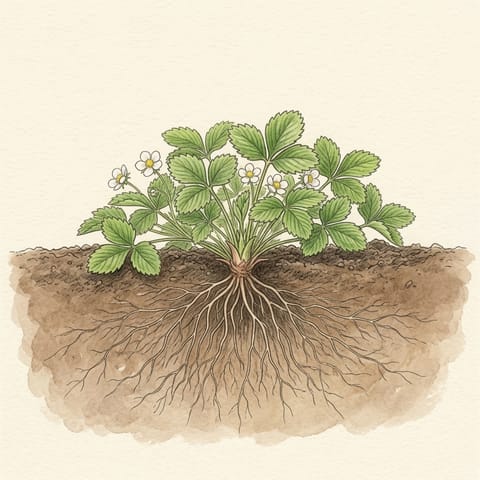 FlowerWhite flowers openAbout 4 months, or the next spring
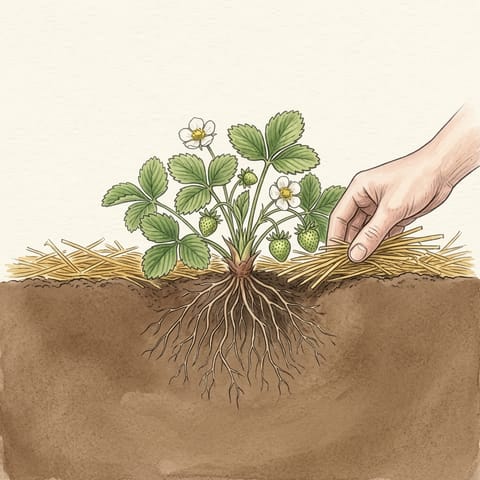 MulchStraw under the young fruitAs the first fruits form
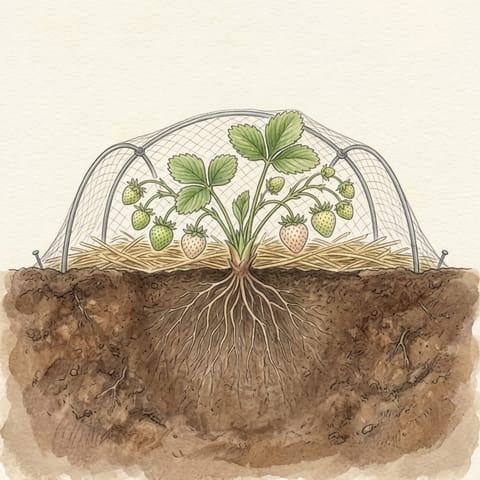 NetCovered before the berries colourAbout 2 weeks before picking
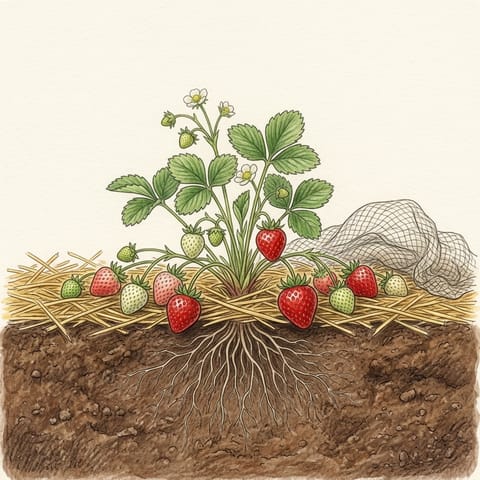 RipenGreen to white to red4–5 weeks after flowering
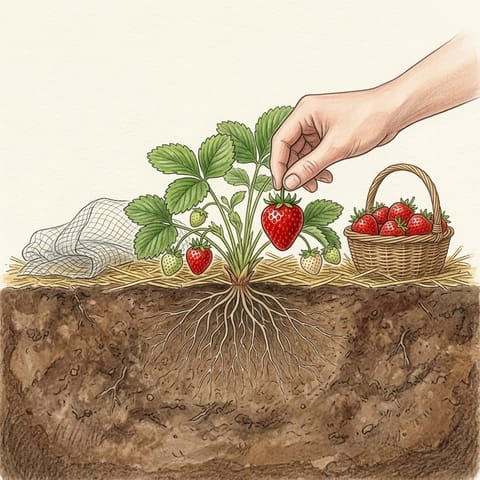 PickRed all over, cap onEvery 2–3 days for about 3 weeks
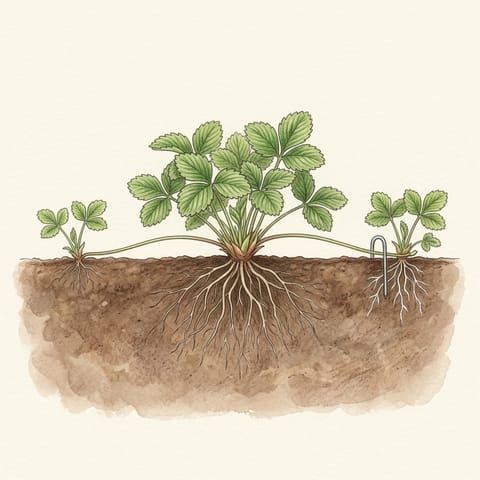 RunnersYoung plants root for next timeAfter the crop
Times run from planting and vary with the season and the variety. Plants set out in late summer or autumn wait for the next spring to flower. Perpetual kinds keep flowering and fruiting in flushes until autumn.
Growing it, step by step
Is it right for you?
- Strawberries are perennials: one planting crops for about three years. They like mild weather, with days around 21–24°C (70–75°F) and cool nights, and stop flowering above about 29°C (85°F).
- The plants take frost, but frost kills open flowers. They need free-draining soil: wet soil rots the crowns, and long wet spells rot the fruit.
- Summer-fruiting (June-bearing) kinds give one big crop over about three weeks. Perpetual (everbearing or day-neutral) kinds crop in smaller flushes from early summer to autumn. All grow well in pots, troughs and raised beds.
When to plant
Plant once the soil is workable, not wet, and at least 10°C (50°F); in hot places, once it has cooled below about 30°C (86°F). Planting in late summer or early autumn gives the plants time to root before they crop the next year. Summer-fruiting kinds planted in spring crop properly only the year after.
Cold winters: plant in spring once the soil can be worked, and cover the plants with loose straw over the coldest months. Mild climates: plant in late summer or early autumn, to crop the next spring and summer. Hot or subtropical places: plant in autumn as the weather cools, to crop from winter into spring. Many gardeners replant every year. Tropics: the cool, dry season or the highlands, in raised beds or pots so the crowns stay dry, with new plants each year.Prepare the bed
- Full sun, sheltered, and out of frost hollows. A few weeks before planting, clear perennial weeds and dig in plenty of compost or well-rotted manure.
- Drainage matters most: the shallow roots and the crowns rot in wet soil. On heavy clay or wet soil, plant in a raised bed or on a mound about 15–20 cm (6–8 in) high.
- Slightly acid soil suits them, pH 6.0–6.5. See soil pH.
- Avoid beds that grew strawberries, tomatoes, potatoes, capsicum or eggplant in the last three years. They leave diseases such as verticillium wilt in the soil.
Plant
- Start with certified disease-free plants, as bare-root runners or in pots. Runners from an old or sickly patch often carry viruses.
- Soak bare roots in water for about half an hour, and trim very long roots to about 10 cm (4 in).
- Dig a wide hole with a small mound in the middle and spread the roots over it. Set the crown, where the leaves meet the roots, level with the soil: roots fully covered, crown not buried. Too deep and it rots; too high and it dries out.
- Space them 30 cm (12 in) apart, in rows 60 cm (24 in) apart, or 20 cm (8 in) apart in pots and troughs. Firm the soil and water in well.
Get it started
- Water daily in dry weather for the first two weeks, while the roots settle.
- About a week after planting, once the soil has settled, check the crowns: firm in any that have lifted, and scrape soil off any that have sunk.
- On summer-fruiting kinds planted in spring, pick off the flowers in their first summer: the plants put their strength into roots and crop far better the next year. On perpetual kinds, pick off just the first flowers, for four to six weeks.
Keep it growing
- Water: at the base, in the morning, keeping the crowns, leaves and fruit dry: wet fruit invites grey mould. The roots are shallow, so in dry weather give a good soak about twice a week, around 25 mm (1 in) a week including rain, most of all while flowering and fruiting. Pots may need water every day in hot weather.
- Mulch: as the first fruits form, tuck clean straw or pine needles about 5 cm (2 in) deep under the plants, so the berries rest on it, not on wet soil. Clear it away after the crop, or by autumn: it shelters slugs and disease.
- Net: before the first berries colour, cover the plants with netting stretched taut over hoops or a frame, the edges held down all round so birds can't get in or get caught.
- Runners: from flowering until autumn, snip off runners at the base every two weeks or so, so the plant puts its strength into fruit. For new plants, let up to three per plant root in late summer.
- Feed: good soil needs none: a compost mulch in autumn or late winter, kept clear of the crowns, is enough. If the crop is poor, give one high-potash feed in spring. Too much feed gives soft berries and more disease. In pots, a liquid feed every two weeks while growing, high-potash from the first flower buds, and none in winter.
- Frost: on frosty nights while the plants are in flower, cover them with fleece or an old sheet and uncover them by day. Flowers hit by frost turn black in the middle and give no fruit.
Watch for problems
The common ones, with a Garden help page each where there is one:
Grey mouldBirdsSlugs and snailsAphidsPowdery mildewLeaf spotVerticillium wiltCrown and root rotStrawberry virusesSpider mitesVine weevilSpotted-wing drosophilaFrost damageHarvest
- Berries ripen about four to five weeks after the flowers open. Pick them when they are red all over: they don't ripen any more once picked.
- Pick every two or three days, once the plants are dry. Berries picked in the warmth of the day taste best, so pick then for eating straight away; pick in the cool of the morning for berries you will keep, and get them out of the sun. Take each berry by its stalk and snap it off with the green cap on.
- Take off mouldy or damaged berries as you go and throw them out, so the rot doesn't spread.
- Summer-fruiting kinds crop for about three weeks. Perpetual kinds give smaller pickings on and off until autumn.
After harvest
- Strawberries don't keep. Eat them soon, or keep them unwashed in the fridge for a few days and wash them just before eating. They freeze well for cooking, but go soft when thawed.
- When the crop is over, lift the net. Cut summer-fruiting plants back to about 10 cm (4 in) above the crown and clear away the old leaves and straw. On perpetual kinds, just remove dead leaves.
- For new plants, peg up to three healthy runners per plant into small pots of compost beside it in late summer, using a U-shaped wire, and cut them free once they have rooted. Snip off the rest.
- Replace the plants every three years or so, or sooner if the crop falls off or the leaves turn mottled or streaked. Put the young plants, or fresh certified ones, in a new bed.
- Next in that bed, once the old plants come out: beans, peas or leafy greens. Plant the new strawberries somewhere else.
Sources
- RHS: How to grow strawberries
- University of Illinois Extension: Growing strawberries
- Penn State Extension: Growing strawberries
- Penn State Extension: Crown and root issues in strawberries
- Oregon State University Extension: Day-neutral strawberry production
- Sustainable Gardening Australia: How to grow delicious strawberries
Facts checked Friday 23 October 2026. General guidance only: local advice comes first.