Home › Vegetables › Silverbeet
Vegetables
Growing silverbeet
Beta vulgaris subsp. vulgaris. A leafy crop grown for its big, glossy leaves and thick stalks, sown where it grows or planted as seedlings. It likes fertile soil and steady water, takes light frost, and crops for months when picked a few leaves at a time. These steps work anywhere: they go by soil and weather, not by month. Also called Swiss chard (US, Canada, UK and elsewhere), chard (UK and US), spinach (loosely, by some Australians).
How silverbeet grows
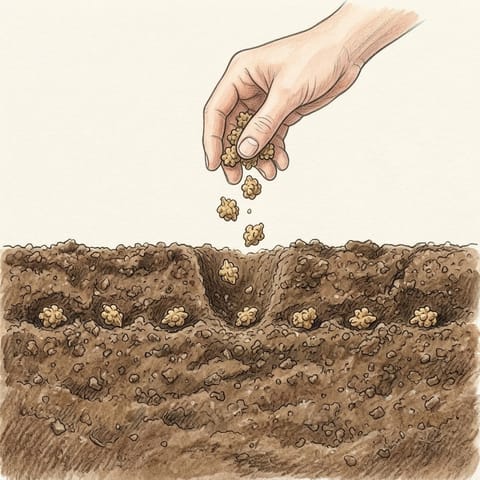 SowSoaked seed clusters in a shallow rowUp in 1–2 weeks
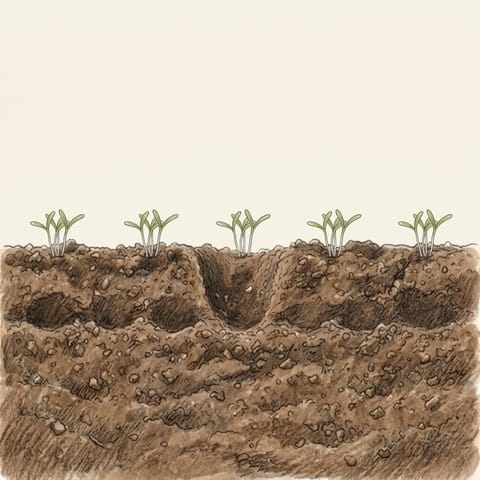 SeedlingsA small tuft from each cluster1–2 weeks
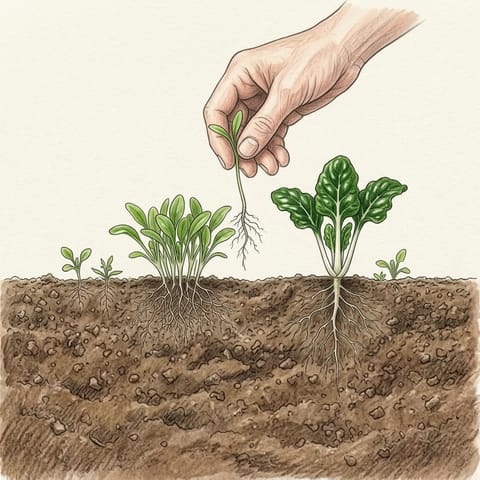 ThinThe strongest one kept every 30 cm (12 in)About 3 weeks
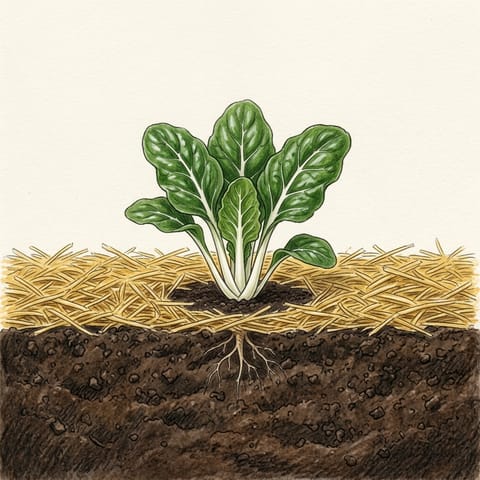 MulchStraw down, clear of the crownAbout 4 weeks
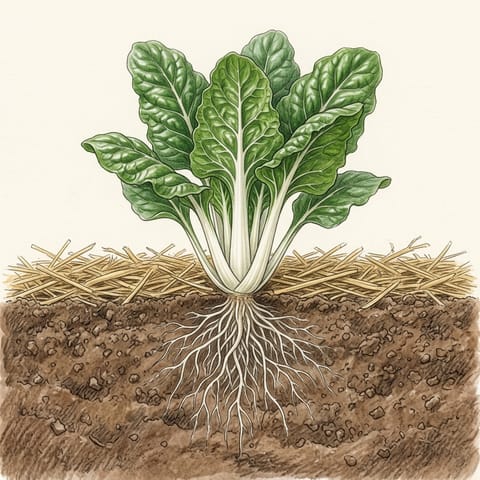 GrowBig glossy leaves on white stalks5–7 weeks
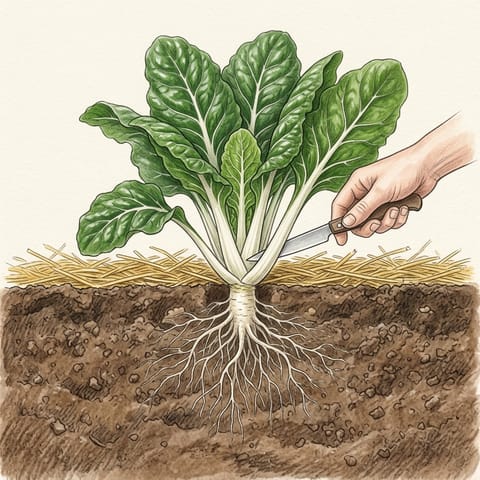 PickOuter leaves cut at the baseFrom 7–10 weeks
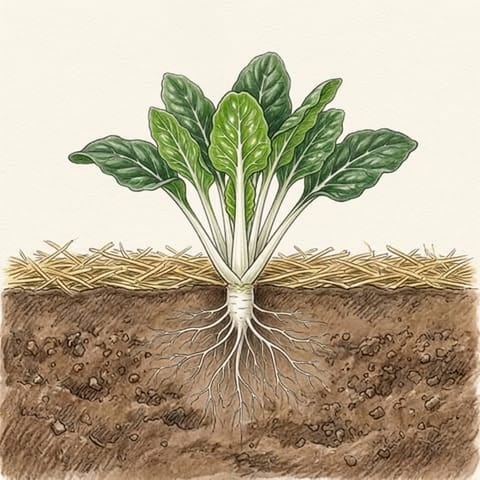 RegrowNew leaves rise from the centreA week or two after picking
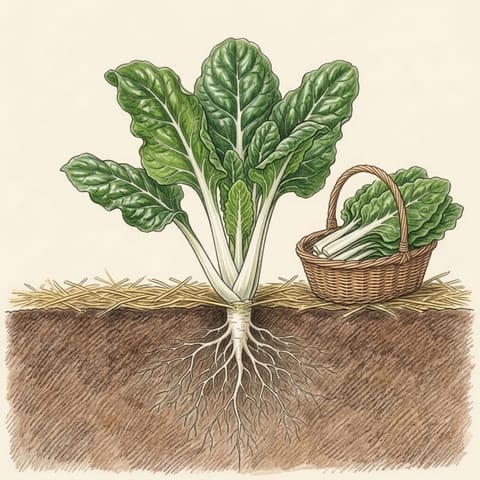 Keep pickingA few leaves every week or twoOften for up to a year
Times run from sowing and vary with the variety and the weather. Seedlings you plant out are ready to pick about 4–6 weeks later. Coloured kinds, sold as rainbow chard, grow the same way.
Growing it, step by step
Is it right for you?
- Silverbeet likes mild weather, with days around 15–24°C (60–75°F). It takes light frost and copes with warm weather far better than spinach, though hot spells slow it and make the leaves tough and bitter.
- One sowing crops for months: picked a few outer leaves at a time, a plant often keeps going for up to a year. Plants that have come through a cold winter usually flower in spring, which ends their picking.
- Each plant needs about 30 cm (12 in) each way, and copes with part shade, about four hours of sun. It grows well in a pot at least 40 cm (16 in) wide and deep, and looks good among flowers.
When to plant
Sow once the soil is at least 5°C (40°F). Seed comes up in one to two weeks, quicker in warmer soil. Young plants take light frost, so sowing can start a few weeks before the last frost. A second sowing in mid to late summer gives leaves through autumn and winter.
Cold winters: sow in spring and again in midsummer; fleece or a cloche stretches the picking into winter. Mild climates: sow from spring to autumn; one planting can crop for most of a year. Hot or subtropical places: sow almost all year, best from autumn to spring. Give summer plantings afternoon shade and steady water. Tropics: the cooler, drier months.Prepare the bed
- A sunny spot, with light shade where summers are hot. Fertile, well-drained soil that holds moisture: dig in plenty of compost before sowing.
- Slightly acid to slightly alkaline soil suits it, about pH 6.0–7.5. See soil pH.
- Avoid a bed that grew silverbeet, beetroot or spinach last year. They are close relatives and share pests and diseases.
Sow and plant
- Soak the seed for a few hours, or overnight, to soften its hard coat.
- Each seed is really a cluster of several seeds, so it comes up as a small tuft. Sow the clusters 1–2 cm (½–¾ in) deep and about 10 cm (4 in) apart, in rows 45 cm (18 in) apart.
- Or sow one or two clusters in each cell of a seed tray. Harden the seedlings off for a week or so, then plant them out once they are about 5 cm (2 in) tall, at the same depth they grew in the tray, without disturbing the roots.
- Space plants 30 cm (12 in) apart. For baby salad leaves, 5 cm (2 in) is enough.
Get it started
- Keep the soil moist until the seedlings are up, then water daily for the first three weeks or so. Water new transplants daily for their first week.
- Thin when seedlings are about 5 cm (2 in) tall: keep the strongest one every 30 cm (12 in) and pull or snip out the rest. Eat the thinnings, or replant them to fill gaps.
- Guard young plants against slugs and snails and birds. If a hard frost is forecast, cover them with fleece.
Keep it growing
- Water: a deep soak at the base about twice a week in dry weather, about 2.5–5 cm (1–2 in) of water a week in all. Keep it even: dry spells give tough, stringy stalks and off-tasting leaves. Pots dry out fast: check them every day in hot weather.
- Mulch: once plants are about 10 cm (4 in) tall, spread straw about 5 cm (2 in) deep to keep the soil cool and moist. Leave a gap around the crown so it doesn't rot.
- Feed: compost dug in before sowing carries it a long way: while the leaves stay dark and glossy, it needs nothing more. If growth slows or the leaves turn pale once picking starts, give a light nitrogen-rich liquid feed every four weeks, best after a heavy pick. In pots, a liquid feed every two weeks once picking starts.
- Weed and tidy: pull weeds by hand or hoe shallowly while the plants are young: they compete poorly. Pull off old yellow leaves as they appear.
Watch for problems
The common ones, with a Garden help page each where there is one:
Slugs and snailsAphidsLeaf minersFlea beetlesBirdsRoot-knot nematodesDowny mildewGrey mouldCercospora leaf spotBoltingHarvest
- Start picking about 7–10 weeks after sowing, once the plants have several leaves about 25–30 cm (10–12 in) long. Small young leaves can be eaten raw in salads.
- Every week or two, cut or snap off a few outer leaves at the base of the stalk, always leaving the centre leaves to keep growing.
- Or cut the whole plant about 5 cm (2 in) above the soil, taking care not to damage the growing point in the centre. It regrows for later pickings.
- A flower stalk rising from the centre means it is finishing. Cut it out for a few more weeks of leaves, then pull the plant.
After harvest
- Silverbeet wilts quickly. Keep it in a bag in the fridge and use it within a week or two.
- The stalks can be eaten raw like celery or cooked: give them a little longer than the leaves.
- Pull plants out once they flower, or when they turn coarse after many months of picking, and compost them. A new sowing every few months keeps young plants coming on as old ones finish.
- Next in that bed: almost anything but its relatives. Beans, peas, tomatoes or cabbage family crops all follow well. Keep silverbeet, beetroot and spinach out for a year.
Sources
- RHS: How to grow chard
- Utah State University Extension: How to grow Swiss chard in your garden
- University of Maryland Extension: Growing Swiss chard in the home garden
- Gardening Australia: Spring planting
- Sustainable Gardening Australia: Silverbeet
Facts checked Wednesday 21 October 2026. General guidance only: local advice comes first.