Home › Plant diseases › Tipburn
Plant diseases
Tipburn
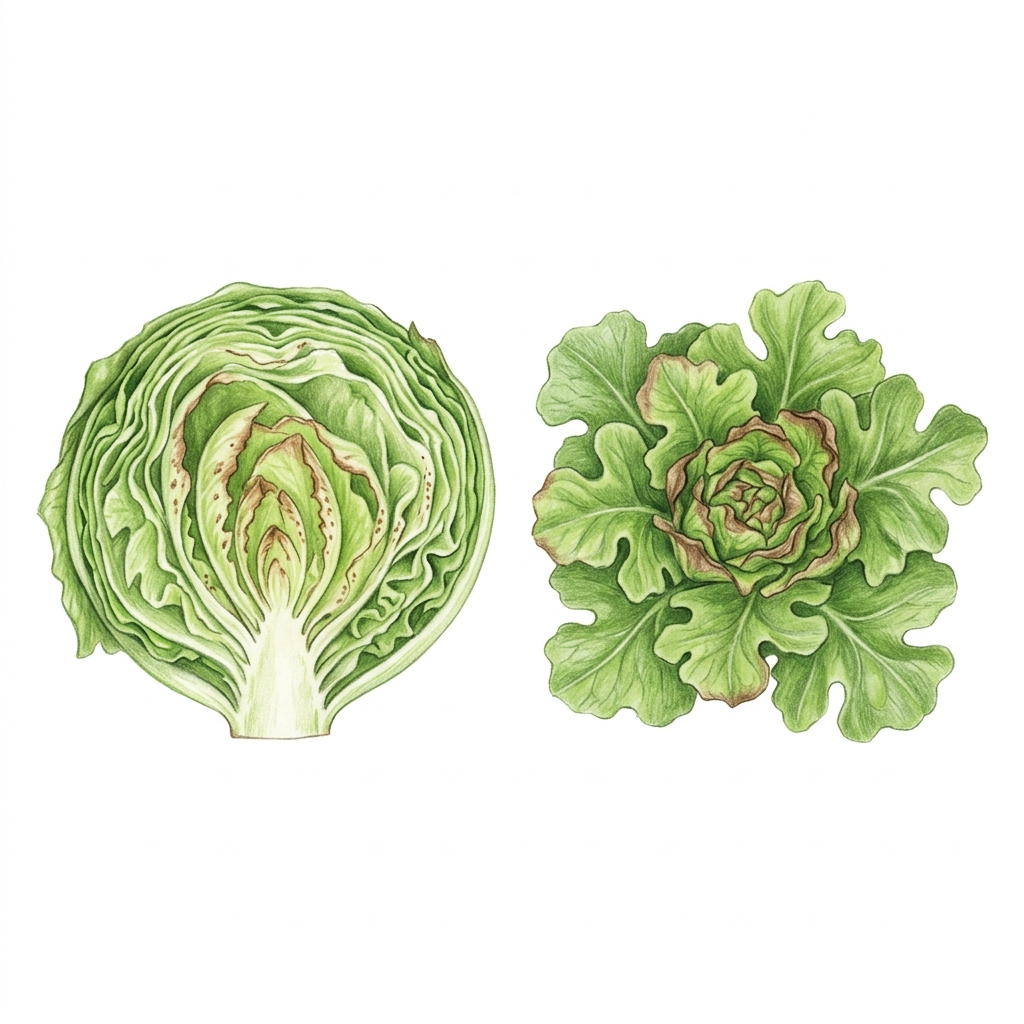
Illustration
Brown, dead edges on the young inner leaves of lettuce, from a shortage of calcium inside the fast-growing leaves, usually brought on by heat and uneven watering. Steady watering, light feeding and growing through milder weather prevent it.
How to spot it
- Brown, dry edges or tips on the youngest, inner leaves.
- Small brown spots along the leaf edge, or the whole edge browned.
- In hearting lettuce it is often hidden: you only see it when you cut the head open.
- Brown edges that turn soft and rot as bacteria move in.
- Often after hot weather, or after a dry spell followed by rain or a heavy watering.
Easily confused with
Downy mildew
Pale yellow, angular patches held in by the veins, with fuzz underneath; tipburn browns the edges of the young inner leaves, with no fuzz.
Grey mould
Fuzzy grey-brown mould on soft, rotting leaves, rather than dry brown edges.
Wind scorch
Brown, dried edges on the leaves facing the wind, rather than on the young leaves in the middle.
Where it's a problem
- Worldwide: Common wherever lettuce grows through hot weather or uneven watering. The soil usually has calcium enough: the problem is getting it into the young leaves. Not regulated.
What to do
- Keep the soil evenly moist: water regularly and don't let it dry out between soakings.
- Feed lightly: too much nitrogen fertiliser makes it worse.
- Time sowings so lettuce matures in mild weather rather than the hottest weeks.
- Test the soil, and correct the pH only if the test shows it's needed.
- Choose kinds described as less prone to tipburn.
- Pick heads as soon as they're ready: tipburn gets worse the longer they stand, and rot can set into the brown edges.
Spraying won't help: tipburn is a calcium shortage inside the fast-growing leaves, not an infection, and usually not a shortage in the soil. In Agriculture Victoria's trials, calcium sprays on the leaves didn't reduce it. Official guides prevent it with steady watering and light feeding.
Vegetables it affects
Free account, no card needed. You sign up or sign in first, then the scanner opens.
Sources
- University of California IPM: Tipburn on lettuce and spinach
- Agriculture Victoria: Tipburn in lettuce
- Utah State University Extension: Leafy greens, physiological problems
- Clemson University HGIC: Lettuce
- RHS: Wind scorch
Facts checked Wednesday 21 October 2026. General guidance only: follow your local council, agency and product label.